 Skip to content

Texas Car Shipping Services
Texas is one of the most active auto transport markets in the country. With major metros like Dallas, Houston, Austin, San Antonio, and El Paso spread across a vast geography, car shipping in Texas is relied on by residents and businesses every day. Dispatch Dudes is a trusted car shipping company, connecting customers to a nationwide network of licensed, insured carriers.
Common reasons for Texas car shipping include corporate relocations, military transfers in and out of Fort Cavazos and Lackland Air Force Base, dealership inventory moves, and snowbird travel. Whatever is driving your move, Dispatch Dudes handles it with a streamlined, fully insured process and multiple transport options to fit your timeline and budget.
Auto Transport Services Available in Texas
Texas customers can choose from a full menu of vehicle transport options:
- Open Transport: The most popular and affordable option, with carriers running Texas corridors like I-45 between Dallas and Houston almost daily.
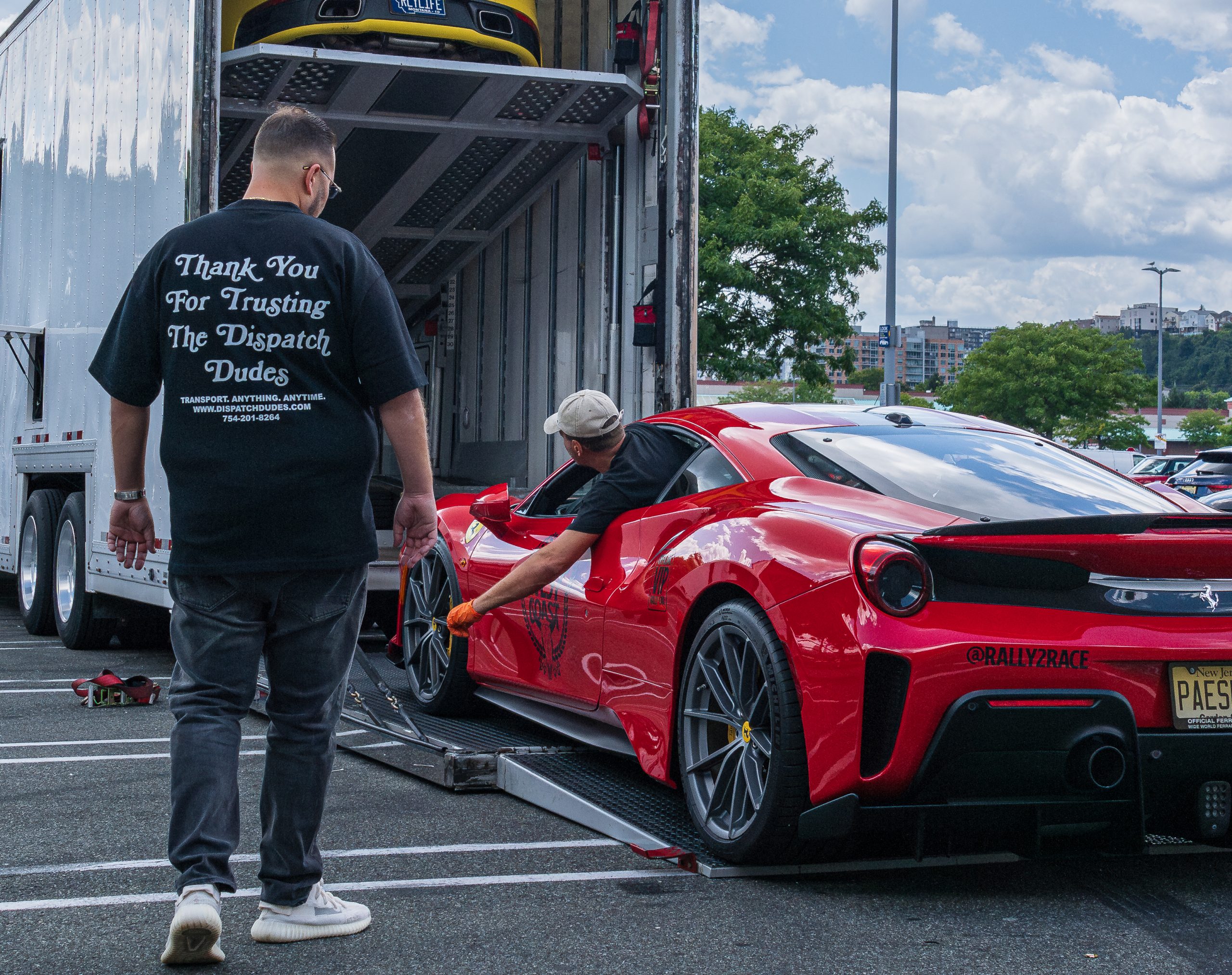
- Enclosed Transport: Texas’s growing luxury and collector-car market — concentrated around Dallas-Fort Worth, Houston’s River Oaks, and Austin — makes enclosed trailers the preferred choice for high-value vehicles, especially through the brutal summer heat.
- Door-to-Door Delivery: Carriers get as close to your address as truck access allows, which matters in sprawling metros like Houston and the DFW Metroplex where large car haulers can’t always reach tight residential streets.
- Expedited Shipping: Faster carrier assignment for time-sensitive moves, including military PCS orders and dealer auction deadlines.
Dispatch Dudes arranges car shipping across the entire state, from the Dallas-Fort Worth Metroplex and the suburbs of Plano, Frisco, and Arlington to the Houston metro, Austin, San Antonio, and out to El Paso on the far western edge of I-10. We regularly coordinate pickups and deliveries in Corpus Christi, Laredo, the Rio Grande Valley around McAllen, Lubbock and Amarillo in the Panhandle, Waco along the I-35 corridor, and College Station. Because El Paso sits roughly 550 miles from the nearest major Texas metro, we route those shipments through New Mexico and Arizona lanes, while dense Texas Triangle markets like Dallas, Houston, and San Antonio see carriers daily.
Shipping a Vehicle To or From Texas
Shipping a Car To Texas
Texas is the second-largest state in the country, and intrastate moves can cover serious ground — Dallas to Houston runs about 240 miles down I-45, Houston to San Antonio roughly 200 miles on I-10, and El Paso to Houston nearly 745 miles across the western deserts. The Texas Triangle formed by Dallas-Fort Worth, Houston, and San Antonio/Austin is one of the busiest auto-transport regions in the South, anchored by I-35, I-10, I-45, I-20, and I-30, which keeps carrier availability high and pricing competitive on those lanes.
Texas continues to attract new residents at a rapid pace. The tech boom in Austin, energy sector growth in Houston, and financial industry expansion in Dallas all drive strong inbound vehicle shipments. Military families reporting to Fort Cavazos near Killeen and Lackland Air Force Base in San Antonio are another consistent source of inbound auto transport demand. I-10 from the west and I-35 from the north are the primary inbound corridors.
Military families relocating under PCS (Permanent Change of Station) orders are a steady part of Texas auto transport, with major installations including Fort Cavazos near Killeen, Joint Base San Antonio (Lackland, Randolph, and Fort Sam Houston), Fort Bliss in El Paso, NAS Corpus Christi, and NAS JRB Fort Worth. We’re familiar with base-access requirements and PCS timelines and can align pickup or delivery with your report-by date.
Shipping a Car From Texas
Outbound Texas car shipping is driven by retirees heading to Florida and Arizona, professionals relocating to the West Coast, and dealership inventory transfers. I-10 west toward California and I-20 east toward the Southeast are the most commonly used departure routes. Texas’s central location makes it a natural hub connecting carriers across the full continental US.
For dealers and auction buyers, Texas is a national hub: Manheim operates around ten auction sites across the state — with Manheim Dallas the largest — alongside Manheim Houston and San Antonio and Copart’s Dallas facility. We move single units and full inventory loads to and from these auctions, coordinating gate releases and buyer-number documentation so vehicles clear quickly.
Popular Car Shipping Routes To and From Texas
Top outbound routes:
- Texas to California — one of the busiest lanes in the country, running I-10 west from Houston and San Antonio
- Texas to Florida — popular with retirees and seasonal travelers heading to Miami, Tampa, and Orlando
- Texas to New York — a long-haul corridor used for corporate relocations and cross-country moves
Top inbound routes
- California to Texas — tech professionals relocating from Silicon Valley and Los Angeles keep this lane consistently full
- Illinois and the Midwest to Texas — Chicago and surrounding states send a large volume of vehicles south on I-35
- Florida to Texas — active year-round with job transfers and lifestyle moves between two major southern states
Texas-specific shipping considerations: A few Texas realities shape how vehicles move here. Summer heat regularly tops 100°F from Houston to the Permian Basin, so many owners of luxury, classic, and exotic vehicles choose enclosed transport between June and September to protect paint, interiors, and sensitive electronics. Texas also ended its annual safety-inspection requirement for non-commercial vehicles on January 1, 2025 under House Bill 3297 (replaced by a $7.50 fee at registration), so a vehicle shipped into Texas no longer needs a safety inspection before it can be registered — though emissions testing still applies in the metro emissions counties around Dallas-Fort Worth, Houston, Austin, and El Paso. Along the Gulf Coast, hurricane season from June through November can occasionally delay pickups in Houston, Galveston, and Corpus Christi.
What Impacts Car Shipping Costs in Texas?
Distance and route demand
High-traffic lanes like Houston to Los Angeles attract more carrier competition, helping keep rates reasonable.
Vehicle type
Larger trucks and SUVs take up more trailer space and cost more to ship than compact sedans.
Seasonality
Summer and the back-to-school season tend to see higher demand, which can push rates up.
Fuel prices
Carrier operating costs shift with diesel prices, and those changes are reflected in transport quotes.
How Our Car Shipping Process Works
- Request a quote: Share your pickup and delivery locations, vehicle type, and preferred dates.
- Carrier assignment: We match you with a vetted, insured carrier that serves your route.
- Pickup inspection: The driver documents your vehicle’s condition on a Bill of Lading before loading.
- Delivery and final check: Compare the vehicle’s condition to the pickup report before signing off.
Transit times from Texas typically range from 2 to 7 days, depending on destination. Shorter routes like Texas to Arizona often land on the lower end, while cross-country runs to the Northeast take closer to a week. Weather, seasonal demand, and rural pickup locations can all affect the exact timeline. We keep you updated throughout.
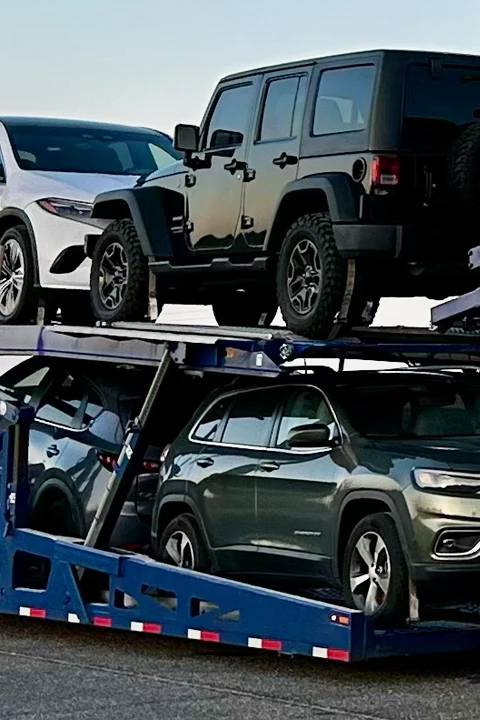
As a licensed auto-transport broker, Dispatch Dudes (Kats & Co LLC) is registered with the Federal Motor Carrier Safety Administration (FMCSA) under USDOT# 3446819 and MC# 1120978. We verify every carrier’s active operating authority, safety rating, and cargo-insurance certificate before assigning your vehicle, and we post loads to Central Dispatch — the industry’s primary carrier load board — to source the right truck for your route. Standard open carriers haul 7 to 10 vehicles on a multi-car trailer, while enclosed shipments often move on smaller 2-to-6-car trailers with lift-gate loading and soft tie-downs for low-clearance vehicles. The Bill of Lading completed at pickup is your official condition report and the document used for any cargo-insurance claim.
Dispatch Dudes is a U.S.-based, FMCSA-licensed auto-transport broker headquartered at 200 Knuth Road, Suite 116, Boynton Beach, FL 33463, coordinating shipments nationwide including every major Texas market. With 6+ years in business and a 4.9-star rating from 449 Google reviews, Dispatch Dudes pairs you with vetted carriers that all carry verified, active cargo insurance. Our team is reachable at 754-201-8264 for status updates from pickup to delivery.
Why Choose Dispatch Dudes for Car Shipping in Texas?
Fully insured carriers
Every carrier in our network carries active cargo insurance
Nationwide carrier network
Broad coverage across all major Texas routes and beyond
Real-time updates
You'll always know where your vehicle stands
Dedicated support
Our team is available to answer questions throughout your shipment
Competitive pricing
Fair rates without compromising on carrier quality
Registering a Vehicle You Ship Into Texas
Texas changed its rules in a way that materially simplifies things for anyone shipping a vehicle in. Under House Bill 3297, Texas ended its annual safety-inspection requirement for non-commercial vehicles on 1 January 2025, replacing it with a $7.50 inspection-replacement fee collected at registration. A vehicle shipped into Texas therefore no longer needs to pass a safety inspection before it can be registered. Emissions testing does still apply, but only in the metropolitan emissions counties around Dallas–Fort Worth, Houston, Austin and El Paso — outside those areas there is no testing requirement. New residents have 30 days to register, and a vehicle identification number inspection is required on an out-of-state vehicle, which means the car needs to be physically present before the paperwork can be completed.
Frequently Asked Questions About Car Shipping in Texas
Yes. All carriers in our network carry active cargo insurance. The Bill of Lading, completed at pickup, documents your vehicle’s pre-transport condition and serves as your protection record throughout the move.
Booking 5 to 10 days ahead works well for most Texas routes. During peak periods like summer, booking further out gives you more carrier options and often better pricing.
Absolutely. Our network regularly handles trucks, SUVs, and oversized vehicles. Larger vehicles cost slightly more due to space requirements, but competitive rates are available on most Texas routes.
Someone needs to be present to sign the Bill of Lading at both ends, but it doesn’t have to be you personally. A trusted friend or family member can handle it on your behalf.
Yes. Non-running vehicles can be transported, but please let us know in advance so we can match you with a carrier equipped to handle them. This may affect pricing slightly.
Short intrastate lanes such as Dallas to Houston (about 240 miles on I-45) or Austin to San Antonio typically complete in 1 to 2 days once a carrier is assigned, since these high-volume Texas Triangle routes see trucks almost daily. Longer hauls to El Paso or out of state run 2 to 7 days depending on distance and demand.
No. Texas eliminated the annual safety inspection for non-commercial vehicles on January 1, 2025 (House Bill 3297), so a vehicle shipped into Texas can be registered without one — you’ll just pay the $7.50 inspection-replacement fee at registration. Emissions testing still applies in major metro emissions counties like those around Dallas-Fort Worth, Houston, Austin, and El Paso.
For luxury, exotic, classic, or freshly detailed vehicles, many Texas owners choose enclosed transport from June through September, when temperatures across Houston, Dallas, and the Permian Basin routinely exceed 100°F. Enclosed trailers shield paint, interiors, and electronics from extreme heat and road debris. Standard daily drivers are generally fine on open carriers year-round.
We arrange transport statewide — Dallas-Fort Worth, Houston, Austin, San Antonio, El Paso, Corpus Christi, Lubbock, Amarillo, Laredo, McAllen, Waco, and College Station — along every major corridor including I-35, I-10, I-45, I-20, and I-30. Popular lanes include Houston to Los Angeles, Dallas to Chicago, and the Texas to Florida snowbird route.
No, not since 1 January 2025. Under House Bill 3297 Texas ended the annual safety inspection for non-commercial vehicles, replacing it with a $7.50 inspection-replacement fee collected at registration. A vehicle shipped into Texas can now be registered without one.
Only the metropolitan emissions counties around Dallas–Fort Worth, Houston, Austin and El Paso. Outside those areas there is no emissions requirement. New residents have 30 days to register, and an out-of-state vehicle also needs a VIN inspection, which requires the car to be present.
THREE Easy steps
How do I book with the Dispatch Dudes?
Step 1
Get A Quote
Give us a call, email, or request a quote below to get started with the most premium auto-shipments.
Step 2
Confirm Your Booking
Verify your pick-up & drop-off dates, then place your order.
Step 3
Get Your Car Shipped
We can have your car scheduled for shipment in as little as 24 hours.
Get a Car Shipping Quote in Texas
Ready to move your vehicle to, from, or within the Lone Star State? Dispatch Dudes makes car shipping in Texas straightforward. Whether you’re in Dallas, Houston, Austin, San Antonio, El Paso, or anywhere in between, we’ll match you with the right carrier and keep you informed from start to finish.
Get your free, no-obligation quote today or call to speak with a Texas transport specialist!