
When you’ve invested thousands of dollars into lowering your car, installing a custom body kit, or upgrading your suspension, the thought of shipping it can be nerve-wracking. We understand this concern because at Dispatch Dudes, we’ve seen too many modified vehicles arrive at their destinations with preventable damage caused by inexperienced carriers.
Modified car shipping requires a completely different approach than standard vehicle transport. Your lowered sports car can’t be loaded the same way as a stock SUV, and your custom wide-body kit needs special attention that most carriers simply aren’t equipped to provide.
Over the years, as we’ve specialized in shipping modified cars, we’ve developed specific protocols that protect your investment while ensuring safe delivery. This comprehensive guide will walk you through everything you need to know about shipping your modified vehicle without damage.
Understanding the Unique Challenges of Modified Vehicle Transport
Modified cars present transportation challenges that standard auto carriers often overlook or misunderstand. The most obvious issue is ground clearance, but that’s just the beginning of what makes these vehicles require special handling.
Lowered vehicles typically have suspension setups that reduce ground clearance by 2–5 inches, compared to stock vehicles, which usually sit 6–8 inches off the ground. This dramatic reduction creates immediate problems when loading onto standard car carriers with steep ramps.
Beyond ground clearance, modified cars often feature expensive aftermarket components that extend beyond the vehicle’s original footprint. Wide-body kits, front splitters, side skirts, and rear diffusers all create additional contact points that can be damaged during transport if not properly protected.
Custom paint jobs and vinyl wraps also require extra protection from road debris, weather, and potential contact with other vehicles or transport equipment. These modifications often represent significant financial investments that can’t be easily or cheaply repaired if damaged.
Essential Pre-Transport Preparation for Modified Vehicles
Proper shipping preparation starts long before your car gets loaded onto a carrier. We always begin with a comprehensive vehicle inspection that documents every modification and identifies potential transport concerns.
During this inspection, we measure ground clearance at multiple points, photograph all modifications, and note any particularly vulnerable components. This documentation serves as both a reference for our carriers and protection for you as the vehicle owner.
We also check for any loose or removable components that might be safer transported separately. Items like removable front splitters, adjustable coilovers that can be raised slightly, or detachable spoilers are evaluated on a case-by-case basis.
Fuel levels need special attention for modified cars. While we typically recommend keeping fuel levels low to reduce weight, some lowered vehicles may need slightly more fuel to prevent the fuel pump from running dry on steep loading ramps.
Critical Ground Clearance Considerations
Ground clearance isn’t just about the lowest point of your vehicle – it’s about understanding how that clearance changes during the loading process. When a car transitions from flat ground onto a loading ramp, the front end typically drops several additional inches.
We measure three critical clearance points: static ground clearance, approach angle clearance, and departure angle clearance. These measurements help us determine the appropriate loading equipment and techniques for your specific vehicle.
For vehicles with extremely low clearance (under 3 inches), we may recommend temporary modifications, such as slightly raising adjustable coilovers or removing removable splitters. While this might seem counterproductive, these minor adjustments can prevent thousands of dollars in damage.
Specialized Loading Techniques for Lowered Cars
Standard loading ramps create angles that can cause severe scraping on lowered vehicles. That’s why our trained carriers use specialized loading techniques specifically designed for low-clearance cars.
The most effective technique involves using extended ramps or hydraulic lift gates that create gentler approach angles. These systems reduce the angle from the typical 12–15 degrees down to 7–10 degrees, significantly reducing the risk of contact.
We also employ go-boards or skid plates when necessary. These protective devices slide under the vehicle’s front end during loading, creating a smooth surface that prevents direct contact between the vehicle and the ramp.
For extremely low vehicles, we sometimes use a “floating” technique in which the vehicle is guided onto the trailer while partially supported, eliminating the sharp angle transition that causes most scraping incidents.
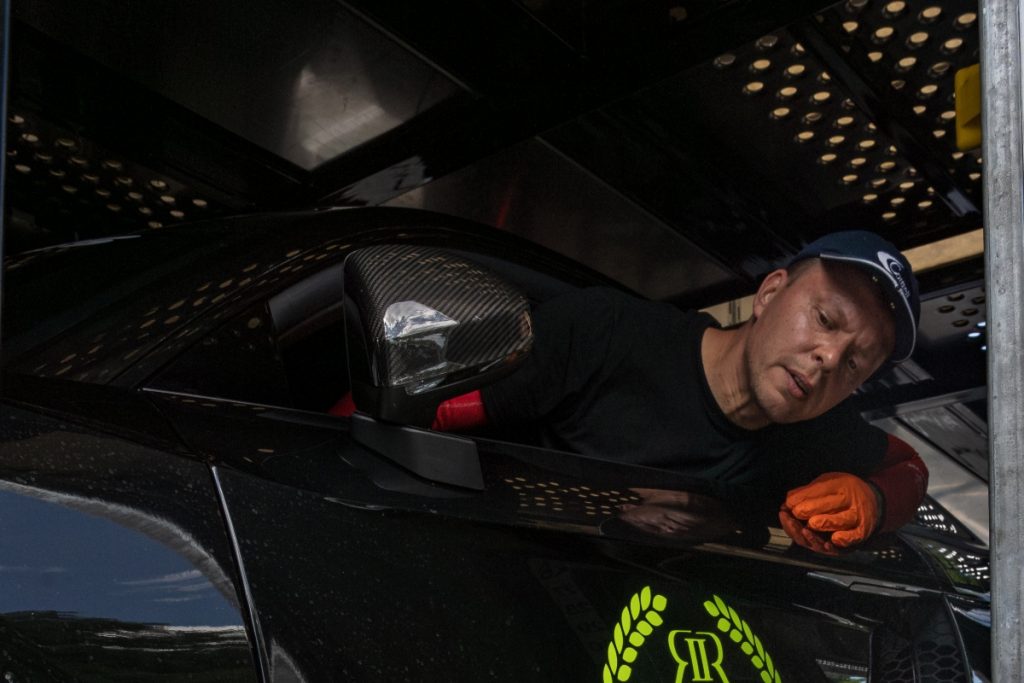
Here’s our step-by-step loading process for modified vehicles:
- Initial clearance measurement and photo documentation
- Selection of an appropriate ramp system based on vehicle specifications
- Installation of protective equipment (go-boards, ramp extensions) if needed
- Careful positioning of the vehicle for optimal approach angle
- Slow, controlled loading with constant clearance monitoring
- Secure positioning and tie-down using appropriate anchor points
- Final inspection and documentation of the loaded vehicle condition
Specialized Equipment Requirements
Modified car shipping demands equipment that goes far beyond what standard carriers use. The difference between safe transport and costly damage often comes down to having the right tools for the job.
Low-angle loading ramps are essential for most lowered vehicles. These longer ramps create gentler approach angles, preventing the front end from contacting the ramp during loading. We work exclusively with carriers who maintain these specialized ramps.
Hydraulic lift gates offer another solution for extremely low vehicles. These systems can pick up the entire vehicle without requiring it to drive up a ramp at all, eliminating approach angle concerns completely.
Adjustable tie-down systems allow us to secure vehicles at appropriate anchor points without putting stress on modified suspension components or body panels. Standard tie-down points might not be accessible or appropriate for modified vehicles.
| Equipment Type | Purpose | Benefits of Modified Cars |
| Low-Angle Ramps | Gentle loading approach | Prevents front splitter/bumper scraping |
| Hydraulic Lift Gates | No-ramp loading | Eliminates approach angle issues |
| Adjustable Tie-Downs | Flexible securing | Accommodates non-standard anchor points |
| Protective Padding | Component protection | Shields body kits and custom parts |
Enclosed vs. Open Transport for Modified Vehicles
The choice between enclosed and open transport becomes even more critical when dealing with modified vehicles. While open transport might be acceptable for stock cars, the additional investment in modifications usually justifies the extra protection of enclosed transport.
Enclosed carriers provide complete protection from weather, road debris, and environmental hazards. This protection is particularly important for custom paint jobs, vinyl wraps, and exposed aftermarket components that might be more vulnerable than stock parts.
The controlled environment inside an enclosed trailer also allows for more careful loading and unloading procedures. Without weather constraints, our drivers can take the extra time needed to properly load modified vehicles without rushing due to rain or other conditions.
Enclosed carriers also typically handle fewer vehicles at once, allowing for more individualized attention to each car’s specific needs. This is particularly beneficial for modified vehicles that may require unique loading or securing procedures.
Protecting Custom Body Kits and Aftermarket Components
Custom body modifications require special attention during transport because they often extend beyond the vehicle’s original dimensions and may not have the same impact resistance as factory components.
Wide-body kits present particular challenges because they increase the vehicle’s overall width, potentially creating clearance issues with the trailer’s wheel wells or side barriers. We carefully measure these dimensions and select trailers with appropriate internal clearances.
Front splitters and rear diffusers are highly vulnerable during loading and unloading. These components often sit very close to the ground and can be easily damaged by contact with ramps or trailer edges. We use protective padding and careful positioning to shield these parts.
Side skirts and rocker panels also need protection from tie-down straps and loading equipment. Our carriers use padded contact points and adjust tie-down positions to avoid putting pressure on these modified components.
Here are the key protection strategies we use for common modifications:
- Front splitters: Go-boards during loading, protective padding during transport
- Side skirts: Padded tie-down contact points, careful strap placement
- Rear diffusers: Extended departure angle planning, protective covering
- Wide body kits: Trailer clearance verification, side protection padding
- Custom wheels: Individual wheel covers, spoke protection
- Performance tires: Pressure monitoring, temperature control
Suspension System Considerations
Modified suspension systems pose unique challenges that require understanding how different setups behave during transport. Air ride systems, coilovers, and lowering springs all have specific considerations that affect transport safety.
Air suspension systems offer the advantage of adjustability, but they also require special handling procedures. We coordinate with vehicle owners to determine the optimal ride height for transport, balancing loading clearance with suspension component protection.
Coilover setups may allow temporary ride-height adjustment, but we’re careful not to make changes that could affect the vehicle’s handling characteristics. Any adjustments are thoroughly documented and coordinated with the owner.
Static lowering springs don’t offer adjustment options, so we focus on using appropriate loading equipment and techniques to work with the fixed ride height. These systems often require the most careful handling procedures.
| Suspension Type | Transport Considerations | Special Procedures |
| Air Suspension | Adjustable ride height | Coordinate optimal transport height |
| Coilovers | Potentially adjustable | Document any temporary changes |
| Static Springs | Fixed ride height | Specialized loading equipment required |
| Bags/Airbags | Pressure sensitive | Monitor and maintain proper pressure |
Documentation and Insurance Considerations
Proper documentation becomes even more critical when shipping modified vehicles, given their higher value and unique characteristics. We maintain detailed records of every modification and its condition throughout the transport process.
Our pre-transport inspection includes high-resolution photographs of all modifications from multiple angles. We also document any existing damage, no matter how minor, to prevent disputes upon delivery.
Transport insurance coverage for modified vehicles requires special attention because standard policies may not fully cover aftermarket modifications. We work with insurance providers who understand modified vehicle values and can provide appropriate coverage levels.
The documentation process also includes creating a detailed inventory of all modifications, their approximate values, and any special handling requirements. This information travels with the vehicle and provides crucial reference material for our drivers.

Working with Experienced Modified Car Carriers
The difference between successful modified car transport and costly damage often comes down to carrier experience. We maintain a network of carriers who specialize in modified vehicles and understand their unique requirements.
Our carrier qualification process includes verification of specialized equipment, training in modified vehicle handling, and a track record of successful transports. We don’t work with carriers who view modified cars as just another vehicle to load.
Experience with modified cars means understanding that these vehicles often require more time for loading and unloading. Our carriers plan their schedules accordingly and don’t rush the process to meet unrealistic delivery deadlines.
We also ensure our carriers understand the value of the vehicles they’re transporting. Modified cars often represent significant financial and emotional investments that can’t be easily replaced or repaired if damaged.
Common Mistakes to Avoid
Over the years, as we’ve specialized in shipping modified cars, we’ve seen numerous preventable mistakes that result in costly damage. Understanding these common car shipping errors can help you avoid them when selecting a transport service.
Using standard auto transport services that lack experience with modified cars is the most frequent mistake. These carriers often don’t recognize the special requirements until damage has already occurred.
Failing to properly document modifications before transport can lead to insurance disputes and coverage gaps. Always insist on comprehensive pre-transport documentation.
Choosing open transport to save money often proves to be a false economy when damage occurs. The additional cost of enclosed transport is minimal compared to the cost of repairing damaged modifications.
Not clearly communicating special requirements can result in carriers showing up without the appropriate equipment. Always discuss your vehicle’s specific needs in detail before booking transport.
Cost Factors for Modified Car Shipping
Modified car shipping typically costs more than standard vehicle transport due to the specialized equipment, additional time, and higher insurance coverage required. Understanding these cost factors helps you budget appropriately and avoid surprise charges.
The most significant car shipping cost factor is usually the choice of enclosed transport, which protects your modifications but comes at a premium over open transport. For most modified vehicles, this additional cost is justified by the protection provided.
Distance and route accessibility also affect costs, particularly for very low vehicles that may require specific types of carriers. Remote pickup or delivery locations may limit carrier options and increase costs.
Vehicle size modifications, such as wide-body kits or extended bumpers, may require larger trailers or special positioning, potentially affecting the number of vehicles that can be transported simultaneously.
Timeline Considerations for Modified Vehicle Transport
Modified vehicle transport often takes longer than standard auto transport due to specialized equipment and carrier requirements. We recommend booking at least 1–2 weeks in advance for domestic transport.
The loading and unloading process also takes more time for modified vehicles, which can affect overall delivery schedules. Our carriers plan for these extended timeframes to avoid rushing the process.
Weather conditions can have a greater impact on the duration of car transport, particularly for extremely low vehicles that may not be safely loadable in certain conditions. We monitor weather forecasts and adjust schedules as needed to ensure safe transport.
Your Modified Car Deserves Expert Care
Shipping your modified car doesn’t have to be a stressful experience when you work with specialists who understand the unique requirements of lowered and customized vehicles.
The key is choosing a transport service that has the experience, equipment, and commitment to handle your investment with the care it deserves.
At Dispatch Dudes, we’ve built our reputation on successfully transporting modified vehicles that other carriers consider too challenging or risky. Our specialized protocols for car shipping, trained carriers, and comprehensive protection measures ensure your custom build arrives in the same pristine condition it left.
Don’t trust your modified car to carriers who treat it like just another vehicle.
Contact us today to discuss your specific transport needs and receive a quote from modified car shipping specialists who understand what your vehicle means to you.
Pricing for modified car shipping varies based on vehicle specifications, distance, and transport options selected.