 Skip to content

Classic Car Transport
Dispatch Dudes arranges enclosed transport for classic, antique, collector and concours vehicles nationwide. We are a licensed auto transport broker — USDOT 3446819, MC-1120978 — and we assign carriers who move collector cars for a living, not general freight haulers taking a one-off.
Transport Options We Arrange
Every option below is arranged door to door — collected at your address and delivered to the destination address.
What classic car transport costs
Classic vehicles almost always move enclosed, which costs more than open transport. Single-car and soft-tie trailers sit at the top of the range.
Insurance: agreed value is the point most owners miss
A carrier’s cargo policy typically pays actual cash value — what a loss adjuster decides the car was worth. For a numbers-matching restoration or a documented survivor, that figure can sit far below what the car would actually fetch.
If your vehicle is insured on an agreed value policy through a specialist collector insurer such as Hagerty, American Collectors or Grundy, confirm in writing whether that policy extends to transit. Where it does not, ask the carrier for a certificate showing a cargo limit at or above your car’s appraised value before you release it. We will request it on your behalf.
How It Works
Step 1 – Request a Quote
Share your vehicle details, pickup location, destination, and preferred shipping dates. Our team provides a transparent, competitive quote with no hidden fees.
Step 2 – Carrier Assignment
Once you confirm your booking, we match your vehicle with a licensed, insured carrier servicing your route. We vet every carrier for compliance, safety, and reliability.
Step 3 – Vehicle Pickup
The carrier arrives at your location, completes a pre-transport inspection, and documents the vehicle’s condition before loading. You receive a copy of the inspection report.
Step 4 – Delivery & Final Inspection
A final inspection confirms your vehicle’s condition upon arrival. Our team stays in contact throughout transit to provide updates and answer any questions.
Equipment that matters for a collector car
- Soft straps over the tyres, never chains over the axles or suspension — chain tie-downs mark chrome, bend period suspension components and are the most common source of transit damage on pre-war cars
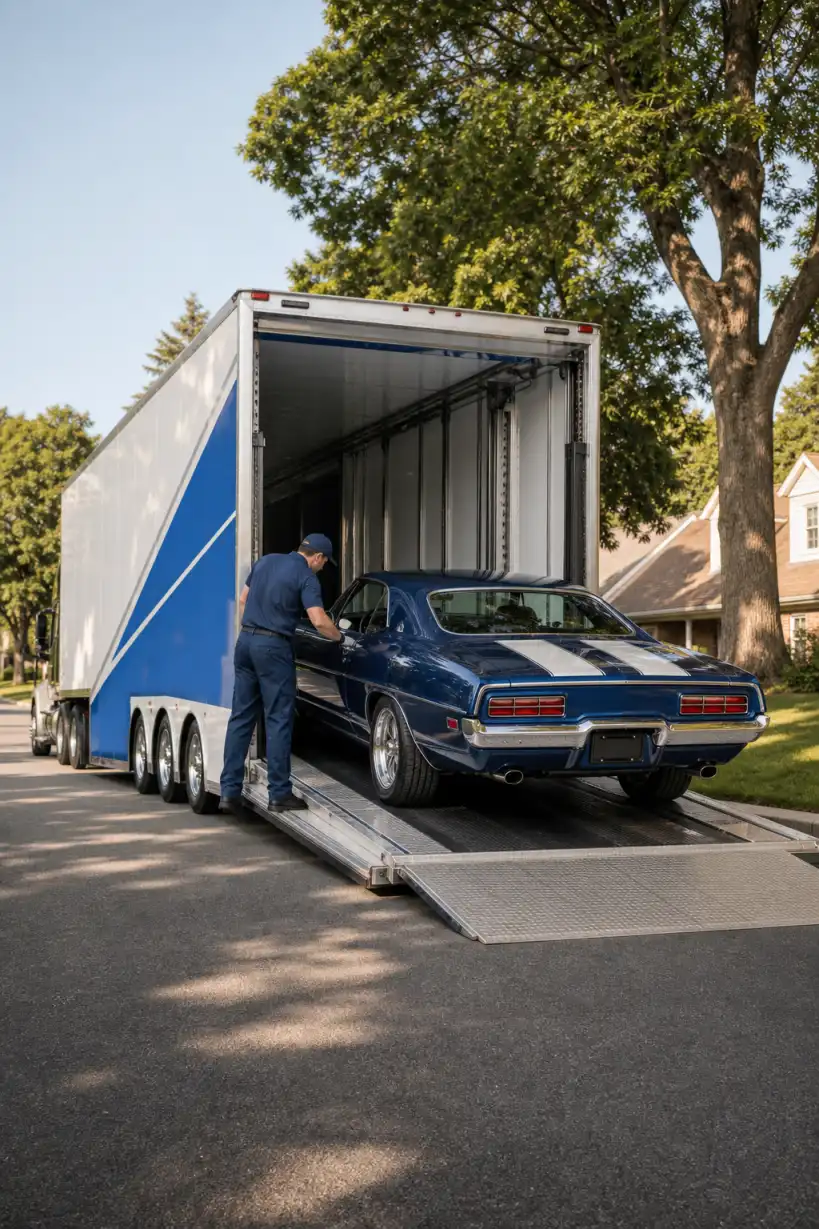
- Hydraulic liftgate rather than ramps, for anything under roughly 4–5 inches of ground clearance or with a period-correct low front valance
- Hard-side enclosed trailer for concours and auction vehicles; soft-side is adequate for drivers and restorations
- Climate consideration for cars with original interiors, lacquer paint or unrestored trim
Auction, barn find and non-running classics
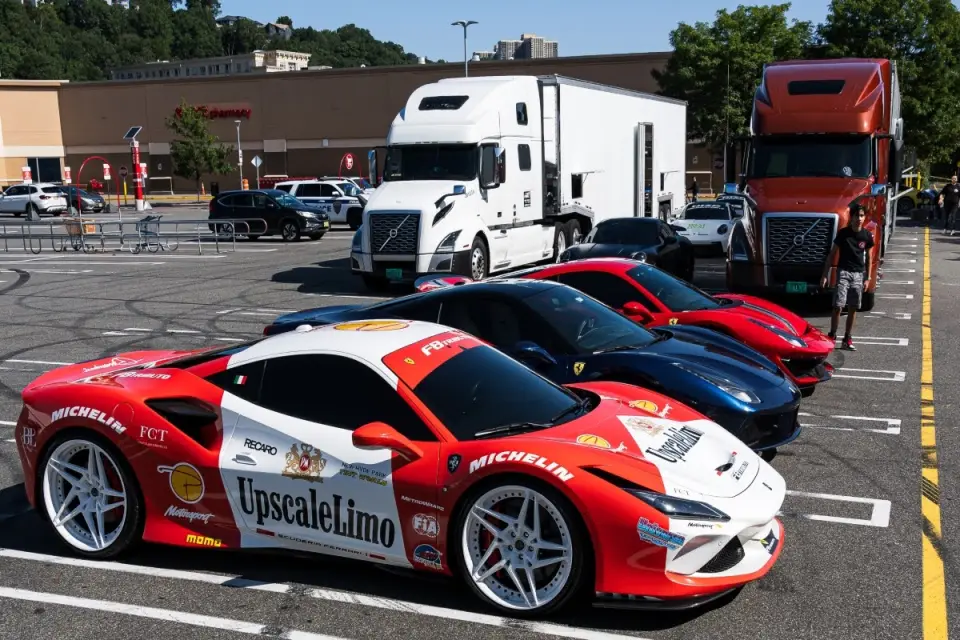
We move vehicles bought at Barrett-Jackson, Mecum, RM Sotheby’s and Hemmings listings, and we handle inoperable cars regularly — barn finds, seized engines, projects with no brakes. A non-running classic needs a winch-equipped enclosed carrier, which typically adds . Tell us at quote stage rather than at pickup; a carrier who arrives without a winch cannot load the car and the slot is lost.
Classic Car Shipping Cost Breakdown: What to Expect
Cost is the first question most owners ask, and the honest answer is that it depends on several real variables. Classic cars typically run higher than standard vehicles because of enclosed transport requirements and specialized handling. Pricing varies by distance, transport type, vehicle condition, and route demand.
Hidden fees are a real problem in this industry. Some carriers quote a base rate, then add fuel surcharges, oversized vehicle fees, or residential delivery charges at pickup. Published cost estimates vary widely across providers, and ranges differ significantly depending on distance and route. Always ask for a written quote that itemizes potential add-ons before you confirm.
The other trap is the lowest-quote bait. A quote that’s below every other estimate usually means the carrier is underbidding to lock you in, then adding fees, or the carrier assigned to your load is inexperienced because nobody qualified will take the job at that rate. Compare three or four quotes and look for the middle range, not the bottom.
| Factor | Effect on Price | Typical Range |
|---|---|---|
| Transport type (open vs. enclosed) | Enclosed costs 30–75% more | Pricing varies; request a quote for current rates |
| Distance | Per-mile rate decreases with longer hauls | Rates available on request; lower per mile over longer hauls |
| Vehicle size / weight | Larger or heavier cars cost more | Premium applies; varies by vehicle size |
| Non-running vehicle | Extra labor and equipment required | Surcharge applies; pricing varies by carrier |
| Expedited shipping | Priority scheduling premium | Varies widely; premium above standard rate applies |
| Seasonal demand | Spring/summer auction season drives prices up | Off-peak (fall/winter) typically 10–20% lower |
| Rural pickup or delivery | Limited carrier access raises cost | Location surcharge may apply; varies by route |
How to Verify a Carrier's Credentials Before You Book
Every legitimate carrier operating in the US has a USDOT number and an MC (Motor Carrier) number. These are required for legal interstate operation. Before you hand over a deposit, look up both numbers through the federal carrier registration database to confirm the carrier’s registration is active and their insurance is current.
Beyond that check, ask the carrier or broker directly for their complaint history and how many loads they’ve completed. Established carriers with real track records will have no problem providing references or documentation. If a carrier can’t or won’t share that information, that’s a serious warning sign.
A few other things worth confirming:
- Ask for the carrier’s certificate of insurance. It should show cargo coverage scaled to your vehicle’s declared value, not just a minimum liability policy.
- Confirm whether the booking is with a broker or a direct carrier. Brokers post loads to networks and carriers bid. That’s not automatically bad, but you want to know who is actually driving the truck.
- Avoid carriers who ask for full payment before pickup. Legitimate companies take a modest deposit upfront, with the balance due at delivery.
- Be skeptical of load boards like uShip for high-value classics. Open bidding attracts carriers of varying experience levels, and the lowest bid is rarely the right choice for a car that can’t afford a mistake.
Dispatch Dudes only works with fully insured, vetted carriers. We’re accredited by the BBB and recognized by Newsweek Readers Choice, which reflects the standard of care we hold our carrier network to. That said, it’s still smart practice to ask for carrier credentials on any shipment, regardless of who booked it.
How to Prepare Your Classic Car for Shipping
Good preparation protects the car and protects you. A thorough pre-shipment inspection, documented in photos, is your evidence if anything changes during transit. Take shots from every angle, including close-ups of any existing scratches, chips, or trim wear. Date-stamp the photos and store them somewhere accessible.
Here’s what else to handle before pickup day:
- Fluid levels: Keep the gas tank between a quarter and half full. Enough to move the car on and off the carrier, not so much that it adds unnecessary weight or leak risk. Check oil and coolant too.
- Battery: Make sure it’s charged and the terminals are secure. A dead battery at pickup creates delays and complicates loading for the driver.
- Alarm: Disable it or pull the fuse. Alarms that trigger during transit are a problem for drivers and other vehicles on the carrier.
- Loose parts: Secure or remove any exterior pieces that could vibrate off. Antennas, mirrors, custom trim, convertible tops — all of these need attention before the car goes on the trailer.
- Personal items: Remove everything from the interior. Carrier insurance covers the vehicle itself, not belongings inside it.
For classic cars specifically, note any quirks in writing for the driver. Does the parking brake need extra force? Is there a trick to starting a cold carburetor? Does the car pull left at highway speed? A brief note handed to the driver at pickup takes two minutes and can prevent real problems. Our detailed guide on preparing your car for shipping covers every step in depth, including a week-out timeline so nothing gets missed.
Frequently Asked Questions
Enclosed transport is the safest option for classic car shipping. It protects the vehicle from weather, road debris, and UV exposure during transit. For particularly rare or low-clearance vehicles, flatbed enclosed or single-car enclosed trailers with soft tie-downs and hydraulic lift gates offer the highest level of protection. Always confirm the carrier has insurance coverage scaled to your vehicle’s declared value before booking.
Enclosed transport for a coast-to-coast classic car shipment costs more than open transport, but most classic car owners choose enclosed for the protection it provides. Factors like vehicle size, pickup location, season, and any expedited scheduling requirements all affect the final price. Request a written itemized quote to avoid surprise fees.
Yes, but not every carrier accepts inoperable vehicles. Not all carriers accept non-running classics outright, and some charge a surcharge for the extra labor and equipment required. Flatbed enclosed carriers are usually the best fit for non-running vehicles since the flat deck eliminates the need to drive the car up a ramp. Always disclose the vehicle’s condition when requesting a quote.
Book at least two weeks out for standard enclosed transport. For expedited shipping or during peak auction season (spring and summer), booking three to four weeks ahead gives you better carrier selection and avoids rush premiums. Same-week bookings are possible but usually cost more and give you less control over which carrier gets assigned. Flexibility on your pickup window, even just two to three days, significantly improves your options.
All licensed carriers are required to carry cargo insurance, but coverage limits vary widely. For high-value classics, always ask for the specific cargo coverage limit in writing. If the standard policy doesn’t match your car’s value, purchase supplemental coverage through your own insurer before the shipment departs.
A broker coordinates transport by posting your shipment to a carrier network and assigning a vetted carrier to the load. A direct carrier owns the trucks and employs the drivers. Brokers typically offer more service options and flexibility. Direct carriers offer more direct accountability for driver quality. Reputable brokers like Dispatch Dudes vet their carrier network carefully, so the usable difference for most classic car owners comes down to who you trust to manage the process.
THREE Easy steps
How do I book with the Dispatch Dudes?
Step 1
Get A Quote
Give us a call, email, or request a quote below to get started with the most premium auto-shipments.
Step 2
Confirm Your Booking
Verify your pick-up & drop-off dates, then place your order.
Step 3
Get Your Car Shipped
We can have your car scheduled for shipment in as little as 24 hours.
Get a classic car transport quote
Tell us the vehicle, its condition and whether it runs, and we will price it against carriers who specialise in collector vehicles. No deposit until a carrier is assigned and their credentials are sent to you.
Call 754-201-8264 or email support@dispatch-dudes.com, Monday–Friday 9am–5pm ET.