Best Enclosed Car Transport Services in 2026

Most car shippers claim nationwide enclosed transport, but only a handful actually deliver door-to-door service, expedited pickup, and transparent insurance in one package. If your vehicle is a luxury car, a classic, an exotic, or anything you can’t afford to scratch, the carrier you choose matters as much as the trailer itself. Here are eight types of enclosed transport services worth knowing, plus our top pick for every situation.

1. Dispatch Dudes , Our Top Pick for Enclosed Car Transport

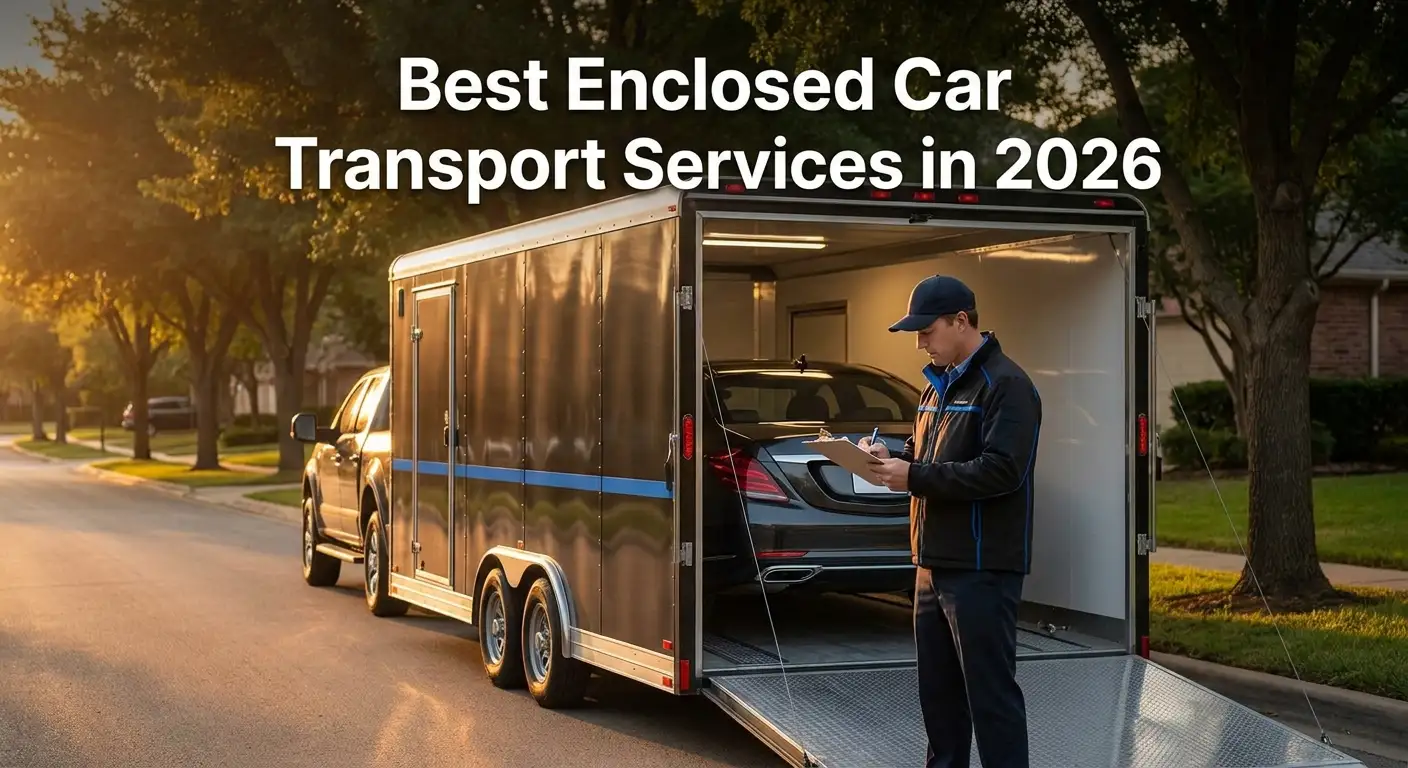
A photorealistic scene of a sleek enclosed car transport trailer parked on a wide suburban street at golden hour, a driver in a branded uniform conducting a vehicle inspection with a clipboard, luxury car partially visible at the trailer door, warm ambient light, cinematic composition. Alt: enclosed car transport service driver inspecting vehicle before loading into enclosed trailer.

Dispatch Dudes is our top pick for enclosed car transport because it’s one of the rare providers that checks every box: door-to-door delivery, expedited scheduling, an instant quote system, and fully insured carriers operating across all 48 contiguous states. The company is headquartered in Boynton Beach, FL, and holds BBB accreditation plus recognition from Forbes Business Council and Newsweek Readers Choice.

What sets us apart in this market is the combination of features most competitors split across different tiers. Our research found that only 3 of 11 major providers offer both door-to-door service and an expedited option together. Dispatch Dudes is one of those three. That matters when you’re relocating fast, buying a car at auction, or shipping a vehicle to a show with a hard deadline.

The booking process is built for speed. Get an instant quote online, confirm your pickup and delivery windows, and we can have your vehicle scheduled in as little as 24 hours. Carriers use soft tie-down straps, padded interior walls, and hydraulic lift gates for low-clearance vehicles, so the car arrives exactly as it left.

Our enclosed car transport service covers luxury cars, classic automobiles, exotics, motorcycles, and modified vehicles. Pricing isn’t listed flat on the site because every shipment is unique, but the instant quote tool generates a real number in seconds based on your route, vehicle, and timing.

The one caveat: if your budget is the only factor and your car is a standard daily driver, open transport will cost less. Enclosed is the right call when the vehicle’s value or condition makes the premium worthwhile.

2. Boutique Enclosed Transport Carriers , White-Glove Specialists

Boutique enclosed transport carriers focus on a narrow client base: owners of rare, high-value, or one-of-a-kind vehicles who need more than a trailer. These providers assign dedicated coordinators to each shipment, offer custom pickup and delivery windows, and use an elite carrier network with documented experience handling exotic sports cars and luxury flagships.

The white-glove category goes beyond standard enclosed shipping in five specific ways. First, a dedicated specialist manages your booking from quote to delivery. Second, specialized padding and securing techniques protect delicate components. Third, access to an elite carrier network means your car isn’t going on a load board. Fourth, flexible scheduling fits around your timeline. Fifth, the equipment is selected based on your specific vehicle’s needs, whether that’s a hydraulic loading system for low-clearance cars or climate-controlled transit for a sensitive vintage piece.

Climate-controlled environments add meaningful protection for vintage vehicles during transit, since temperature swings and humidity can affect rubber seals, leather interiors, and paint finishes on older cars. That’s a real differentiator from standard enclosed shipping, which controls weather exposure but not internal climate.

Who is this for? Collectors moving a show car to a regional event, owners of high-value or six-figure vehicles, and dealerships transferring inventory between showrooms. The service costs more than standard enclosed transport, but for a vehicle worth six or seven figures, the premium is a small fraction of the replacement cost.

If you’re comparing options at this level, Dispatch Dudes offers a premium enclosed service with dedicated advisor support. Worth getting a quote before committing to a boutique-only carrier.

3. Exotic and Supercar Enclosed Shippers , High-Value Protection

Exotic and supercar transport is its own sub-market. A McLaren, Lamborghini, or Bugatti isn’t just expensive. It also sits inches off the ground, has a front splitter that can clip a loading ramp, and may have carbon fiber components that don’t respond well to conventional tie-down pressure points.

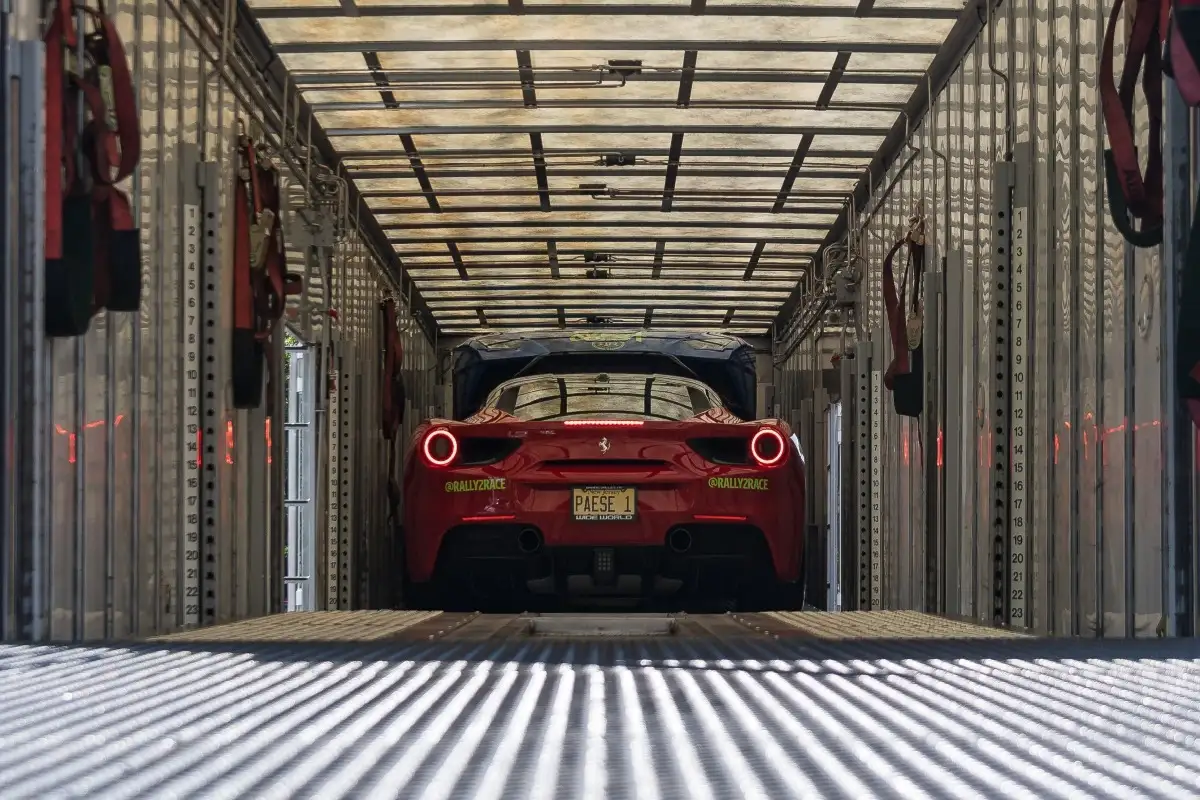
Specialists in this category carry rubber pads to cushion transition points on the ramp, use over-wheel ratchet straps that hold the car without touching the body, and often drive single or dual-car liftgate trailers. That level of attention is the standard at dedicated exotic carriers, not the exception.

Insurance coverage is where this category separates sharply from the mainstream. Many enclosed transport providers disclose only minimal cargo coverage limits. That figure is nearly irrelevant for a high-value supercar. Look specifically for carriers that disclose higher cargo coverage limits. Some providers advertise coverage up to $100,000, which is still well below the value of many exotic vehicles. For anything above that, ask your carrier about excess coverage or verify that your own collector car insurance extends during transport.

The loading process for an exotic also takes longer. Low-profile cars need the trailer’s dump valve engaged to lower the deck, small rubber pads placed at transition points, and a slow, careful approach. Rushing that step is how front splitters get damaged. Good exotic transport operators plan extra time at each stop. Speed is never the goal.

Dispatch Dudes works with carriers equipped for low-clearance exotic vehicles, including liftgate-equipped trailers and drivers experienced with high-value shipments. If you’re moving a supercar, request the liftgate option when you get your quote.

4. Classic and Vintage Car Transport Companies , Enclosed Soft-Ride Options

Classic and vintage car transport has specific demands that don’t always match exotic car needs. A 1965 Mustang fastback or a 1957 Bel Air may not sit as low as a Lamborghini, but it has decades of wear on its frame, original rubber that can crack under stress, and a paint job that reacts differently to tie-down contact than modern clearcoat.

The key equipment distinction here is soft-ride suspension and soft-sided versus hard-sided trailers. Hard-sided enclosed trailers offer maximum protection from the elements and debris. Soft-sided enclosed trailers use weather-resistant tarp material and offer more loading flexibility, which some restorers prefer for cars with very unusual dimensions or protruding chrome. For most classic car owners, a hard-sided trailer with air-ride suspension is the better call on long hauls.

Drip pans are a usable detail that matters more with older vehicles. As shown in a walkthrough of a Kentucky enclosed trailer, the upper deck includes drip pans that prevent oil or coolant from an upper-deck vehicle from dripping onto the car below. Older engines leak more often. If your classic is riding on the lower deck, confirm whether the trailer has this feature.

If you want more detail on finding the right carrier for a specific era of vehicle, the guide on classic car shipping services breaks down what to look for by vehicle type and value range.

Prep matters too. Before loading, clean the exterior, remove all personal items from the cabin, document the current condition with photos, and keep the fuel level at about a quarter tank. Disable any alarm system and provide any special handling instructions specific to your model. That last point matters most for cars with unusual door hinges, trunk locks that stick, or fuel systems that need special attention during tilt-loading.

Key Takeaway: For classic and vintage cars, confirm the trailer has air-ride suspension and drip pan protection before booking, and document your vehicle’s condition thoroughly with photos before pickup.

5. Low-Ground-Clearance and Modified Vehicle Shippers , Lift-Gate Equipped

A photorealistic close-up of a hydraulic lift gate on an enclosed auto transport trailer being lowered to ground level on a residential street, a lowered modified sports car staged nearby ready to be loaded, sunlight reflecting off the car's paint, realistic detail and depth. Alt: hydraulic lift gate on enclosed car transport trailer for low ground clearance vehicles.

Lowered cars, slammed trucks, wide-body kits, and heavily modified builds present a loading problem that standard ramp trailers can’t solve safely. When a car’s front splitter sits 2 inches off the ground, a loading ramp creates a gap that will contact and damage the front lip every time.

Liftgate-equipped enclosed carriers solve this. The hydraulic liftgate lowers flat to the ground, the car rolls onto it with zero ramp angle, and the gate lifts the vehicle up to the trailer deck. No scraping. No clearance guessing. These trailers typically carry two to three vehicles at a time, which means more individual handling attention per car than a standard multi-car enclosed trailer.

Modified vehicles add another layer of complexity: non-standard weight distribution, wider track widths, or roll cages that change how a car responds to tie-downs. A carrier experienced with modified builds will know to account for these. Ask specifically about their experience with modified vehicles when you get quotes. A yes-or-no answer tells you a lot about their actual carrier network versus what they promise on their booking page.

The dump valve system is worth understanding here. As explained in a live trailer walkthrough from East Coast Truck and Trailer Sales, the dump valve drops the entire trailer air suspension to its lowest position, giving extra clearance between the tire and the trailer frame during tight loading situations. The switch has three positions: all the way down for loading, center for ride height, and all the way up for crossing railroad tracks or steep driveways. Carriers who know how to use it correctly protect your car from contact damage that looks minor but adds up quickly.

If you’re shipping a lowered or modified vehicle and aren’t sure which trailer type you need, the team at Dispatch Dudes can match your specific vehicle to the right carrier configuration. The instant quote tool captures vehicle dimensions, and our advisors follow up with carrier options suited for your setup.

6. Auction and Dealer Enclosed Transport Fleets , Volume Shipping

Auction houses and dealerships operate on a different model than individual owners. They’re moving multiple vehicles per week, often on tight timelines tied to auction dates or showroom inventory cycles. Enclosed transport at volume requires a carrier fleet with consistent availability on specific routes, not just one-off availability from a load board.

Dealers and auction buyers who regularly purchase vehicles at major collector car auction events have specific logistics needs. An enclosed carrier that handles collector car events understands tight pickup windows, knows how to coordinate with event staff, and has the capacity to load multiple lots on the same trip. For dealers managing a luxury inventory, the ability to schedule recurring transport on fixed routes is worth more than a slightly lower per-car rate from an inconsistent provider.

Volume pricing structures vary. Some enclosed carriers offer flat-rate contracts for dealers moving a set number of vehicles per month. Others price per shipment with a volume discount applied at invoicing. Either way, the math changes significantly from individual consumer pricing. A dealer moving 10 enclosed shipments a month at even a modest discount per unit saves meaningfully over a year.

One usable note for auction buyers: after winning a vehicle, you typically have a limited window to arrange transport before storage fees start. Carriers who work the auction circuit know this timeline and can prioritize pickup accordingly. Ask any provider specifically about their auction transport experience and typical pickup lead time before committing.

Dispatch Dudes works with dealers and auction buyers alongside individual vehicle owners. Our expedited scheduling option is particularly useful for auction purchases where pickup timing isn’t flexible.

7. Snowbird and Seasonal Enclosed Shippers , Florida and Sun Belt Routes

Snowbirds who drive their own vehicles between the Northeast and Florida know the wear that trip puts on a car. Snowbirds who ship their cars know it’s often the smarter call, especially for higher-value vehicles that don’t need hundreds of highway miles of exposure twice a year.

Florida and Sun Belt route corridors have their own seasonal demand patterns. Peak northbound volume runs March through April as seasonal residents return home. Peak southbound volume runs October through November as they head back. Booking outside those windows usually means better pricing and more carrier availability. Inside those windows, carriers fill up fast and prices reflect it.

Enclosed transport makes particular sense on Florida routes for vehicles with low-clearance or fresh paint. I-95 through the Carolinas and Georgia has road debris and weather exposure that open carriers can’t avoid. An enclosed trailer keeps the car sealed for the full run.

Door-to-door service is the usable choice for snowbirds. If your home has a standard driveway and access for a large vehicle, the carrier picks up directly. If not, they’ll coordinate a nearby pickup point. Either way, you fly ahead and the car arrives at the destination, often within a few days.

For snowbirds shipping luxury or collector vehicles on Florida routes, Dispatch Dudes offers enclosed transport with door-to-door pickup on the FL-to-Northeast corridor and expedited scheduling for owners who need the car to arrive before a specific date. Our dedicated advisors can confirm typical transit times for your specific route when you request a quote.

Readers who want deeper insight into planning vehicle builds and adventure rigs for long-distance trips may find useful context in enthusiast publications covering overlanding and specialty vehicle preparation.

8. Expedited Enclosed Transport Services , Priority Pickup and Delivery

Standard enclosed transport works on the carrier’s schedule. You give a first-available date, and pickup happens when a carrier on the right route has a slot. For most shipments, that’s fine. When time is tight, it isn’t.

Expedited enclosed transport prioritizes your vehicle in the carrier matching process. Instead of waiting for a standard slot, the broker or dispatcher searches for a carrier who can work with your specific window, often achieving pickup within one to two days of your first available date. The tradeoff is cost. Expedited service carries a premium over standard pricing, but the spread varies by route, season, and how tight your window actually is.

The usable uses are clear. A relocation with a hard start date. An auction vehicle that needs to arrive before a show. A vehicle sale where the buyer is waiting. In any of these cases, the cost of expedited service is small compared to the cost of a missed deadline.

Dispatch Dudes offers expedited enclosed transport as a standalone option. When you book expedited, our team prioritizes carrier matching and confirms a pickup window that fits your schedule. We can have a vehicle scheduled in as little as 24 hours in many markets. That’s not a guarantee for every route and every timing combination, but it’s a realistic outcome for most major metro-to-metro lanes.

One thing worth knowing: expedited pickup timing is more controllable than expedited delivery timing. Route conditions, weather, and traffic can shift final delivery by a day. Build that margin into your planning if you have a hard delivery deadline.

Pro Tip: When booking expedited enclosed transport, give the dispatcher your actual hard deadline, not just your preferred date. Knowing the real constraint helps them find the right carrier faster.

Open vs. Enclosed Car Transport: Side-by-Side Comparison

The choice between open and enclosed transport comes down to the vehicle’s value, its susceptibility to weather and debris, and your budget. Here’s how the two options compare across the factors that matter most to most vehicle owners.

Enclosed carriers originated partly from the need to protect show cars and auction vehicles, the same use case where enclosed transport earns its premium today.

Factor Open Transport Enclosed Transport
Weather protection None — vehicle exposed during transit Full — sealed trailer blocks rain, sun, salt
Road debris risk Present — rock chips and dust possible Minimal — hard-sided trailer blocks debris
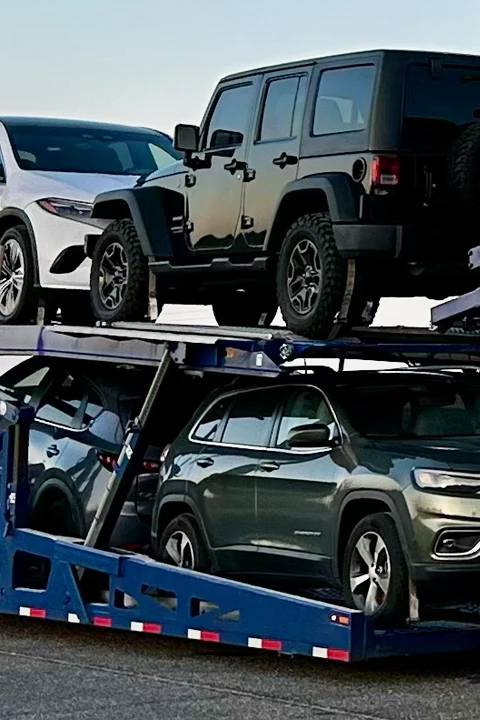
Carrier capacity 7 to 10 vehicles per load 2 to 6 vehicles per load
Typical cost premium Base rate 30 to 50% more than open
Best for Standard vehicles, everyday drivers Luxury, classic, exotic, modified vehicles
Availability High — most carriers run open trailers Moderate — fewer enclosed carriers in network
Insurance exposure Covered, but more debris risk Covered, less debris and weather risk
Loading method Drive-on ramps Ramp or hydraulic liftgate

For about 90% of vehicles shipped in the US, open transport is the usable default. It’s faster to arrange, cheaper, and perfectly safe for standard cars. Enclosed transport is the right call when your vehicle’s condition or value makes the additional cost a reasonable insurance policy against the small but real risks open transport carries.

How to Choose the Right Enclosed Car Transport Service

Not all enclosed carriers are the same, and the term “nationwide enclosed transport” covers a wide range of actual service quality. Here’s what to verify before you book.

Verify the carrier’s USDOT number

Every motor carrier operating in the US is required to register with the Federal Motor Carrier Safety Administration. Ask for the USDOT number and check it at the FMCSA’s official carrier lookup tool to confirm the carrier is licensed and in good standing. A broker who can’t provide this is a red flag.

Ask about actual insurance limits

This is the most important question most people don’t ask. Standard cargo insurance floors are common across the industry, and that baseline coverage is not meaningful protection for a high-value car. Ask specifically what the cargo coverage limit is on your shipment, not just that the carrier is “fully insured.” For high-value vehicles, confirm whether the carrier’s policy or your own collector car insurance covers the gap.

Confirm door-to-door service

Some providers quote terminal-to-terminal pricing but present it as a comparable alternative to door-to-door. Know which one you’re getting. Terminal drop-off means you drive the car to a staging lot and pick it up from another lot at the destination, adding time and exposure on both ends.

Check for liftgate availability if needed

If your vehicle sits low, ask explicitly whether the assigned carrier has a hydraulic liftgate. Don’t assume the carrier will mention it if your car needs it. Specify your ride height or any ground clearance concerns when booking.

Get everything in writing

A solid booking confirmation includes the pickup window, delivery estimate, carrier name, insurance details, and total cost with no hidden fees. If the company is vague about any of these before you commit, that vagueness won’t improve after you pay.

Dispatch Dudes provides all of this at booking, including carrier insurance documentation and a clear pickup confirmation. Our instant quote gives you a real number, not a bait-and-switch estimate that changes at dispatch.

Frequently Asked Questions

How much does enclosed car transport cost compared to open?

Enclosed car transport typically costs 30 to 50 percent more than open transport for the same route. Pricing varies by distance, trailer type, and scheduling, with liftgate service, expedited scheduling, and single-car trailers pushing costs higher. Get an instant quote for your specific route to get an accurate number.

Is enclosed car transport worth it for a luxury car?

Yes, for most luxury, exotic, and classic vehicles it’s worth it. The premium protects against weather exposure, road debris, and the handling risks that come with an open multi-car trailer. For a vehicle worth $80,000 or more, the cost difference between open and enclosed transport is small relative to the potential repair cost from a single stone chip or water intrusion event during transit.

How long does enclosed car transport take?

Transit time depends on distance and route. Short hauls of 1 to 200 miles typically complete in 1 to 2 days. Mid-range shipments of 200 to 600 miles usually take 2 to 4 days. Long-distance runs of 1,500 miles or more can take 5 to 9 days. Expedited service compresses pickup timing but doesn’t always change transit time significantly once the carrier is en route.

What vehicles need enclosed transport?

Enclosed transport is standard for luxury cars, exotic and supercar models, classic and vintage automobiles, and heavily modified vehicles with low ground clearance. It’s also preferred for vehicles with fresh paint or restorations, collector cars, and any vehicle where road debris or weather exposure during transit would be an unacceptable risk. Motorcycles and powersports equipment also ship well in enclosed trailers.

Can I ship a non-running car in an enclosed trailer?

Yes. Enclosed carriers equipped with hydraulic liftgates can load non-running vehicles without ramps or forklifts in most cases. Carriers typically add a surcharge for non-running vehicles because of the extra handling time. Confirm the carrier’s liftgate weight capacity matches your vehicle’s weight before booking, and let them know upfront that the car doesn’t run so they can plan accordingly.

How do I verify an enclosed carrier’s insurance before booking?

Ask for the carrier’s USDOT number and check their insurance status through the federal carrier safety database. Request a certificate of insurance showing the cargo coverage limit before your vehicle is loaded. Confirm whether your own auto or collector car insurance policy extends coverage during transport, and ask the carrier specifically what their per-vehicle cargo limit is, not just whether they’re insured.
Wrapping Up

If your vehicle deserves better than an open trailer and an estimated delivery window, Dispatch Dudes is the provider we recommend first. We offer door-to-door enclosed transport, expedited scheduling, and fully insured carriers nationwide, with an instant quote so you know your actual cost before committing. Get your enclosed transport quote and we can have your vehicle scheduled within 24 hours.

Leave a Comment

Your email address will not be published. Required fields are marked *

Scroll to Top