 Skip to content

Door-to-Door Car Shipping
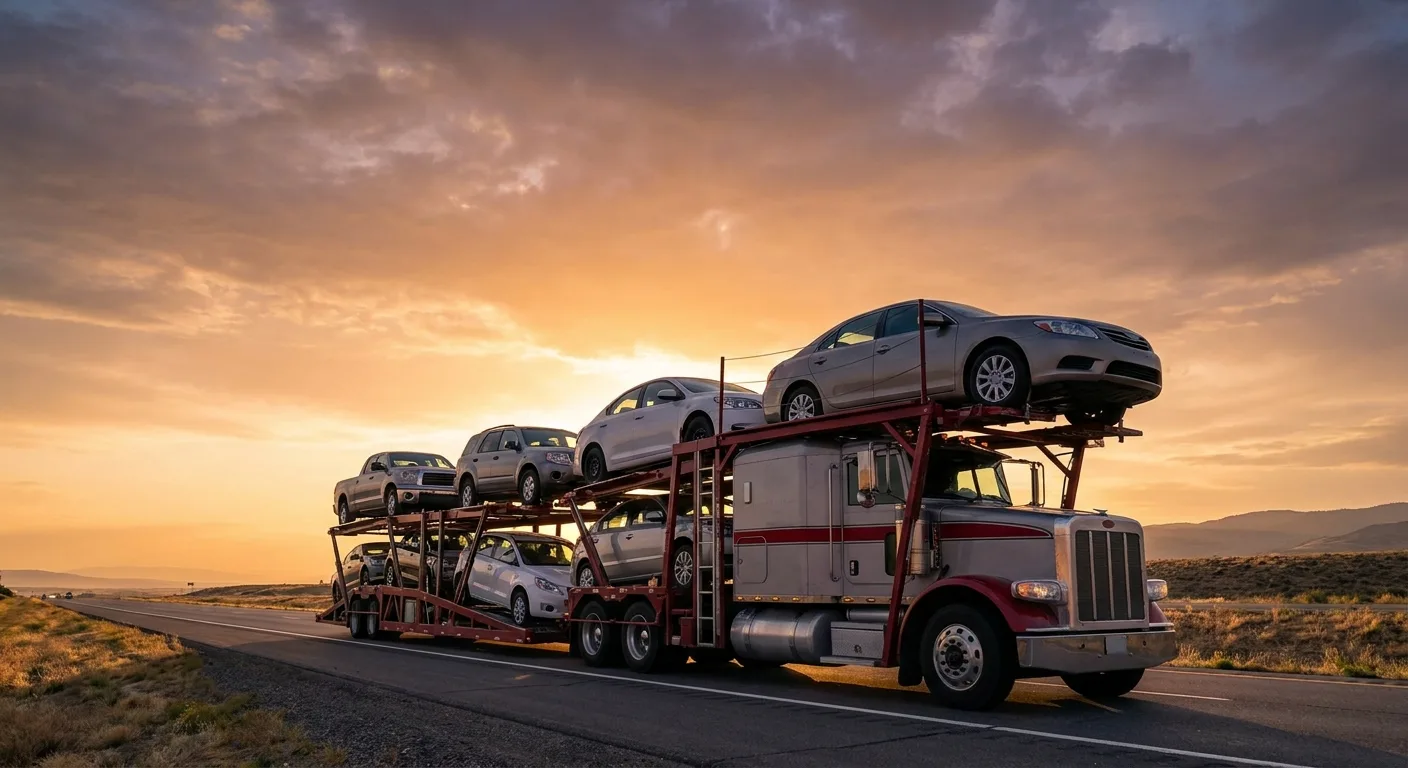
Door-to-door car shipping means the carrier collects your vehicle at your address and delivers it to your destination address — no terminal drop-off, no storage lot, no second trip. It is how the overwhelming majority of vehicles now ship, and it is what we arrange by default.
Dispatch Dudes is a licensed auto transport broker — USDOT 3446819, MC-1120978.
Transport Options We Arrange
Every option below is arranged door to door — collected at your address and delivered to the destination address.
What door-to-door shipping costs
Door-to-door is usually cheaper overall than terminal-to-terminal once you account for terminal storage fees and the cost of getting yourself to and from the depot.
| Door-to-door | Terminal-to-terminal | |
|---|---|---|
| Collection | Your address | You drive to a depot |
| Storage fees | None | Often charged per day |
| Handling | Loaded once, unloaded once | Extra load/unload at each terminal |
| Timing | Scheduled window with you | Tied to terminal hours |
| Best for | Almost everyone | Flexible timing, cost-sensitive, near a depot |
What “door” realistically means — and why honesty here matters
A car hauler is 75 to 80 feet long and can weigh 80,000 lb loaded. There are streets it physically cannot enter, and a carrier who promises otherwise is either going to fail or damage something.
Your driver will get as close to your address as is legal and safe. Where they cannot reach the door, they will arrange to meet you at a large nearby lot — typically a supermarket, shopping centre or similar — usually within a few minutes’ drive. Common reasons this happens:
- Narrow residential streets or tight cul-de-sacs with no turning radius
- Low-hanging branches or overhead cables below the trailer’s clearance
- Weight-restricted roads and bridges, or posted no-truck routes
- HOA or municipal restrictions on commercial vehicles in residential areas
- Steep driveways, speed bumps or gated complexes with limited access
We tell you this before you book rather than on the day. If your address is likely to be a problem, we will say so at quote stage.
How It Works
Step 1 – Request a Quote
Share your vehicle details, pickup location, destination, and preferred shipping dates. Our team provides a transparent, competitive quote with no hidden fees.
Step 2 – Carrier Assignment
Once you confirm your booking, we match your vehicle with a licensed, insured carrier servicing your route. We vet every carrier for compliance, safety, and reliability.
Step 3 – Vehicle Pickup
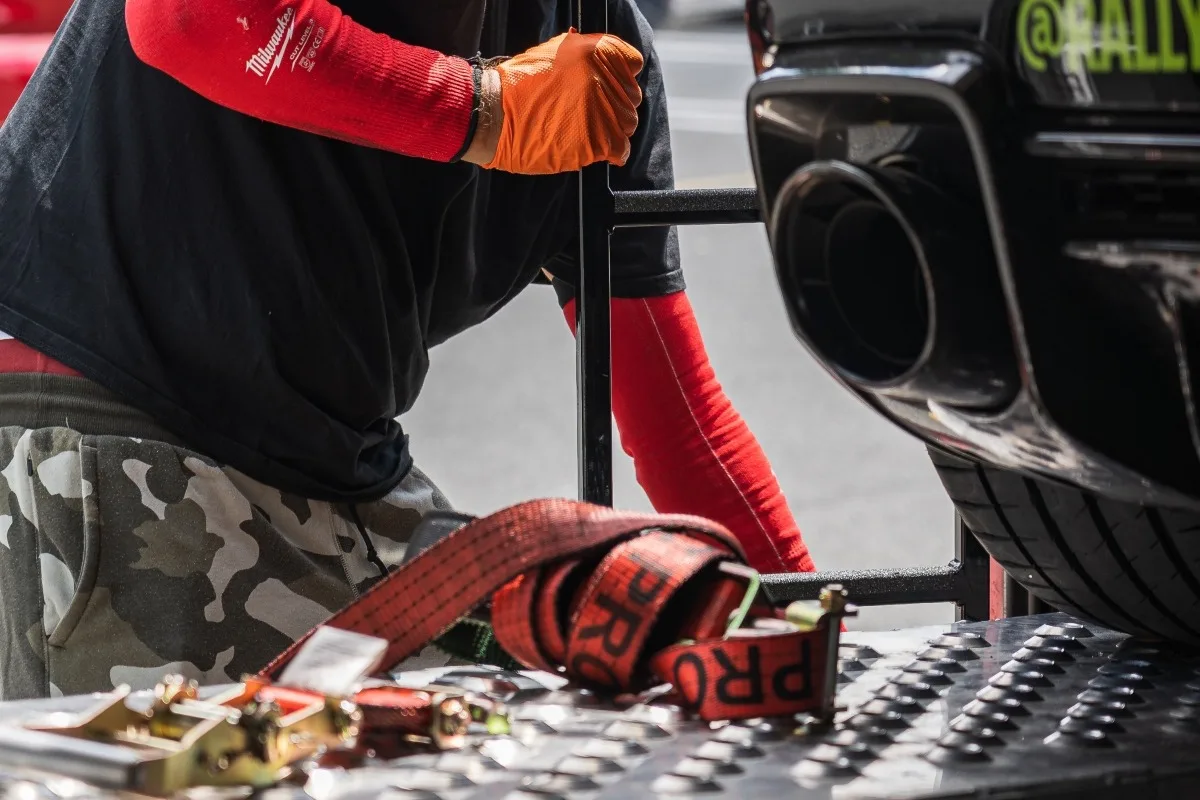
The carrier arrives at your location, completes a pre-transport inspection, and documents the vehicle’s condition before loading. You receive a copy of the inspection report.
Step 4 – Delivery & Final Inspection
A final inspection confirms your vehicle’s condition upon arrival. Our team stays in contact throughout transit to provide updates and answer any questions.
The Bill of Lading — the document that decides any claim
At collection the driver completes a Bill of Lading (BOL) recording your vehicle’s condition, and you both sign it. The same document is signed again at delivery. If damage occurs in transit, the difference between those two inspections is what a claim rests on.
Photograph the vehicle from every angle at both ends, in daylight, before signing. Do not sign a delivery BOL marked “clean” until you have actually walked around the car.
What to Look For When Choosing a Door-to-Door Car Shipping Service
Most shoppers compare price first. That’s understandable, but it’s the wrong place to start. Here’s what actually separates a good experience from a stressful one.
Insurance coverage, and what it actually covers
Auto haulers are federally required to carry liability insurance, but that policy protects the public from the truck , not your vehicle on the trailer. Your vehicle is covered under the carrier's cargo insurance, which is a separate policy. Federal cargo minimums can be as low as per vehicle, which won't come close to replacing a modern car. According to Progressive's official guidance on shipping insurance , it's your respons
The Bill of Lading, your most important document
Before your vehicle is loaded, the driver should inspect it with you and document every scratch, dent, and scuff on a Bill of Lading. At delivery, a second inspection happens. If new damage appears, it must be recorded on the delivery BOL before you sign. Signing a clean report without noting damage makes a later claim very difficult to win.
Broker vs. carrier, know who you're actually dealing with
Most companies in this space are brokers: they match you with a third-party carrier. That's not inherently bad, but it means the quality of your actual transport depends on which driver gets assigned. Providers that use private, vetted networks , rather than open load boards , give you more consistency. Ask directly whether the company uses its own drivers or assigns from a public marketplace.
Pricing transparency
Our research across 21 providers found that only one company publicly disclosed a price range. That's a real problem when you're trying to budget. If a provider won't give you a ballpark without running a full quote, that's fine , but make sure the quote is itemized. Expedited fees, enclosed transport premiums, and non-running vehicle surcharges should all appear as line items, not buried in a total. Open carrier transport: pr
Frequently Asked Questions
Door-to-door car shipping costs vary based on distance, vehicle size, transport type, seasonality, and route demand. Prices differ between open and enclosed options, with enclosed generally higher. Expedited service may incur additional fees. Request an itemized quote to see each cost component clearly.
Door-to-door means the carrier picks up and delivers as close to your address as safely and legally possible. If your street is too narrow for a large transport truck, the driver will arrange a nearby meeting point , a parking lot or wide street , rather than skip the delivery. This is standard practice and doesn’t mean you’ll need to travel far from your home.
Your vehicle is covered by the carrier’s cargo insurance during transport, not the hauler’s liability policy. Cargo minimums under federal rules can be as low as per vehicle, so it’s important to confirm the carrier’s actual coverage limit before you book. Some brokers also offer optional gap protection plans. Your personal complete auto policy may provide backup coverage in certain situations.
Most cross-country shipments take 7 to 10 days. Shorter routes of 500 miles or less typically take 1 to 3 days. Weather, carrier availability, and route demand can all affect the timeline. Expedited shipping can reduce transit time significantly but costs more. Ask your provider for a written delivery estimate before you confirm the booking.
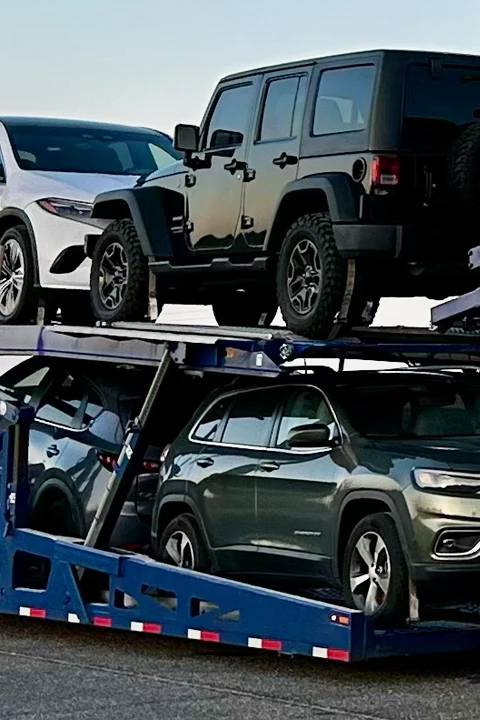
Open transport loads your vehicle on an uncovered multi-car trailer , the most common and affordable option, used for everyday vehicles. Enclosed transport puts your car inside a covered trailer, protecting it from weather and road debris. Enclosed costs 40 to 75% more than open but is recommended for high‑value vehicles, classic cars, and any vehicle with show‑quality paint or finishes.
You don’t have to be present personally, but someone must be available at both pickup and delivery , at least 18 years old , to inspect the vehicle and sign the Bill of Lading. That document is your primary protection if damage occurs. Never sign a clean delivery report without first comparing the vehicle’s condition to the pickup inspection record.
THREE Easy steps
How do I book with the Dispatch Dudes?
Step 1
Get A Quote
Give us a call, email, or request a quote below to get started with the most premium auto-shipments.
Step 2
Confirm Your Booking
Verify your pick-up & drop-off dates, then place your order.
Step 3
Get Your Car Shipped
We can have your car scheduled for shipment in as little as 24 hours.
Get a door-to-door quote
Give us both addresses and your date window and we will tell you upfront whether a full door delivery is realistic at either end. No deposit until a carrier is assigned.
Call 754-201-8264 or email support@dispatch-dudes.com, Monday–Friday 9am–5pm ET.