 Skip to content

Shipping an antique car is nothing like shipping a daily driver. One scratch on irreplaceable paint, one wrong tie-down point on a 1934 Cadillac, and you’ve got a damage claim that no standard carrier policy will fully cover. We reviewed antique car shipping options across the market and found that most collectors are flying blind when it comes to actual insurance limits and carrier qualifications. Here are the ten best options, starting with our top pick, and what each one actually does well.
1. Dispatch Dudes , Our Top Pick for Antique Car Shipping
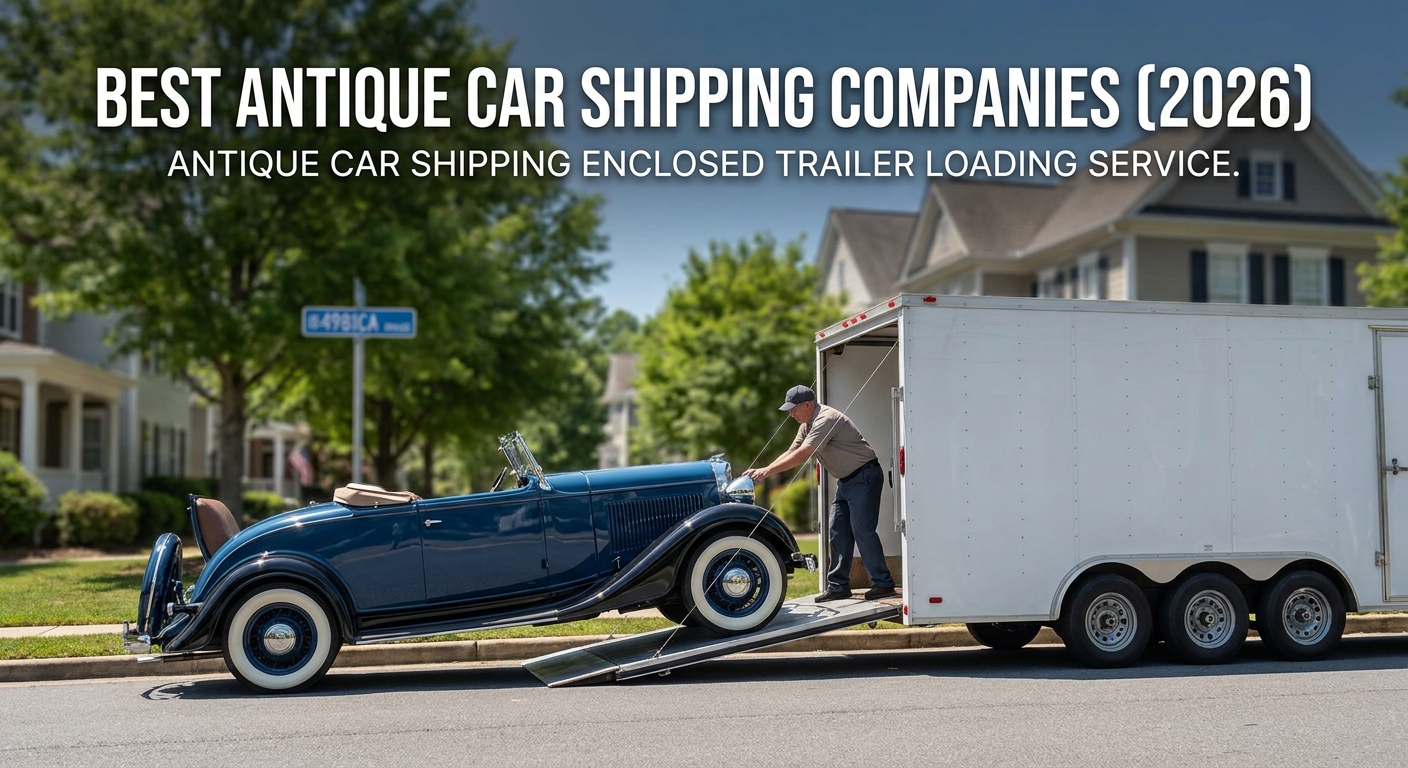
Dispatch Dudes is our clear first choice for antique car shipping. The Boynton Beach, Florida company handles open and enclosed transport, door-to-door delivery, and expedited moves , all through a curated private carrier network, not open load boards where the lowest bidder wins.
Here’s what separates them: every shipment is assigned a dedicated shipping advisor who selects the right carrier for the specific vehicle, route, and timing. That advisor stays on the job from quote to delivery, giving you direct communication rather than a generic call center. For a 1957 Bel Air or a barn-find Porsche 356, that personal oversight matters.
Every carrier in their network is fully insured with cargo coverage. Founder Benjamin Kats was accepted into the Forbes Business Council, and the company holds BBB accreditation plus a Newsweek Readers’ Choice recognition , trust signals that are hard to fake in a competitive market. They offer both open and enclosed options, making them the only company in our research that explicitly provides a hybrid approach. That flexibility is worth something when a partially restored classic can safely ride open but a concours-condition coupe needs a hard shell.
One honest caveat: their site doesn’t explicitly list non-running vehicle support, so if your project car doesn’t roll and steer, confirm that capability when you get your quote. For everything else, Dispatch Dudes is where we’d start.
2. Enclosed Auto Transport , White-Glove Protection for Classics
Enclosed-only carriers are the gold standard for antique car transport. These providers put your vehicle inside a fully covered trailer, shielding it from road debris, weather, and the kind of gravel chip that can ruin original single-stage lacquer. The tradeoff is cost: enclosed transport typically runs 30, 50% more than open, but for a high-value vehicle, that premium is a fraction of one bad repair bill.
What distinguishes a true enclosed specialist from a broker who just happens to book enclosed trailers is equipment. Premium enclosed carriers use air-ride suspension trailers, which cushion the car against road vibration , important for antique rubber seals and brittle chrome trim that can crack under constant highway jostling. Soft-tie systems replace the metal hooks that standard carriers use, protecting the undercarriage and wheel wells.
Loading technique matters too. Wide-fender cars like a 1937 Cadillac are genuinely difficult to load because the fenders extend far over the tires, making it nearly impossible to judge clearance inside an enclosed trailer. An experienced enclosed specialist will have a spotter or a remote winch for exactly this situation. If a company can’t tell you their loading procedure for wide-body classics, that’s a problem.
Our research found that roughly 33% of antique car shippers advertise enclosed-only service. Those companies tend to charge more, but they also tend to carry higher cargo insurance limits and employ drivers with specific collector vehicle experience. Before you book any enclosed specialist, compare their enclosed transport service terms against what’s standard in the industry so you know what you’re actually paying for.
3. Auction and Show-Ready Antique Car Transport , Delivery for Time-Sensitive Purchases
Auction transport is a distinct niche. When you win a car at a major collector auction, you need it delivered in the same condition it was in when the hammer fell , no exceptions. These services specialize in that window between auction floor and your garage.
Carriers that specialize in auction transport typically photograph and document every vehicle before loading, use GPS-equipped enclosed trailers, and employ drivers trained specifically in collector car handling. That attention to detail reflects the stakes involved , the driver is often the first face you meet as a consignor, and reputable carriers take that responsibility seriously.
What you’re paying for with auction-specific transport is chain-of-custody documentation and real-time GPS tracking so you can watch your car move from the auction site to your address. That GPS visibility matters when a car is worth six figures and sitting on a trailer somewhere in Kansas.
The catch with auction-specific services is availability. They’re built around event calendars. If you need to ship outside of auction season, or from a private sale, these providers may not be the right fit. For flexible, year-round antique car transport to any address, a full-service provider like Dispatch Dudes is a better match.
4. Enclosed Transport for Low-Clearance and Custom-Modified Antiques
Low-clearance cars , customs, slammed hot rods, cars with aftermarket front splitters , face a specific loading danger that standard carriers ignore. A steep 20-degree ramp can drag a front bumper or exhaust system across the trailer edge during loading. That kind of damage happens before the car even leaves the driveway.
Enclosed carriers equipped for low-clearance vehicles solve this with two pieces of equipment: hydraulic lift gates and extended aluminum ramps. A hydraulic lift gate keeps the car level on a flat platform during loading, eliminating the ramp angle entirely. Extended ramps reduce the approach angle to roughly 6 degrees instead of the standard 20 , a critical difference for any car sitting under 4 inches off the ground.
The tie-down system is equally important. Standard metal hooks can scratch wheel wells and compress suspensions in ways that transmit road vibration directly to the car’s frame. Soft-tie wheel nets and axle straps distribute tension evenly and avoid putting downward pull on a low-travel performance suspension. Straps should attach to unsprung parts like lower control arms, never to the shocks themselves.
For cars with carbon fiber body panels, extreme width, or air suspension, enclosed transport with a liftgate isn’t optional , it’s the only method that doesn’t risk a repair bill. Liftgate service does carry a premium over standard enclosed rates, but for a car with a high-value custom paint job, that’s an easy call.
5. Door-to-Door Classic Car Shipping , Pickup and Delivery at Your Location
Door-to-door service means the carrier comes to your address for pickup and delivers directly to your destination , no dropping the car at a terminal, no extra driving a fragile antique through unknown parking lots. For antique cars, providers like Dispatch Dudes offer this option, eliminating the need for owners to handle their own logistics at both ends.
For antique cars, terminal drop-off creates real risk. Every additional driver, every unfamiliar ramp, every moment the car sits in an open lot is an exposure point. The fewer hands on the car, the better. A door-to-door service that uses the same carrier for the full route reduces that risk substantially.
Cost-wise, door-to-door typically adds a modest premium over terminal service on most routes, and for rural pickups where carrier access is limited, it can add more. That said, the convenience alone is worth it for most classic car owners , your car doesn’t move until you’re there to document its condition, and it doesn’t arrive until someone is at the destination to sign off.
When you book door-to-door, confirm that the carrier will do the full route without transferring to another driver. Ask directly: will the same truck and driver handle pickup and delivery? A single chain of custody keeps the bill of lading clean and makes any damage claim far simpler to resolve. As a shipper, you have documentation rights at both pickup and delivery, so request a signed bill of lading that records the vehicle’s condition before the carrier departs.
6. Expedited Enclosed Transport , Fast Delivery for Time-Sensitive Moves
Sometimes the timeline drives the decision. A car show in two weeks, a cross-country auction purchase, a last-minute relocation , these situations call for expedited enclosed transport, which compresses the standard booking window to 24, 48 hours and often means a dedicated single-car or two-car trailer rather than a full multi-vehicle hauler.
The speed premium is real. Expedited scheduling adds to the base rate, and on enclosed moves that already cost more than open transport, that stacks up fast. But the tradeoff is worth it when the alternative is driving a 50-year-old car a long distance yourself or missing a delivery deadline at a show venue.
Dispatch Dudes offers expedited transport as part of their service menu, which is one reason they stand out. Most companies require a 3, 5-day pickup window to find available carriers , Dispatch Dudes can schedule a shipment in as little as 24 hours through their private driver network. That kind of response time isn’t possible when a company relies on open load boards.
One usable note on expedited moves: because the window is tight, have your car prepped before you book. Fuel at a quarter tank, battery disconnected, photos taken, alarm disabled. If the truck arrives and the car isn’t ready, you may still be charged a dry-run fee. Preparation cuts friction on both ends.
7. Inoperable and Partially Disassembled Vehicle Transport
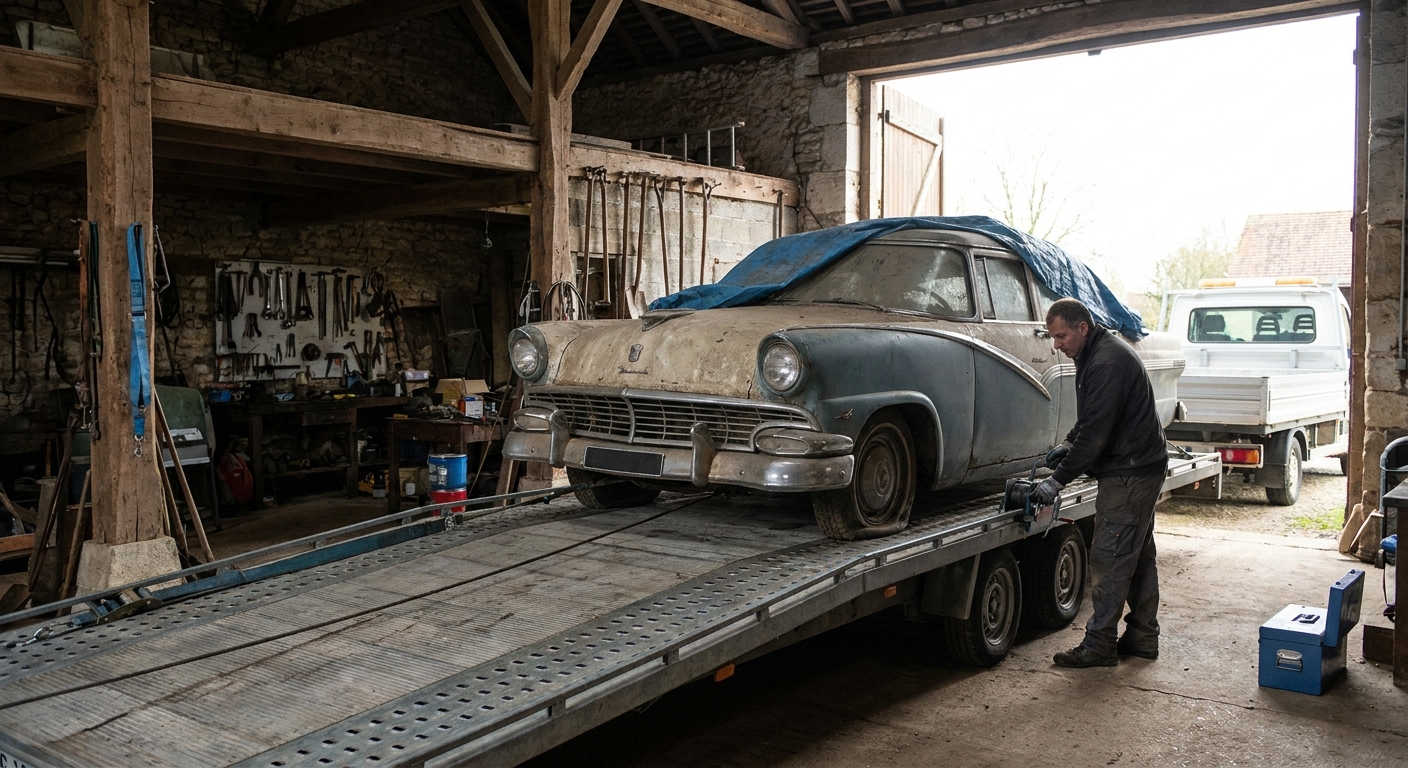
A lot of antique cars don’t run. They’re mid-restoration, stuck in a barn, or just waiting for parts. Shipping a non-running classic is more complex than shipping a running one, but it’s far from impossible , as long as the right equipment is involved.
The first question carriers ask is whether the car rolls, brakes, and steers. If it does all three, most enclosed and open carriers can handle it with a small non-running fee. If it doesn’t roll or steer, the loading method changes entirely. You’ll need a carrier with a winch system or a hydraulic liftgate that can bring the car aboard without it moving under its own power. Dragging a non-rolling car up standard ramps will damage both the car’s underside and the trailer floor.
For inoperable car transport, preparation is everything. Stabilize loose body panels, drain old fuel, top off antifreeze (an improperly maintained cooling system can crack an engine block during transport), and photograph every angle before pickup. If the car has frozen brakes, some carriers will refuse the shipment for safety reasons , others will work with you if you can get the wheels to at least roll with assistance.
Carriers that specialize in non-running vehicles typically carry substantial cargo insurance per load. Verify that figure before booking, because a partially disassembled shell with rare body panels can be worth more than a running car. The non-run fee is a small price for proper equipment and real insurance coverage.
8. Climate-Controlled Container Shipping , Moisture and Temperature Protection
Standard enclosed trailers protect against weather during transit, but they don’t regulate temperature or humidity. For multi-week shipping , especially international moves, long-term storage in transit, or routes that cross dramatic climate zones , this approach represents a separate tier of protection entirely.
Temperature swings are genuinely destructive to vintage interiors. Leather shrinks in dry heat, wood dashboards crack, and old rubber seals deteriorate when repeatedly cycled between cold and warm. A climate-controlled container maintains moderate humidity and temperature throughout the journey. For a car with a delicate lacquer finish or original leather, that single feature can preserve thousands of dollars in value.
The moisture question is real. Sealing air gaps and monitoring ventilation are the two variables that matter most for long-term container storage, particularly when a vehicle will be enclosed for more than a few weeks or transported across regions with significant humidity differences.
Climate-controlled container shipping is more expensive than standard enclosed transport, and it’s not necessary for most domestic moves. It’s the right choice when the car is crossing an ocean, sitting in a container for more than a few weeks, or carries original trim so fragile that any humidity fluctuation would cause damage. For domestic transport under two weeks, a quality enclosed trailer with air-ride suspension handles the job well.
9. GPS-Tracked Antique Car Transport , Real-Time Monitoring for Collectors
GPS tracking on a collector car shipment isn’t a luxury feature , it’s a basic accountability tool. When a high-value collector vehicle is on a trailer somewhere between Florida and California, knowing its location in real time isn’t just reassuring. It also creates a verifiable record of the route, rest stops, and delivery timeline that matters if a dispute arises.
The best antique car shippers equip their trailers with GPS units that give you continuous location updates, either through a web dashboard or a direct call to your shipping advisor. Some enclosed carriers include GPS-equipped trailers as a standard feature. Passport Transport offers a tracking option and encourages customers to contact them directly for updates. Dispatch Dudes provides real-time updates through dedicated shipping advisors who stay with the shipment from pickup to delivery.
What to watch for: some companies advertise GPS tracking but deliver it as “call us for an update” rather than a live map. There’s a real difference between those two things. If real-time visibility matters to you , and it should for any high-value antique , ask specifically whether the tracking is live or manual before you book.
GPS also matters at delivery. A timestamped arrival record makes it much easier to establish when and where a vehicle was at any given point, which protects both the owner and the carrier if damage is discovered post-delivery and the location of the incident is in question.
10. Fully Insured Classic Car Transport , Understanding Coverage for High-Value Vehicles
Insurance is where antique car shipping gets genuinely complicated. Our research found that 78% of antique car shipping companies provide no public information about their coverage limits at all. Of the two that do disclose: one lists a $500 gap coverage, another lists $1,000,000 in liability coverage. The average disclosed limit across our full dataset is $500,250 , but that number is almost meaningless given how little is actually shared.
Here’s the core issue. Carrier insurance only pays out claims that involve carrier negligence. If a wheel flies off a passing truck and hits your car on an open trailer, that’s not the carrier’s fault, and standard cargo insurance won’t cover it. For classic and antique cars , where values can reach well into the high six and seven figures , standard auto insurance also falls short. Specialist classic car insurers offer agreed-value policies specifically designed for this gap: rather than paying out depreciated cash value, an agreed-value policy pays the full insured amount with no depreciation in the event of a covered total loss.
Before shipping any high-value antique, do three things. First, get an agreed-value policy in place with a specialist insurer. Second, verify the carrier’s cargo insurance limit in writing , not just their word that they’re “fully insured.” Third, take date-stamped photographs of every angle of the car, including the undercarriage, on pickup day and keep a signed copy of the bill of lading.
What to Look for When Choosing an Antique Car Shipping Company
The antique car shipping market includes a large number of providers. Most of them have a website and a quote form. Very few have the equipment, experience, and insurance infrastructure to safely move a 90-year-old vehicle. Here’s how to filter quickly.
Verify every company’s USDOT and MC numbers through the federal carrier database before booking. This takes under five minutes and eliminates an entire category of fraudulent brokers who clone legitimate carrier websites and collect deposits before disappearing. Antique car owners are a frequent target because the transactions are high-value and the owners often don’t know the standard verification process.
On pricing: only four companies in our research share cost ranges publicly, with quotes spanning $750 to $1,500 for most domestic routes. Passport Transport listed a $1,500, $3,500 range, which reflects premium enclosed-only pricing for longer hauls. If a quote is significantly below market, it warrants scrutiny , not celebration. For sellers and dealers who also want to build an online presence to showcase classic inventory, working with a professional web design partner can help attract buyers before a car ever needs to be shipped.
Frequently Asked Questions
How much does it cost to ship an antique car?
Pricing for domestic antique car shipments varies based on distance, transport type, and vehicle condition. Open transport on shorter routes is generally the most affordable option. Enclosed transport on cross-country routes runs higher, with premium enclosed-only services quoting more for longer hauls. Inoperable vehicles typically carry an additional fee. Expedited scheduling adds to base rates as well. Get at least three quotes before committing.
Is enclosed transport really necessary for antique cars?
Yes, for most antique cars. Enclosed transport protects original paint, chrome trim, and fragile rubber seals from road debris, weather, and UV exposure that open trailers can’t prevent. If your car has original unrestored paint, a high appraised value, or is heading to an auction or show, enclosed is the right call. Open transport can work for short routes and project cars with lower values.
Can you ship an antique car that doesn’t run?
Yes, as long as it rolls, brakes, and steers. Most enclosed carriers can handle a non-starting vehicle, sometimes with a small additional fee. If the car doesn’t roll or steer, you need a carrier with a winch or hydraulic liftgate, and not all companies have that equipment. Confirm the capability before booking, and make sure brakes are functional, since many carriers refuse a vehicle with no braking ability.
How do I verify an antique car shipping company is legitimate?
Look up the company’s USDOT and MC numbers in the FMCSA’s SAFER database. Confirm the business name, address, and status match. Ask for a certificate of insurance and verify the cargo limit per vehicle. Avoid companies that demand full payment upfront by wire transfer or won’t provide a written quote. Accreditation from recognized organizations and verifiable customer reviews are also useful signals.
How long does it take to ship an antique car cross-country?
Cross-country shipping typically takes 7 to 10 days on standard enclosed transport. Expedited single-car service can cut that to 3 to 5 days at a higher cost. Shorter regional routes run 2 to 5 days. Peak season from March through July sees higher demand and occasionally slower booking windows. Booking 2 to 3 weeks ahead gives you the best carrier selection and standard market pricing.
What insurance do I need before shipping an antique car?
Carrier cargo insurance covers negligence during transport, but it won’t cover every scenario. Before shipping, get an agreed-value policy from a specialist insurer, this pays the full insured amount with no depreciation on a covered total loss, unlike standard auto policies that pay depreciated cash value. Photograph the car thoroughly on pickup day and keep a signed bill of lading as your primary evidence record.
Final Recommendation
For most antique car owners, Dispatch Dudes is the right starting point. They offer both enclosed and open transport, genuine door-to-door service, and dedicated advisor support that stays with the shipment , not a call center that picks up after three transfers. Get your free quote at dispatchdudes.com and tell them what you’re moving. A dedicated advisor will match your car to the right carrier and keep you informed from pickup to delivery.