 Skip to content

Car shipping becomes exponentially more difficult in densely populated states. The logistics that work perfectly in rural areas often fall apart completely when faced with heavy traffic, limited parking, and complex urban infrastructure.
New Jersey is a perfect example of these challenges. With 1,200 people per square mile, it’s the most densely populated state in America. This density creates a web of complications that make vehicle transportation significantly more challenging than in less populated areas.
The state’s major highways, such as I-95, Route 1, and the approaches to the George Washington Bridge, experience constant congestion. Carriers must navigate rush-hour traffic, navigate tight urban streets, and find suitable parking spots for large transport trucks in areas where space is at a premium.
Understanding these density-related challenges helps explain why car shipping is more difficult in densely populated states and reveals the specialized expertise required to transport vehicles in such environments.
The Mathematics of Population Density Impact
Population density directly affects every aspect of car shipping operations. When you have 1,200 people per square mile compared to states with 50 or fewer people per square mile, the logistics become entirely different.
More people mean more cars on the road at all times. New Jersey’s highways experience traffic levels that would be considered rush-hour congestion in less-populated states, but this occurs throughout most of the day. Carriers can’t simply avoid busy periods because those periods extend much longer.
The sheer number of vehicles creates unpredictable delays. A minor accident that might cause a 10-minute delay in rural areas can shut down major arteries for hours in New Jersey. This unpredictability makes scheduling extremely difficult for car shipping companies.
Urban areas within densely populated states also have more complex road networks. Instead of straight highways connecting cities, carriers must work through intricate systems of local roads, bridges, and tunnels that weren’t designed for large transport vehicles.
Major Highway Challenges in New Jersey
I-95 Corridor Complications
I-95 serves as New Jersey’s main north-south artery, but it’s also one of the most congested highways in the country. This highway carries both local commuter traffic and long-distance freight, creating daily bottlenecks that affect car shipping schedules.
The highway’s design includes numerous entrance and exit ramps spaced closely together. These frequent merging points create stop-and-go conditions that are particularly challenging for car carriers. Large transport trucks need more space and time to accelerate and brake safely.
Construction zones appear regularly along I-95, often with little advance notice to carriers. These zones typically reduce the roadway to fewer lanes and impose weight restrictions that can force carriers to find alternative routes on short notice.
Route 1 Urban Navigation
Route 1 presents different challenges as it passes through numerous municipalities and commercial districts. Unlike interstate highways, Route 1 includes traffic lights, pedestrian crossings, and frequent driveways that interrupt traffic flow.
The commercial development along Route 1 creates constant merging traffic from shopping centers, office complexes, and residential areas. This mixing of local and through traffic creates unpredictable conditions for car carriers trying to maintain schedules.
Parking restrictions along Route 1 make it nearly impossible for carriers to stop for breaks or to address minor issues. The lack of suitable rest areas designed for large vehicles forces carriers to plan their routes more carefully than in less developed areas.
George Washington Bridge Approach Strategies
Approaches to the George Washington Bridge are among the most challenging driving conditions for car carriers in the region. The combination of heavy traffic, complex interchanges, and height restrictions creates multiple obstacles.
Traffic backups from the bridge often extend for miles on the New Jersey side, creating unpredictable delays that can last several hours. Carriers must build these potential delays into their scheduling, which affects efficiency and costs.
The bridge’s height and weight restrictions require carriers to verify their load configurations before approaching. Vehicles that exceed these limits must find alternative crossings, often adding significant time and distance to their routes.
How Traffic Affects Vehicle Shipping in New Jersey
Traffic patterns in New Jersey follow predictable daily cycles, but the duration and intensity of congestion far exceed what carriers encounter in less populated states. Morning rush hour typically begins around 6 AM and can extend until 10 AM, while evening congestion often starts by 3 PM and continues past 7 PM.
Weekend traffic presents additional challenges as recreational travelers mix with commercial vehicles. Summer weekends see particularly heavy traffic as people travel to shore destinations, creating unexpected delays on routes that might normally be clear.
Weather events amplify traffic problems significantly. A light snowfall that might barely affect traffic in rural areas can create gridlock conditions in New Jersey. Carriers must monitor weather forecasts more closely and have backup plans ready.
Special events, construction projects, and accidents can completely shut down major routes. The limited number of alternative routes means that when one highway experiences problems, traffic diverts to roads that quickly become overwhelmed.
Urban Infrastructure Limitations
Dense populations require complex infrastructure that often works against efficient car shipping operations. Bridges, tunnels, and overpasses built decades ago weren’t designed for today’s large car carriers.
Height restrictions appear frequently throughout New Jersey’s urban areas. Many overpasses and bridges have clearances that standard car carriers can barely clear, and some areas are completely inaccessible to certain types of transport vehicles.
Weight limits on older bridges and roads can force carriers to reduce their loads or find alternative routes. This requirement particularly affects efficiency, as carriers may be unable to transport as many vehicles per trip.
Road surface conditions in heavily trafficked areas deteriorate more quickly. Potholes, cracked pavement, and uneven surfaces add additional stress on transport vehicles and the cars they are carrying.
The Parking Problem for Large Carriers
| Location Type | Available Spaces | Restrictions | Typical Duration |
| Urban Streets | Very Limited | Time/Size Limits | 30 minutes max |
| Shopping Centers | Moderate | Off-hours Only | 1-2 hours |
| Highway Rest Areas | Limited | Often Full | Variable |
| Industrial Areas | Good | Distance from Residential | 4+ hours |
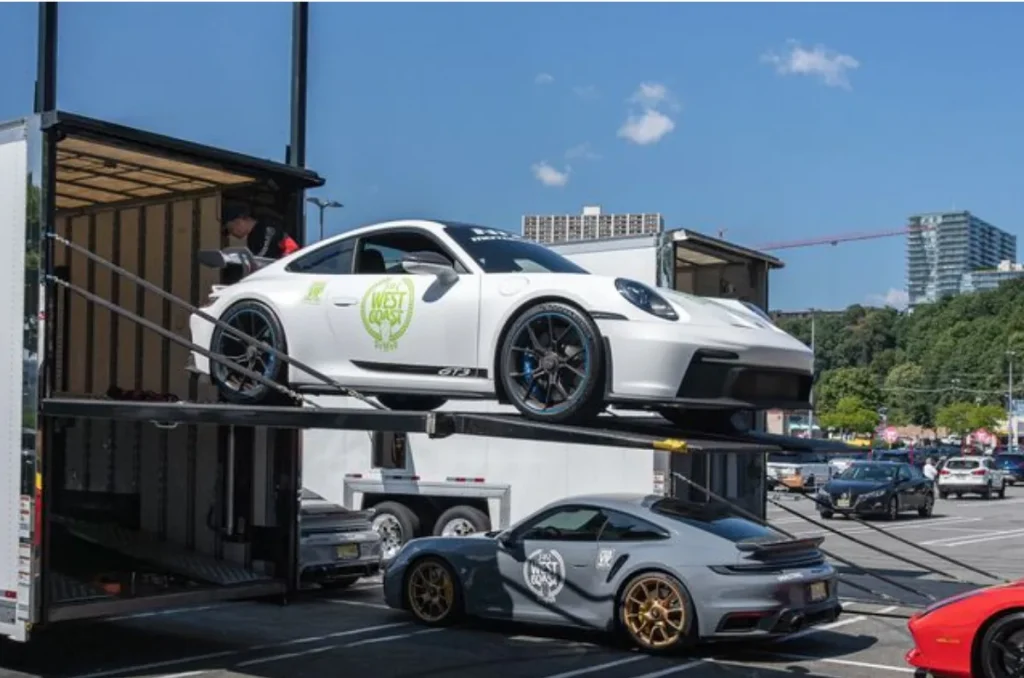
Finding suitable parking for large car carriers represents one of the biggest challenges in densely populated areas. Standard parking lots and street parking simply cannot accommodate vehicles that may be 80 feet long and carry multiple cars.
Most urban areas have parking restrictions specifically designed to keep large trucks out of residential and commercial zones. These restrictions force carriers to park in industrial areas that may be miles away from pickup or delivery locations.
The limited parking options mean carriers often can’t stop when they need to rest or address mechanical issues. This situation creates safety concerns and forces carriers to plan routes around available parking rather than optimal efficiency.
Competition for suitable parking spots is intense. Truck stops and rest areas designed for large vehicles fill up quickly, especially during peak travel times. Carriers may spend significant time searching for legal parking spaces.
Rush Hour Scheduling Strategies
Successful car shipping in New Jersey requires sophisticated timing strategies that account for multiple rush hour periods and traffic patterns. Dispatch Dudes has developed specific protocols for working around these congested periods.
Here are the key timing considerations for New Jersey car shipping:
- Morning Window (5 AM – 6 AM): Best time for urban pickups before traffic builds
- Mid-Morning (10 AM – 2 PM): Optimal for highway travel between cities
- Late Evening (8 PM – 10 PM): Secondary window for deliveries in urban areas
- Weekend Early Hours: Saturday and Sunday mornings before recreational traffic
- Holiday Periods: Require complete schedule adjustments and alternative routes
Carriers must also coordinate with customers who may not be available during optimal shipping windows. This coordination requires flexible scheduling systems that can accommodate both traffic patterns and customer availability.
Emergency scheduling becomes necessary when unexpected delays occur. Having backup time slots and alternative routes prepared helps minimize the impact of traffic-related disruptions.
Advanced Technology Solutions
Modern car shipping companies use sophisticated routing and tracking technology to address the challenges of dense population areas. GPS systems designed specifically for commercial vehicles account for height restrictions, weight limits, and traffic patterns.
Real-time traffic monitoring allows dispatchers to reroute carriers around accidents, construction zones, and unexpected congestion. This capability is essential in areas where traffic conditions can change rapidly throughout the day.
Customer communication systems provide updates on potential delays due to traffic conditions. This transparency helps manage expectations and allows customers to plan accordingly.
Predictive analytics help identify patterns in traffic and delivery challenges. By analyzing historical data, companies can identify the best times and routes for specific areas within New Jersey.
Cost Implications of Density Challenges
| Challenge Factor | Cost Impact | Mitigation Strategy | Typical Increase |
| Extended Transit Time | Higher Labor Costs | Optimized Routing | 15-25% |
| Fuel Consumption | Increased Operating Costs | Traffic Avoidance | 10-20% |
| Parking Fees | Direct Additional Costs | Strategic Planning | 5-10% |
| Insurance Risks | Higher Premiums | Safety Protocols | 8-15% |
The challenges of shipping cars in densely populated areas like New Jersey translate directly into higher operational costs. Extended transit times mean carriers spend more hours completing routes, increasing labor costs and reducing the number of loads they can handle per day.
Fuel consumption increases significantly in stop-and-go traffic conditions. Carriers may use 30-40% more fuel while traveling through congested areas than while driving on rural highways.
The risk of damage increases in congested areas due to tight spaces, frequent stops, and more complex maneuvering requirements. This increased risk often translates into higher insurance costs for car shipping companies.
Equipment wear and tear accelerates in challenging driving conditions. Frequent stops, starts, and low-speed driving put additional stress on transport vehicles and require more frequent maintenance.
Weather and Seasonal Complications
Densely populated areas like New Jersey experience more severe weather-related challenges. Snow removal takes longer on congested roads, and the salt used for de-icing can cause additional vehicle damage concerns during shipping.
Summer heat creates different problems in urban areas where asphalt and concrete increase ambient temperatures. These conditions can affect both the transport vehicles and the cars being shipped, requiring additional precautions.
Seasonal traffic patterns vary significantly in New Jersey due to shore tourism and holiday travel. Spring and summer bring increased weekend traffic that can double normal travel times on certain routes.
Hurricane season requires special preparation, as evacuation routes can become congested and some areas may become temporarily inaccessible. Car shipping companies must have emergency protocols in place for such situations.
Why Professional Expertise Matters
Successfully shipping cars in New Jersey requires specialized knowledge that goes far beyond standard transportation logistics. Companies need extensive experience with local traffic patterns, route restrictions, and timing strategies specific to densely populated areas.
The complexity of coordinating pickups and deliveries in urban environments requires sophisticated scheduling systems and flexible operations. Standard approaches that work in rural areas often fail completely in high-density situations.
Professional car shipping companies maintain relationships with local authorities and stay up to date on construction projects, road closures, and changing regulations that affect their operations.
Emergency response capabilities become essential when operating in challenging environments. Having backup plans, alternative routes, and emergency contacts can mean the difference between successful delivery and significant delays.
Partner with New Jersey’s Car Shipping Experts
The unique challenges of New Jersey’s dense population require specialized expertise and proven strategies. Understanding traffic patterns, infrastructure limitations, and timing requirements makes the difference between smooth transport and frustrated delays.
Working with experienced professionals who understand these complexities ensures your vehicle reaches its destination safely and on schedule. The investment in professional car shipping services pays for itself through reduced stress and reliable results.
Don’t let New Jersey’s challenging shipping environment complicate your vehicle transport needs. Contact us today to discuss how our specialized expertise can solve your car shipping challenges in the Garden State.