 Skip to content

Shipping a vintage car is nothing like moving a daily driver. One stone chip on original paint or a botched low-clearance loading can cost more than the move itself. So picking the right carrier matters. Here are the best vintage car shipping options for 2026, and exactly who each one fits.
1. Dispatch Dudes (Our Top Pick)
Dispatch Dudes is a nationwide vehicle transport company that ships cars, motorcycles and boats across the US using open and enclosed carriers, with door-to-door and expedited options. Best for collectors and buyers who want a single advisor managing the whole move, not a bidding war on a load board.
Here’s what sets us apart. We don’t dump your classic onto open load boards or hand it to the lowest bidder. Each shipment goes through a curated private driver network, and a dedicated advisor picks the carrier based on your vehicle, route and timing. You get direct communication and real-time updates from quote to delivery.
Every move runs through fully insured carriers, with coverage ranging from $100,000 to over $450,000. That matters when you’re trusting someone with a seven-figure hypercar or a numbers-matching muscle car. According to a March 2026 industry report, Dispatch Dudes operates in a $10.5 billion auto transport market with more than 7,000 providers, and we built our model on trust-first handling rather than cut-rate quotes.
For vintage and high-value cars, we lean on enclosed auto transport (a fully covered trailer that shields your car from weather and debris) and white-glove, door-to-door service with controlled loading. Founder Benjamin Kats put it plainly: every vehicle gets the same care, “whether it’s a daily driver or a seven-figure hypercar.” The company is BBB accredited, was featured by Newsweek Readers’ Choice, and Kats sits on the Forbes Business Council.
One honest caveat: our trust-first model isn’t built to be the cheapest quote on the board. If you only care about the lowest number, you may find a cheaper open-carrier rate elsewhere. For an irreplaceable classic, that’s usually a trade worth making. Pro Tip: Book your enclosed slot 2 to 3 weeks ahead, since enclosed carriers are fewer and fill faster.
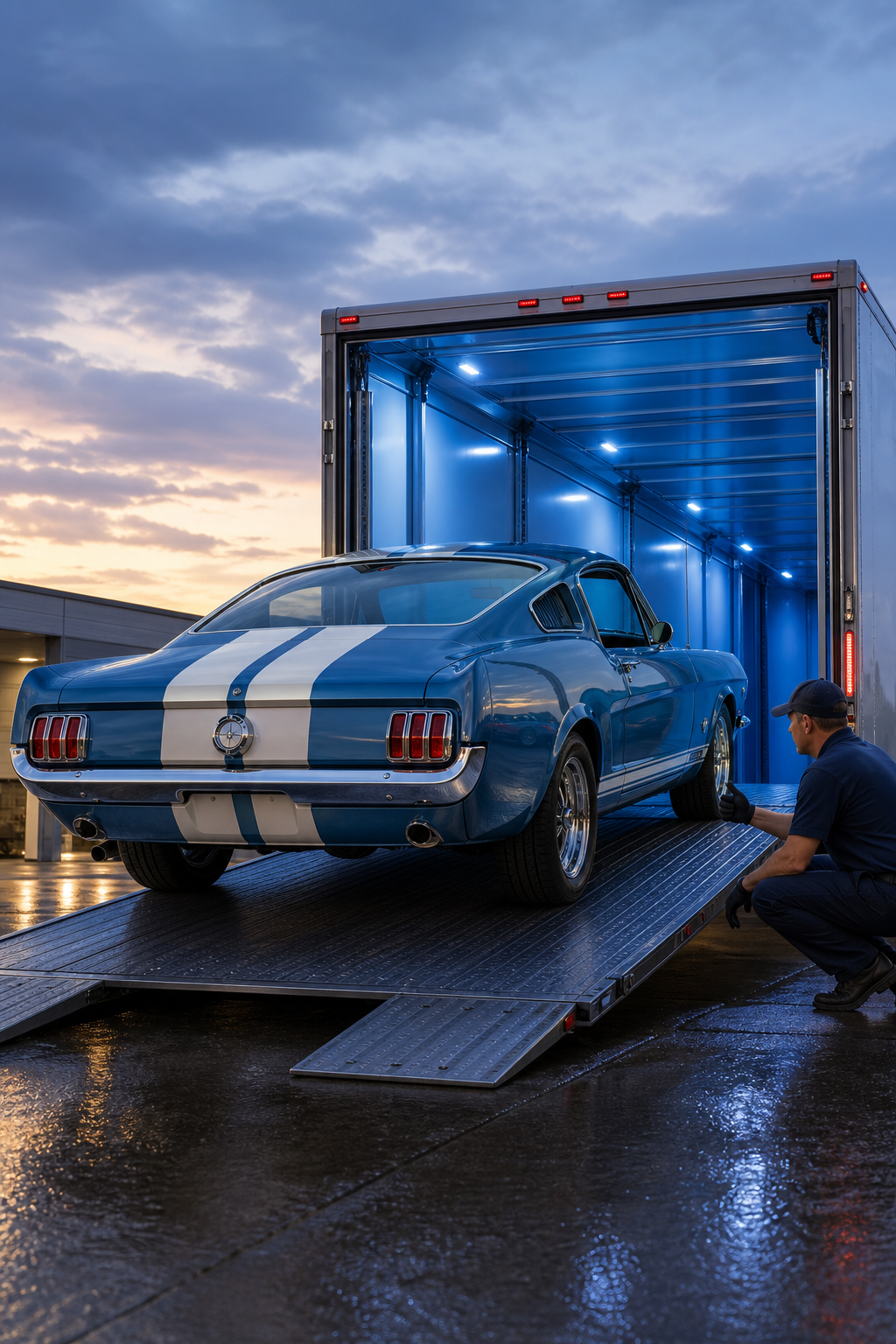
2. Enclosed Transport Specialists for Classic Cars
These are carriers whose entire fleet is enclosed trailers built for vintage, antique and exotic vehicles. Best for owners of irreplaceable cars who won’t risk open transport under any circumstances.
Enclosed transport keeps your car inside a sealed trailer with only a few other vehicles, away from rain, hail, dust and road debris. It’s the difference between flying coach and flying first class. Specialist trailers add air-cushioned suspension and shift-resistant tie-down systems to cut wear during transit, and many use hydraulic lift gates and soft straps for low-clearance cars.
The trade-off is cost and speed. of nearly 700 quotes, enclosed transport averages around $1,500, roughly 40% more than open transport, and only about 10% of customers choose it. It’s also usually slower, because there are far fewer enclosed carriers on the road than open ones.
When does the premium pay for itself? If your car was built before 1970, has low ground clearance, or carries custom paint and chrome that can’t be reordered. For a Honda from a regular dealership, enclosed is overkill. For a 1957 Bel Air, it’s the only sane choice.
Documenting condition before transport is just as important as the trailer. Operations teams that lean on inspection software like flowdit to standardize condition reports and corrective actions show how useful a clear photo-and-checklist record is at both pickup and delivery, especially when a claim hangs on proving the car arrived exactly as it left.
3. Expedited and White-Glove Vintage Car Carriers
These carriers add speed and concierge handling on top of enclosed transport. Best for auction deadlines, show dates, or six- and seven-figure cars where timing and white-glove care outweigh price.
White-glove service means specialized loading equipment for low-clearance supercars, climate-controlled trailers, multi-angle condition photography, and a signed condition report from both parties. Some providers regulate trailers to roughly 65 to 75 degrees Fahrenheit and 45 to 55% humidity to protect carbon fiber, Alcantara and fine leather during long hauls. For the rarest cars or tight event windows, air freight cuts transit to days instead of weeks.
Pricing reflects the upgrade. , enclosed classic car shipping runs roughly $900 to $1,500 for shorter regional routes, $1,200 to $1,500 mid-distance, and $1,800 to $3,000 or more coast-to-coast. Expedited and white-glove handling sits at the top of those ranges.
The honest caveat: most owners don’t need air freight or climate control. Those features matter for hypercars, museum pieces and concours entries. For a well-kept driver-grade classic, standard enclosed transport gets you the same protection at a far lower price. Dispatch Dudes offers expedited and white-glove enclosed service too, so you can match the service level to the car instead of overpaying by default.
4. Snowbird and Seasonal Classic Car Shippers from Florida
Snowbird shippers move vehicles between northern homes and warm-weather states on a seasonal schedule. Best for retirees and seasonal residents who keep a classic in Florida or Arizona and don’t want to drive it 1,200-plus miles twice a year.
The dominant route is the I-95 corridor between the Northeast and Florida. On the Florida-to-New York lane, Navi Auto Transport’s route data shows roughly 1,200 to 1,500 miles, a 3 to 5 day transit, and a 1 to 3 day pickup window. Open transport runs about $550 to $900 and enclosed about $850 to $1,250, with demand peaking March through May as seasonal residents head home.
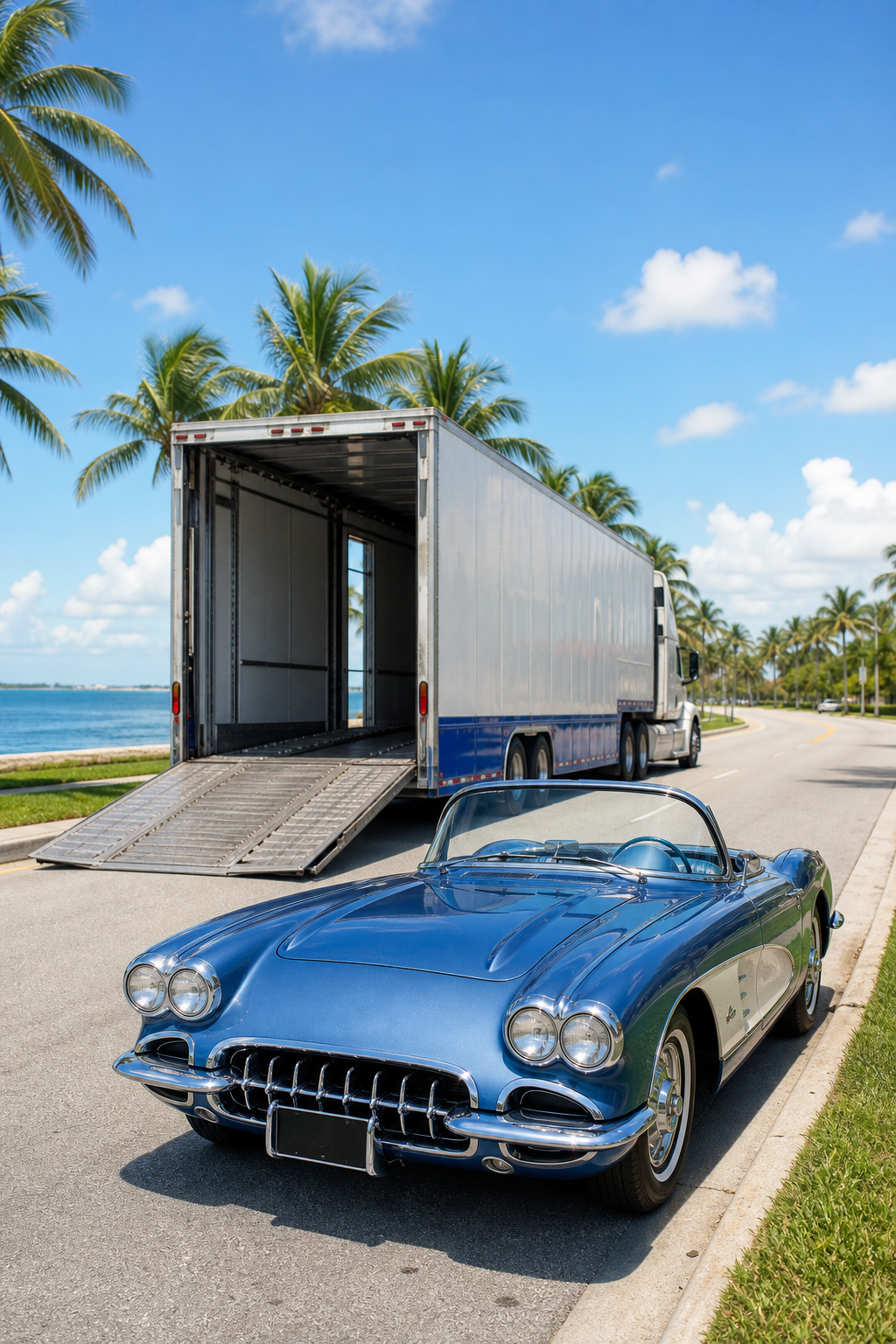
Timing drives price here more than anything. Ship in summer or off-peak winter and you’ll pay less. Book during the March-to-May northbound rush and rates climb $100 to $200, with tighter carrier capacity. Hurricane season from June to November can add a day or two to Florida departures.
Plan around city access too. Full-size carriers can’t reach most Manhattan addresses because of low overpasses and weight limits, so deliveries there shift to a meet-point in Queens, the Bronx or northern New Jersey. As a Boynton Beach, Florida company, Dispatch Dudes runs these snowbird lanes regularly, which helps if you’re moving a classic north each spring. Book at least 30 days out during peak season to lock a better rate.
5. Auction and Dealer Vintage Car Transport Providers
These providers specialize in moving cars to and from auctions and between dealerships. Best for buyers winning lots at collector auctions and dealers redistributing high-value inventory on tight windows.
Auction houses sometimes run their own transport. Mecum, in the collector car business since 1988, offers enclosed and GPS-trackable trailers, lets buyers schedule delivery right from the auction floor, and has drivers photograph and document each vehicle before loading. That single-call coordination removes a lot of friction when you’ve just bought a car two time zones from home.
Dealer-to-dealer transport has its own pressures: tight pickup windows, strict documentation and the need to get cars retail-ready fast. Open carriers handle routine inventory cheaply, while enclosed carriers protect the luxury, exotic and classic units. A documented pre-transport inspection recorded on the Bill of Lading protects both ends of the handoff, which is why serious auction and dealer moves always start with photos and a signed condition record.
The caveat for buyers: auction-house transport is convenient but not always the cheapest or fastest for your exact route. Compare it against an independent enclosed carrier before you commit. Dispatch Dudes works with both auction buyers and dealerships, so you can get a quote on the same lane and decide on price and timing rather than defaulting to the auction’s in-house option.
What to Look for in a Vintage Car Shipping Company
Before you book vintage car shipping, weigh the factors that actually change your price and your risk. Distance, trailer type, vehicle size, route access and season all move the number.
On cost, MoveAdvisor’s pricing breakdown puts car shipping between about $750 for a few hundred miles on an open carrier and roughly $2,250 for a cross-country enclosed move, with enclosed adding $500 to $625 over open. Bigger or heavier classics add another $190 to $250 because they take up more trailer space.
Use this checklist to compare providers honestly:
The cheapest quote is the most common trap. Lowball numbers often hide improper equipment, thin coverage and surprise fees that surface at pickup. Always get a custom quote tied to your exact vehicle and route, and check insurance in writing before you sign.
Frequently Asked Questions
How much does it cost to ship a vintage car?
Enclosed vintage car shipping usually runs about $1.50 to $2.00 per mile, which works out to roughly $800 to $1,200 for shorter moves and $1,500 to $3,500 for cross-country routes. Final price depends on distance, vehicle size, route access and the season you ship in. Always get a custom quote for your exact car and lane.
Is enclosed transport really safer for classic cars?
Yes. Enclosed transport protects your classic from weather, road debris, UV exposure and prying eyes inside a sealed trailer. Specialist carriers add air-cushioned suspension, soft tie-downs and lift gates for low-clearance cars. For any car with original paint, custom finishes or high value, the extra cost over open transport is worth the protection.
Can I ship a non-running classic car?
Yes, you can ship a non-running vintage car. Carriers use winch-equipped trailers to load vehicles that can’t drive on under their own power. Expect to pay a bit more because of the special loading equipment and time involved. Tell the company the car is inoperable when you request a quote so they assign the right trailer.
When is the cheapest time to ship a classic car?
Fall and winter are usually the cheapest seasons for vintage car shipping. Spring and summer drive demand up because of better driving weather, car shows and auctions. Snowbird routes flip this, with northbound Florida lanes peaking March through May. If your timing is flexible, off-peak months get you lower rates and easier carrier availability.
How far in advance should I book?
Book enclosed vintage car shipping at least two to three weeks ahead, and 30 days out during peak snowbird season. Enclosed carriers are fewer than open ones, so slots fill faster. Booking early also tends to secure a better rate, the same way buying airline tickets early usually costs less than booking last minute.
Conclusion
For most collectors, the right move is enclosed, door-to-door transport with a single advisor and high-limit insurance, which is exactly what Dispatch Dudes is built to deliver. Match the service level to the car: standard enclosed for a driver-grade classic, white-glove for a hypercar or concours entry. Get an instant quote from Dispatch Dudes and let an advisor pick the carrier that fits your vehicle, route and timing.