 Skip to content

Illinois Car Shipping Services
Dispatch Dudes arranges car shipping through carriers. For an Illinois move, check the truck handoff before planning around a Chicago street address or a fixed departure date. Title and registration paperwork is a separate job from transport.
Compare open transport and enclosed transport, then confirm a door-to-door handoff that the assigned carrier can safely reach.
Auto Transport Services Available in Illinois
Choose the service around the vehicle and the pickup plan:
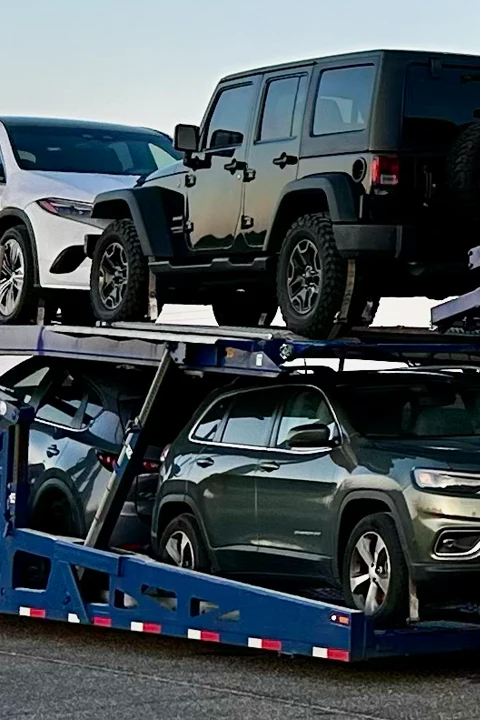
- Open transport: an exposed trailer for a vehicle whose owner accepts that transport setting.
- Enclosed transport: a covered trailer; discuss clearance, loading equipment, and the car’s needs.
- Expedited shipping: ask about priority assignment and confirmed pickup availability.
- Door-to-door transport: a handoff at the address when safe and legal truck access permits it.
Plan both ends of your Illinois shipment
Bringing a car into Illinois
For a Chicago delivery, tell the coordinator about low overhead clearance, an alley entrance, loading restrictions, and whether the vehicle is inside a garage. Chicago’s official truck-limit dataset documents height and weight limits and notes that some streets require permits. Its map is not a complete permit determination: the carrier must verify the legal approach for its truck.
For a suburban apartment or a downstate home, confirm loading permission and a place to turn and unload. Door-to-door service still depends on safe truck access; an everyday passenger-car route may not work for a transporter.
Sending a car out of Illinois
If an Illinois lease ends before the confirmed pickup window, arrange an authorized representative or another agreed handoff. For a dealer purchase, provide release hours, a contact who can release the keys, and whether the vehicle is ready to leave.
For a low-clearance collector car, discuss enclosed transport and how it will load. Use our car-shipping cost guide to compare the same scope; a Chicago origin does not prove a lower price or an assigned truck.
Illinois route planning includes the final approach
IDOT’s Getting Around Illinois separates road construction and current conditions from commercial truck-route and restriction maps. That distinction matters when a car can reach the address but a larger transporter cannot.
Give both addresses and tell the coordinator about construction near the handoff, restricted streets, garage clearance, and any access deadline. The carrier determines the legal route and any required permissions. A mapped interstate connection does not establish shipment frequency or timing.

Confirm the shipment in four stages
1. Describe the move
Share both ZIP codes, vehicle year/make/model, modifications, operating condition, access, and the days it can actually be handed over.
2. Confirm the carrier
Booking and assignment are separate. Ask which carrier is assigned, what pickup window it has confirmed, and who will update you if that changes.
3. Document pickup
Have the owner or an authorized representative inspect the car with the driver, photograph its condition, and review the Bill of Lading before signing.
4. Inspect at delivery
Compare the car with its pickup record before signing at delivery. Record any discrepancy and confirm the carrier's reporting and claim procedure.
What is confirmed about your Illinois pickup?
Ask separately about the pickup window, road transit estimate, and who will receive the car. An estimate is not an appointment or a guaranteed arrival date. If a flight, lease end, or seller deadline is fixed, explain it before booking and plan who can attend if the window changes.
Use IDOT’s current conditions and construction maps when discussing an Illinois handoff. Ask the coordinator to distinguish a road delay from a carrier that has not yet been assigned.
Compare quotes for the same Illinois move
Use the same origin, destination, vehicle condition, trailer type, access details, and dates in each quote. A fixed Chicago curbside appointment and a flexible nearby handoff are different scopes.
Ask what is included, which changes could revise the price, when payments become due, and whether a carrier is assigned. Describe a non-running car precisely: does it roll, steer, and brake, and can the truck reach it?
Match the trailer to the car and handoff
Open transport
Open transport carries the car on an exposed trailer. Discuss the vehicle's condition and loading access before choosing equipment.
Enclosed transport
Enclosed transport uses a covered trailer. For a collector or low-clearance car, confirm the loading method as well as the trailer type; coverage terms belong to the assigned policy.
Door-to-door handoffs
Door-to-door service depends on safe and legal access. If the truck cannot reach the address, agree on a nearby permitted handoff with the carrier.
Priority pickup discussion
Expedited shipping calls for a clear availability discussion. Ask what pickup window has been confirmed; priority assignment does not establish a guaranteed transit time.
Know who is arranging and who is carrying your car
Dispatch Dudes’ credentials page identifies KATS & COMPANY LLC as a property broker arranging transport through carriers. Ask for the assigned carrier’s company name, USDOT number, and applicable cargo-policy information before pickup.
A generic insurance label does not establish what a particular policy covers. Review its applicable limits, exclusions, and claim steps, then document the vehicle at both handoffs. Confirm one contact for coordination and another at each location if you will not be there.
Keep Illinois registration separate from transport
The Illinois Secretary of State new-resident guide gives new residents 30 days after establishing residence to apply for title and registration, provided the vehicle is properly registered elsewhere. Transport delivery does not complete the application or make a car ready for legal road use.
For a financed vehicle whose title is held by an out-of-state lender, the guide describes substitute ownership documents plus a loan-agreement copy. Leased vehicles have additional requirements. Ask the lender or lessor for the needed documents before the car arrives.
An out-of-state purchase can also require a bill of sale and transaction-specific tax paperwork. Confirm your own situation with the Secretary of State; the driver’s condition record is not a title-transfer document.
Frequently Asked Questions About Car Shipping in Illinois
The assigned carrier transports the vehicle. Request its identity and applicable cargo-policy information before pickup; review limits, exclusions, and the reporting procedure rather than assuming every loss is covered.
Arrange an authorized representative who can meet the driver, review the condition record, and sign at the handoff. Share that person’s contact information and availability with the coordinator.
Say whether it starts, rolls, steers, and brakes, whether all wheels are fitted, and where it is parked. Loading equipment and access must be evaluated before a carrier is assigned.
Request it when you know both locations and your actual availability. Explain a fixed flight, lease, or seller deadline; confirm assigned capacity and a pickup window rather than relying on a universal booking interval.
A covered trailer changes the transport setting. Confirm loading clearance, equipment, and the assigned carrier’s policy; trailer type does not replace condition documentation.
No. Tell the coordinator about street restrictions, low clearance, an alley or garage entrance, and loading permission. Agree on a permitted nearby handoff if the truck cannot reach the address.
The Secretary of State guide describes substitute ownership documents with a loan-agreement copy. Confirm the documents for your situation before the vehicle arrives.
Getting Around Illinois provides construction, conditions, truck-route, and restriction maps. These are planning resources, not proof that a specific truck can legally use every street.
Provide the seller’s release contact and hours, whether payment and paperwork are complete, and whether the car can load. A quote does not show that the seller has released the vehicle.
The Secretary of State guide lists additional leased-vehicle documents. Check with the lessor and the state before delivery; do not assume the shipping paperwork is sufficient.
The Secretary of State guide gives new residents 30 days after establishing residence, provided the vehicle is properly registered in another jurisdiction. Check individual requirements with the state.
THREE Easy steps
How do I book with the Dispatch Dudes?
Step 1
Get A Quote
Provide both locations, vehicle details, condition, access concerns, and your available dates.
Step 2
Confirm Your Booking
Review the written terms, ask whether a carrier is assigned, and confirm its pickup window.
Step 3
Get Your Car Shipped
Coordinate the handoffs and inspect the vehicle with the driver at pickup and delivery.
Get a Car Shipping Quote in Illinois
Start with both ZIP codes, the vehicle’s year/make/model, whether it runs, trailer preference, and the dates a person can meet the driver. Add gate access, restricted streets, garage clearance, and seller release details that affect loading.
Request your Illinois quote or call 754-201-8264. Confirm written scope, carrier assignment, and timing before treating the move as booked. Return to Dispatch Dudes for the wider service overview.