 Skip to content

Enclosed Car Transport
Enclosed car transport moves your vehicle inside a covered trailer — fully shielded from weather, road debris, dust and prying eyes. It is the standard for classic, exotic, luxury, low-clearance and high-value vehicles, and it typically costs 30–50% more than open transport on the same route.
Dispatch Dudes is a licensed auto transport broker (USDOT 3446819, MC-1120978). We assign FMCSA-authorised enclosed carriers and send you the carrier’s name, DOT number and insurance certificate before pickup.
Transport Options We Arrange
Every option below is arranged door to door — collected at your address and delivered to the destination address.
What enclosed car transport costs
Enclosed transport costs more than open, and the gap is widest on short routes where loading effort is spread over fewer miles. We price your route against live enclosed carrier availability.
How enclosed trailers work
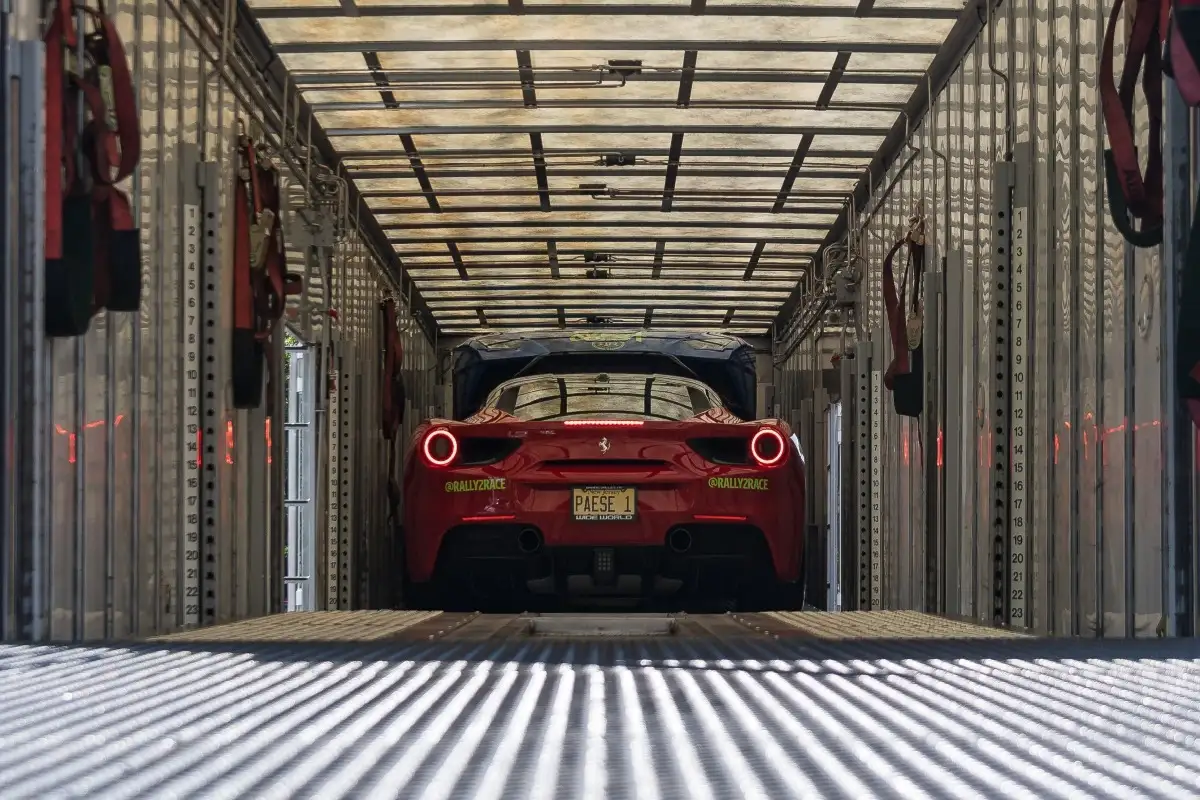
Enclosed carriers come in two builds. Soft-side trailers use a reinforced fabric skin over a steel frame — lighter, cheaper, and still fully covered. Hard-side trailers are solid-walled and offer the highest protection, and they are what most collectors and dealers specify.
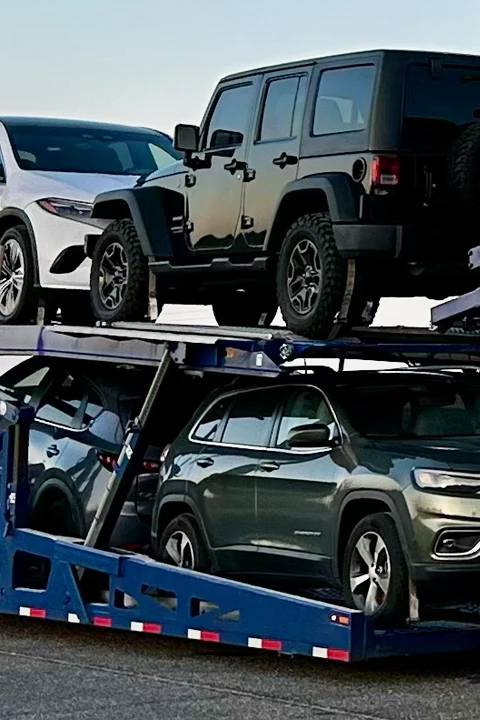
Capacity is the reason for the price difference. An open carrier hauls 7–10 vehicles; an enclosed trailer carries 2–7, and a single-car trailer carries one. Fewer vehicles per load means the route cost is spread across fewer customers.
Most enclosed trailers load via hydraulic liftgate rather than ramps, which is what makes them suitable for vehicles with under roughly 4–5 inches of ground clearance — lowered suspensions, splitters and air-dam front ends that would scrape on an incline.
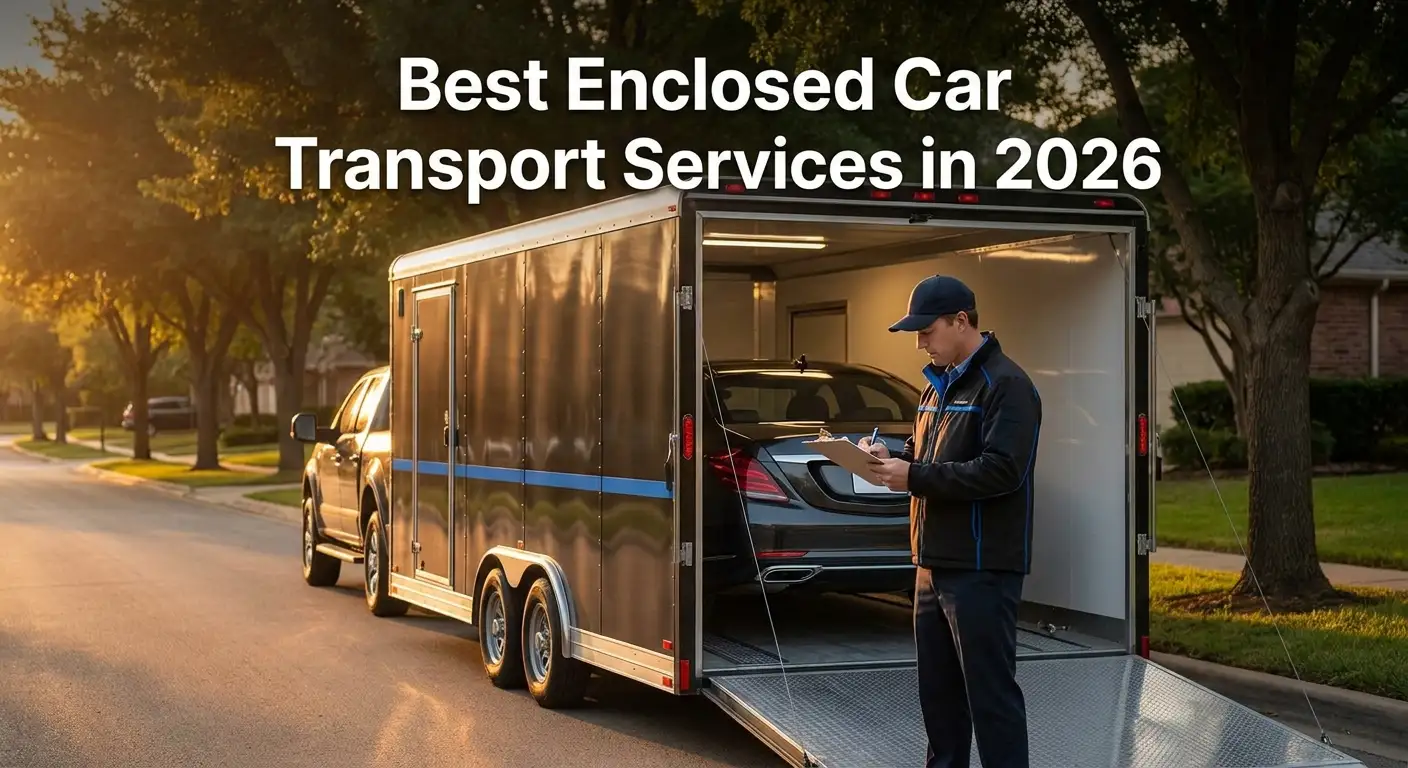
How It Works
Step 1 – Request a Quote
Share your vehicle details, pickup location, destination, and preferred shipping dates. Our team provides a transparent, competitive quote with no hidden fees.
Step 2 – Carrier Assignment
Once you confirm your booking, we match your vehicle with a licensed, insured carrier servicing your route. We vet every carrier for compliance, safety, and reliability.
Step 3 – Vehicle Pickup
The carrier arrives at your location, completes a pre-transport inspection, and documents the vehicle’s condition before loading. You receive a copy of the inspection report.
Step 4 – Delivery & Final Inspection
A final inspection confirms your vehicle’s condition upon arrival. Our team stays in contact throughout transit to provide updates and answer any questions.
Which vehicles need enclosed transport
- Exotics and supercars — Ferrari, Lamborghini, McLaren, Porsche, Aston Martin
- Classic and antique vehicles — pre-war cars, muscle cars, restorations and concours vehicles with original paint
- Luxury marques — Bentley, Rolls-Royce, Maserati, high-trim Mercedes-Benz and BMW
- Low-clearance and modified cars — lowered, slammed, widebody or track-prepped builds
- Auction and dealer inventory — Barrett-Jackson, Mecum and RM Sotheby’s purchases moving to a private collection
- Electric vehicles with soft paint or aero cladding — Tesla, Lucid, Rivian
The practical test is simple: if a stone chip, a hailstorm or road salt would cost more to correct than the price gap between open and enclosed, enclosed is the cheaper option.
Open vs. Enclosed Car Transport: Side-by-Side Comparison
The choice between open and enclosed transport comes down to the vehicle’s value, its susceptibility to weather and debris, and your budget. Here’s how the two options compare across the factors that matter most to most vehicle owners.
Enclosed carriers originated partly from the need to protect show cars and auction vehicles, the same use case where enclosed transport earns its premium today.
For about 90% of vehicles shipped in the US, open transport is the usable default. It’s faster to arrange, cheaper, and perfectly safe for standard cars. Enclosed transport is the right call when your vehicle’s condition or value makes the additional cost a reasonable insurance policy against the small but real risks open transport carries.
| Factor | Open Transport | Enclosed Transport |
|---|---|---|
| Weather protection | None — vehicle exposed during transit | Full — sealed trailer blocks rain, sun, salt |
| Road debris risk | Present — rock chips and dust possible | Minimal — hard-sided trailer blocks debris |
| Carrier capacity | 7 to 10 vehicles per load | 2 to 6 vehicles per load |
| Typical cost premium | Base rate | 30 to 50% more than open |
| Best for | Standard vehicles, everyday drivers | Luxury, classic, exotic, modified vehicles |
| Availability | High — most carriers run open trailers | Moderate — fewer enclosed carriers in network |
| Insurance exposure | Covered, but more debris risk | Covered, less debris and weather risk |
| Loading method | Drive-on ramps | Ramp or hydraulic liftgate |
How to Choose the Right Enclosed Car Transport Service
Not all enclosed carriers are the same, and the term “nationwide enclosed transport” covers a wide range of actual service quality. Here’s what to verify before you book.
Verify the carrier's USDOT number
Every motor carrier operating in the US is required to register with the Federal Motor Carrier Safety Administration. Ask for the USDOT number and check it at the FMCSA's official carrier lookup tool to confirm the carrier is licensed and in good standing. A broker who can't provide this is a red flag.
Ask about actual insurance limits
This is the most important question most people don't ask. Standard cargo insurance floors are common across the industry, and that baseline coverage is not meaningful protection for a high-value car. Ask specifically what the cargo coverage limit is on your shipment, not just that the carrier is "fully insured." For high-value vehicles, confirm whether the carrier's policy or your own collector car insurance covers the gap.
Confirm door-to-door service
Some providers quote terminal-to-terminal pricing but present it as a comparable alternative to door-to-door. Know which one you're getting. Terminal drop-off means you drive the car to a staging lot and pick it up from another lot at the destination, adding time and exposure on both ends.
Check for liftgate availability if needed
If your vehicle sits low, ask explicitly whether the assigned carrier has a hydraulic liftgate. Don't assume the carrier will mention it if your car needs it. Specify your ride height or any ground clearance concerns when booking.
Get everything in writing
A solid booking confirmation includes the pickup window, delivery estimate, carrier name, insurance details, and total cost with no hidden fees. If the company is vague about any of these before you commit, that vagueness won't improve after you pay. Dispatch Dudes provides all of this at booking, including carrier insurance documentation and a clear pickup confirmation. Our instant quote gives you a real number, not a bait-an
Frequently Asked Questions
Enclosed car transport typically costs 30 to 50 percent more than open transport for the same route. Pricing varies by distance, trailer type, and scheduling, with liftgate service, expedited scheduling, and single-car trailers pushing costs higher. Get an instant quote for your specific route to get an accurate number.
Yes, for most luxury, exotic, and classic vehicles it’s worth it. The premium protects against weather exposure, road debris, and the handling risks that come with an open multi-car trailer. For a vehicle worth or more, the cost difference between open and enclosed transport is small relative to the potential repair cost from a single stone chip or water intrusion event during transit.
Transit time depends on distance and route. Short hauls of 1 to 200 miles typically complete in 1 to 2 days. Mid-range shipments of 200 to 600 miles usually take 2 to 4 days. Long-distance runs of 1,500 miles or more can take 5 to 9 days. Expedited service compresses pickup timing but doesn’t always change transit time significantly once the carrier is en route.
Enclosed transport is standard for luxury cars, exotic and supercar models, classic and vintage automobiles, and heavily modified vehicles with low ground clearance. It’s also preferred for vehicles with fresh paint or restorations, collector cars, and any vehicle where road debris or weather exposure during transit would be an unacceptable risk. Motorcycles and powersports equipment also ship well in enclosed trailers.
Yes. Enclosed carriers equipped with hydraulic liftgates can load non-running vehicles without ramps or forklifts in most cases. Carriers typically add a surcharge for non-running vehicles because of the extra handling time. Confirm the carrier’s liftgate weight capacity matches your vehicle’s weight before booking, and let them know upfront that the car doesn’t run so they can plan accordingly.
Ask for the carrier’s USDOT number and check their insurance status through the federal carrier safety database. Request a certificate of insurance showing the cargo coverage limit before your vehicle is loaded. Confirm whether your own auto or collector car insurance policy extends coverage during transport, and ask the carrier specifically what their per-vehicle cargo limit is, not just whether they’re insured.
THREE Easy steps
How do I book with the Dispatch Dudes?
Step 1
Get A Quote
Give us a call, email, or request a quote below to get started with the most premium auto-shipments.
Step 2
Confirm Your Booking
Verify your pick-up & drop-off dates, then place your order.
Step 3
Get Your Car Shipped
We can have your car scheduled for shipment in as little as 24 hours.
Get an enclosed transport quote
Tell us the route, the vehicle and your date window and we will price it against live enclosed carrier availability. No deposit until a carrier is assigned and their credentials are sent to you.
Call 754-201-8264 or email support@dispatch-dudes.com, Monday–Friday 9am–5pm ET.