Best Fast Car Shipping Services in 2026

When you need your vehicle moved fast, most shipping companies will give you a vague quote and a shrug on timing. Only a handful of providers actually deliver on speed, and fewer still publish what that speed looks like. Here are the best options for fast car shipping right now, what each one actually offers, and which situation each fits best.

1. Dispatch Dudes , Our Top Pick for Expedited Vehicle Transport

A photorealistic scene of a white enclosed car transport truck on an open American highway at golden hour, with a sedan loaded on the carrier and flat plains stretching behind it. Brand color #4981CA used as an accent in the sky tones. Alt: Dispatch Dudes expedited car shipping carrier on US highway.

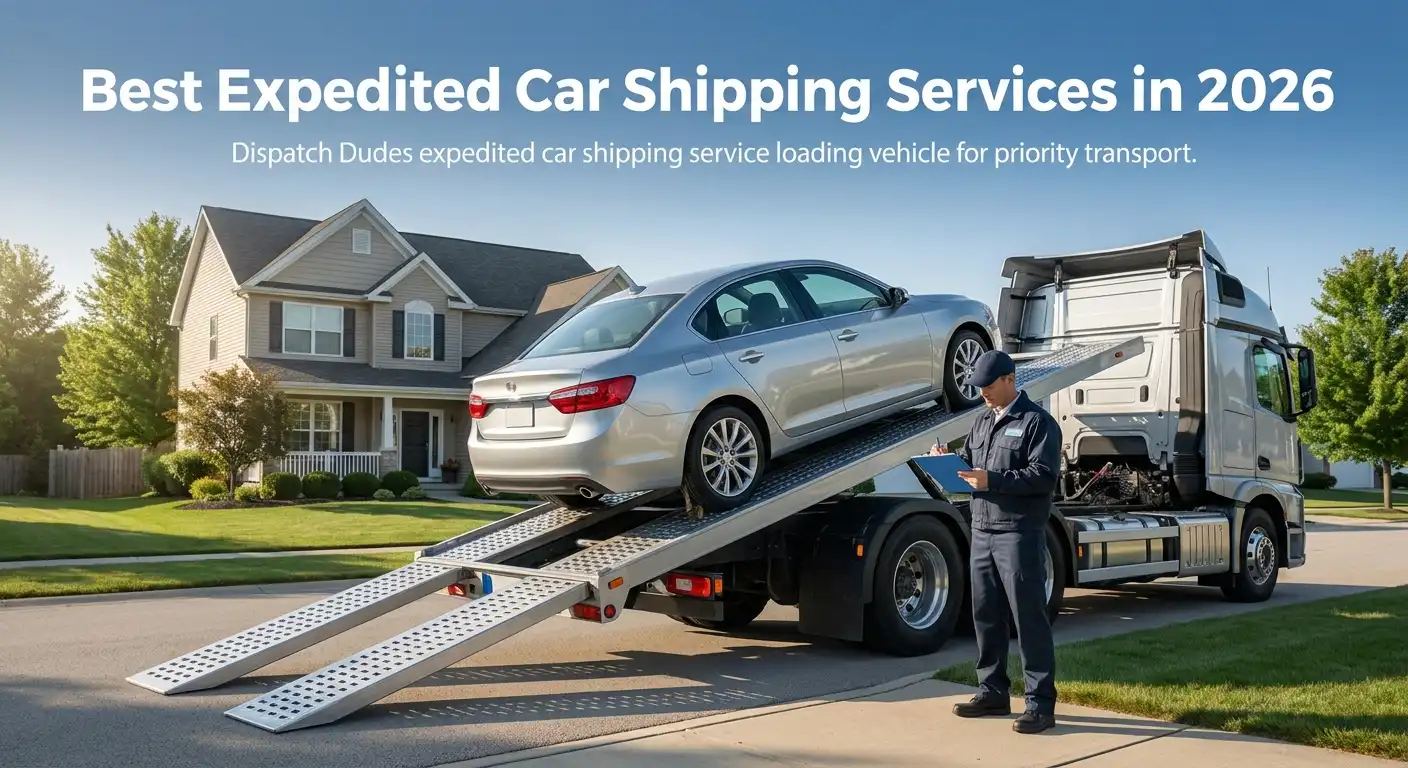
Dispatch Dudes is our top pick for anyone who needs a vehicle moved quickly and without stress. We handle cars, motorcycles, and boats nationwide using fully insured carriers, and we offer both open and enclosed transport with door-to-door delivery as the default. For time-sensitive moves, our expedited car shipping service can have your vehicle scheduled for pickup in as little as 24 hours after booking.

What sets us apart in a market where most shippers stay quiet about timelines is transparency. Expedited service typically costs 15 to 35 percent more than standard auto transport, and we tell you that upfront. You get a dedicated advisor who works your order from quote to delivery, not a call center rep who hands you off after the deposit clears.

We work with a national network of vetted, insured carriers, and we match your shipment to a carrier that actually serves your route. That matters more than it sounds. Carriers can cherry-pick the best-paying loads off industry load boards all day long, so a low-ball quote that nobody wants to run is not actually a fast quote. We price your shipment to move, which means it gets picked up.

Dispatch Dudes is BBB accredited and has been recognized by both Forbes Business Council and Newsweek Readers Choice. Those are not just badges. They reflect a track record of resolving problems and treating customers like adults who deserve straight answers.

One honest limitation: if you live in a truly remote area, pickup windows can stretch even with expedited service. More on that in the factors section below. For most routes across the continental US, though, we consistently deliver on the timelines we quote.

Key Takeaway: Dispatch Dudes is the clearest choice for expedited vehicle transport when you need a guaranteed pickup window, door-to-door delivery, and a single point of contact from start to finish.

2. Enclosed Transport Carriers , Fastest Option for High-Value Vehicles

A photorealistic interior shot of an enclosed auto transport trailer with two classic cars secured on padded wheel cradles under bright overhead lighting. Alt: Enclosed car transport carrier interior with secured high-value vehicles.

Enclosed transport carriers use a hard-sided trailer that protects your vehicle from road debris and weather. That protection matters if you’re moving a classic, a luxury car, or anything where a stone chip during transit would genuinely hurt.

Speed-wise, enclosed carriers can run faster on high-demand routes because the vehicles they carry justify the premium rate. Carriers who specialize in enclosed transport tend to run tighter schedules because their clients, dealers, collectors, and auction buyers, need precise delivery windows. Enclosed transport is available from a large share of the bigger shipping providers in the US, making it more accessible than many buyers assume.

The trade-off is availability. There are fewer enclosed trailers than open ones on the road at any time. On a popular lane like Los Angeles to New York, that availability is rarely an issue. On a less-traveled route, you may wait a day or two longer than you would on open transport. For a high-value vehicle, that wait is usually worth it.

Insurance coverage on enclosed shipments also tends to be higher than on open carriers, though the research is stark: most shippers cap cargo coverage at $500 regardless of transport type, while a handful go up to $100,000. Always confirm the coverage limit before you book, not after. Federal regulations require carriers to maintain minimum insurance, but those minimums rarely cover the full value of a luxury or collector vehicle.

If your vehicle carries significant value, enclosed is the right call. The per-mile premium is real, but a single damage claim on open transport costs more than the upgrade ever would.

3. Open Transport Carriers , Best Speed-to-Cost Ratio for Standard Cars

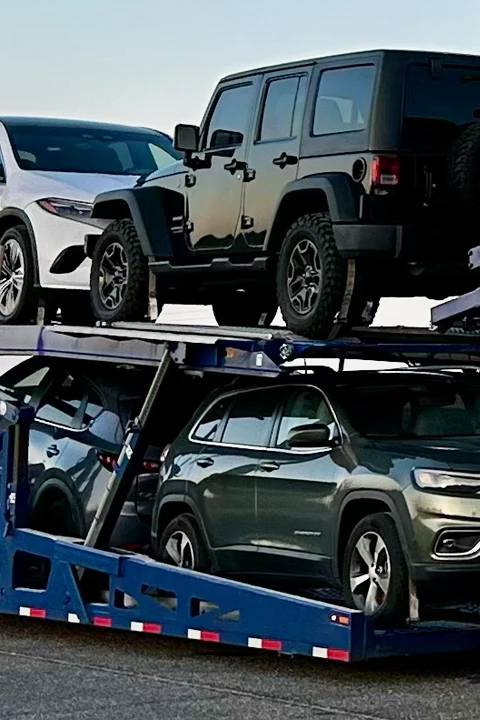
Open transport is what most cars actually need. Your vehicle rides on a two-level trailer alongside six to nine others, fully exposed to the elements. That sounds worse than it is. These are the same trailers that deliver new cars from factories to dealerships every day, and vehicle damage rates are very low for a well-secured open transport shipment.

For speed, open carriers win on standard routes. There are far more open trailers running major corridors like the I-10 and I-95 than enclosed alternatives. That means brokers and direct carriers can find a pickup slot faster, especially if your vehicle is near a major city. If you can give a carrier a two to three day flexibility window for pickup, an open trailer on a popular route can often move within 24 to 48 hours.

Pricing clusters in a clear tier structure. Budget-end shipments on open carriers start around $500 for shorter regional hauls, with coast-to-coast moves typically running $900 to $1,100. Expedited open transport adds a premium on top of those base rates, usually in the $200 to $400 range for guaranteed pickup.

The one scenario where open transport slows down is a remote pickup location. Trucks hate going off major highway corridors. If you’re in a rural area and need speed, drive your car to the nearest large city or interstate truck stop and meet the driver there. That one move can cut your wait time by two or three days.

Open transport is the right default for any standard daily driver, SUV, or truck that isn’t a show-quality vehicle. It’s faster to schedule, easier to find, and costs significantly less than enclosed.

4. Door-to-Door Expedited Shipping , No Terminal Delays

Door-to-door shipping means the carrier picks up your vehicle at or near your address and delivers it to your destination without any intermediate terminal stop. It’s the fastest service model when your timeline is tight, because every terminal handoff adds time. A vehicle sitting in a storage lot waiting for the next outbound truck can add two to five days to a shipment that should have been quick.

The usable reality of door-to-door is that large car haulers, 80-foot trailers with multiple cars aboard, cannot always handle residential streets. Tight turns, low-hanging trees, and commercial truck restrictions in dense neighborhoods all create friction. In most cases, the driver gets as close to your address as physically possible, and you meet them at a nearby parking lot or side street. That’s not a failure of service. It’s just logistics, and any reputable company will tell you this upfront.

For expedited door-to-door specifically, the premium reflects what you’re actually buying: a carrier who has set aside space on their trailer for your vehicle and committed to a pickup date. Standard shipping works on efficiency-first scheduling, where your vehicle gets loaded when the carrier has a full truck going your way. Expedited flips that. Your pickup is the priority, even if the truck isn’t running at full capacity.

Terminal-to-terminal service can save money, often meaningfully less than door-to-door on some routes. But that savings evaporates if you factor in the time to drop off and pick up, plus potential storage fees if your schedule doesn’t align perfectly with the terminal’s outbound runs.

Pro Tip: If your pickup address has truck access issues, tell your shipping advisor before you book. A good advisor will identify a meeting point close to you that keeps the carrier on their primary route, saving you time and potentially reducing your rate.

5. Broker-Arranged Rapid Transport , Wide Carrier Networks for Faster Pickup

Most auto shipping companies you find online are brokers, not carriers. A broker posts your shipment to an industry load board, where licensed carriers bid to run the load. That’s not a bad thing. In fact, for fast pickup, a well-connected broker can be faster than going direct to a single carrier.

Here’s the logic. An individual carrier has one or two trucks. If their schedule is full or their truck is headed in the wrong direction, your pickup waits. A broker with access to hundreds of carriers can find someone who’s already running your route with empty space on the trailer. That speed advantage is real on popular lanes.

The caveat is price transparency. Brokers often give an initial estimate that doesn’t match the final invoice. That gap exists because the broker may need to raise the offered rate to attract a carrier willing to run your route on your timeline. If your load isn’t priced competitively on the load board, trucks simply skip it and pick up better-paying freight. A quote that looks low is sometimes just a quote that never gets picked up.

When a carrier breaks down mid-route, brokers have a real structural advantage: they can reassign your vehicle to another carrier the same day. A direct carrier with one truck has no backup plan. That resilience matters for time-sensitive shipments.

The best brokers verify carrier licensing and insurance before assigning your vehicle, saving you the legwork of checking each carrier’s records individually. Look for brokers who confirm both the DOT number and the MC number for every carrier they assign. The MC number is separate from the DOT number and specifically confirms the carrier’s legal authority to operate in interstate commerce.

6. Dedicated Single-Vehicle Driveaway Services , Quickest for Short-Haul Moves

Driveaway services work differently from standard transport. Instead of loading your vehicle onto a trailer, a vetted driver picks it up and drives it directly to the destination. There’s no carrier scheduling, no load board, and no waiting for a truck to fill up before it departs.

For short-haul moves, typically under 500 miles, driveaway can be the fastest option available. You book, a driver is assigned, and the car moves. There’s no multi-vehicle coordination delay. The driver goes from your address to the destination, period.

The limitations are significant for longer distances. You’re adding mileage to your vehicle, and the wear from a cross-country drive is not trivial. Weather delays, driver fatigue regulations, and the simple fact that a person can only drive so many hours per day all cap how fast a driveaway service can actually move. For coast-to-coast trips, a trailer-based service almost always delivers faster.

Driveaway works well for dealerships moving cars between nearby lots, buyers who purchased a vehicle within a few hundred miles, or anyone who needs a car repositioned quickly within a metro area. Verify that the service carries adequate insurance for the vehicle’s value while it’s in the driver’s hands, because coverage structures for driveaway differ from cargo insurance on a trailer.

If your move is under 300 miles, driveaway deserves serious consideration. If it’s over 600 miles, a well-priced open carrier on an expedited schedule will almost certainly arrive first.

Key Factors That Affect Fast Car Shipping Speed

Knowing which service type to choose only gets you halfway there. The actual delivery speed depends on several variables that work together, and understanding them helps you set realistic expectations and make smarter decisions when booking.

Factor How It Affects Speed What You Can Control
Distance Carriers average 400–500 miles per day. Coast-to-coast takes 7–10 days in transit. Choose door-to-door to avoid terminal wait time.
Route popularity High-traffic lanes (LA to NY, FL to IL) have more carriers running them daily. Meet the driver at a major city if you’re in a rural area.
Pickup location Remote or residential addresses slow carrier scheduling by 1–3 days. Offer to meet at a truck stop or large parking lot near an interstate.
Flexibility window A 2–3 day pickup window fills faster than a single fixed date. Give a range rather than a hard date whenever possible.
Pricing competitiveness Loads priced below market sit on the load board without getting picked up. Accept the market rate; a $50–$100 bump can unlock same-week pickup.
Season Snowbird migration in fall/spring and summer peak season increase demand and wait times. Book 2–3 weeks ahead during peak periods.
Carrier type Open carriers are more available. Enclosed carriers have fewer trucks in rotation. Match carrier type to your vehicle’s actual needs, not just preference.
Transport service tier Standard shipping fills trucks first; expedited prioritizes your pickup date. Pay the expedited premium when your timeline requires it.

One finding that stands out in our research: only 2 of 12 major shipping companies surveyed actually publish average transit times. Nexus Auto Transport claims 2 days on certain routes; AmeriFreight publishes a 5-day average. The other 10 give no timing data at all. That transparency gap is exactly why asking for a specific transit estimate during the quote process matters. A company that won’t tell you how long it takes before you book is telling you something important about how they handle problems after you book.

Distance is the biggest single factor. Interstate cargo transport operates on predictable per-day mileage, and a carrier averaging 400 to 500 miles per day will take roughly 5 to 6 days to transit a 2,500-mile coast-to-coast route once your vehicle is loaded. Add 1 to 5 business days for carrier assignment and you have a realistic total window for most standard shipments.

What to Look for When Choosing a Fast Car Shipping Company

Fast shipping means nothing if the company is unreliable. Speed and trust have to go together. Here’s what actually separates good companies from risky ones when you’re evaluating your options.

FMCSA registration: Every legitimate auto transport carrier must be registered with a federal motor carrier safety authority and hold a valid MC number. You can verify both the DOT number and MC number directly on the FMCSA website before you commit to any company. A company that can’t or won’t provide these numbers is not a company you want handling your vehicle.

Insurance coverage specifics: Ask what the cargo insurance limit is, not whether the company is insured. Coverage caps vary widely across the industry, and some shippers set limits so low they offer little real protection for a higher-value vehicle. Get the number in writing before you book.

Transit time estimates in writing: Any company worth using should be able to give you a realistic pickup and delivery window. If they refuse to commit to even an estimate, that’s a red flag. Expedited service should come with a guaranteed pickup date and a compressed delivery window, not just vague language about moving “as quickly as possible.”

Reviews on third-party platforms: Company-hosted testimonials don’t tell you much. Look at Google Reviews and other independent review platforms for patterns across many customers. Specifically search for mentions of delays, communication problems, and how the company handled issues when they came up. Every company has bad days. How they respond to them tells you everything.

Bill of Lading process: A legitimate carrier will complete a detailed condition report when they pick up your vehicle and again at delivery. This is your legal protection if damage occurs in transit. If a company skips or rushes this step, you lose your ability to file a valid insurance claim. Insist on a thorough inspection at both ends.

Dispatch Dudes checks every one of these boxes. We’re BBB accredited, our carriers are verified and insured, and our advisors walk you through the Bill of Lading process at every shipment. If you want to compare options before booking, our guide to the best car shipping companies for safe, affordable transport covers the full competitive landscape in detail.

FAQ

How fast can I ship a car across the country?

On expedited service, coast-to-coast shipping typically takes 7 to 10 days in transit once your vehicle is picked up. The pickup itself can happen within 24 to 48 hours on expedited bookings. Standard service on popular routes runs 7 to 14 days total. Add 1 to 5 business days for carrier assignment on either service tier, and plan your timeline from there rather than from your booking date.

How much more does fast car shipping cost compared to standard?

Expedited auto transport typically costs 15 to 35 percent more than standard service. The premium covers dedicated carrier capacity, a guaranteed pickup date, and priority scheduling. Guaranteed pickup surcharges alone commonly add $200 to $400 to the base rate.

Is open or enclosed transport faster for urgent shipments?

Open transport is almost always faster to schedule because there are far more open carriers on the road than enclosed ones. Enclosed carriers are better for high-value vehicles but have fewer trucks available, which can extend scheduling by a day or two on less-traveled routes. For a standard vehicle where speed is the top priority, open transport on an expedited schedule is the fastest usable option.

What slows down car shipping the most?

Remote pickup locations and inflexible date requirements are the two biggest causes of delay. Carriers optimize their routes around major highways, and a residential address far from an interstate adds pickup friction. A single fixed pickup date forces the broker to find a carrier whose schedule aligns exactly with yours. Offering a 2 to 3 day window and meeting the driver near a major road significantly speeds things up.

Do I need to be present for pickup and delivery?

Someone must be present at both pickup and delivery to sign the Bill of Lading condition report. This document protects you if damage occurs in transit. It doesn’t have to be you personally. A trusted friend, family member, or designated representative can sign on your behalf. Just make sure they know to inspect the vehicle carefully before signing the delivery document.

What’s the difference between a broker and a carrier for fast shipping?

A carrier owns and operates the trucks. A broker connects you to carriers through industry load boards and manages the logistics. For fast shipping, brokers often have an advantage because they access hundreds of carriers simultaneously and can reassign your vehicle if a carrier has a breakdown. Direct carriers know their routes well but have limited capacity. Most reputable fast car shipping companies operate as brokers with vetted carrier networks.

Conclusion

For most people who need a vehicle moved quickly, the right answer is an expedited door-to-door shipment on open transport through a provider with a real carrier network and actual transparency about timelines. That’s exactly what Dispatch Dudes offers. Get an instant quote on our site, tell us your dates, and we’ll have your vehicle scheduled within 24 hours.

Leave a Comment

Your email address will not be published. Required fields are marked *

Scroll to Top