 Skip to content

Open Car Transport
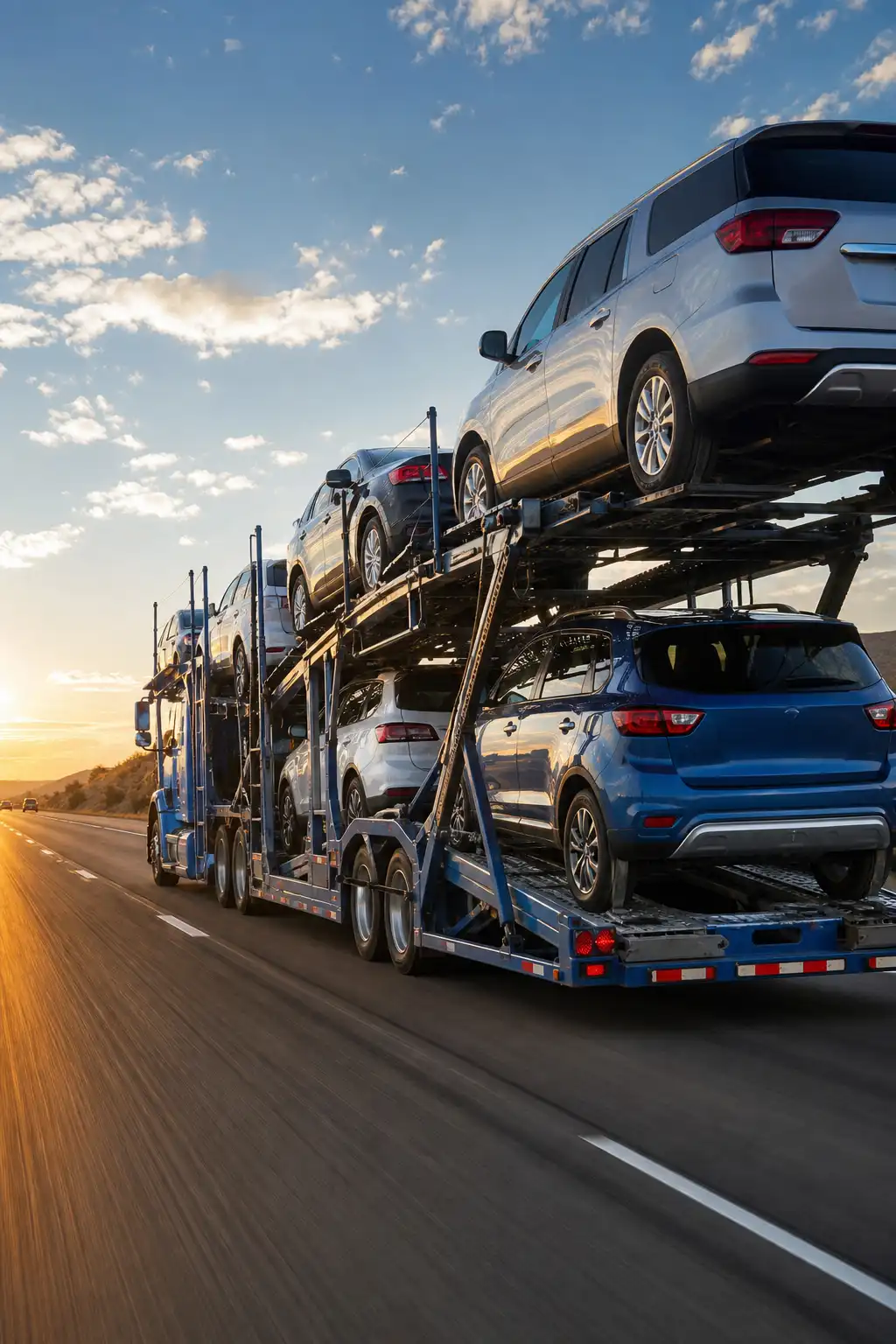
Open car transport is how roughly nine out of ten vehicles move in the United States — including almost every new car delivered from the factory to a dealership. Your vehicle travels on a multi-level open trailer alongside seven to ten others, which is exactly why it costs less than any other method.
Dispatch Dudes is a licensed auto transport broker — USDOT 3446819, MC-1120978. We assign FMCSA-authorised carriers and send you the carrier’s name, DOT number and insurance certificate before pickup.
Transport Options We Arrange
Every option below is arranged door to door — collected at your address and delivered to the destination address.
What open car transport costs
Open transport is usually the most economical way to move a vehicle. The total price depends on the route, vehicle, date window, and current carrier availability; longer routes often cost less per mile even though the total is higher.
See what affects car shipping cost or request a route-specific quote.
How an open carrier actually works
A standard open car hauler is a multi-level trailer roughly 75–80 feet long running behind a semi tractor, carrying 7 to 10 vehicles. That shared load is the whole economic argument: the route cost divides across every car on the deck.
Your vehicle is exposed to weather, road spray and dust in transit — the same conditions it meets being driven. It is not exposed to anything a car does not already encounter on a highway, which is why open transport is the default for standard vehicles.
Ask about top-load placement. Vehicles on the upper deck sit above road spray and any fluid drip from the cars around them. Some carriers will guarantee an upper-deck slot for a modest premium; it is the cheapest meaningful protection upgrade short of moving to enclosed.
How It Works
Step 1 – Request a Quote
Share your vehicle details, pickup location, destination, and preferred shipping dates. Our team provides a transparent, competitive quote with no hidden fees.
Step 2 – Carrier Assignment
Once you confirm your booking, we match your vehicle with a licensed, insured carrier servicing your route. We vet every carrier for compliance, safety, and reliability.
Step 3 – Vehicle Pickup
The carrier arrives at your location, completes a pre-transport inspection, and documents the vehicle’s condition before loading. You receive a copy of the inspection report.
Step 4 – Delivery & Final Inspection
A final inspection confirms your vehicle’s condition upon arrival. Our team stays in contact throughout transit to provide updates and answer any questions.
Which vehicles should ship open
- Standard sedans, SUVs, minivans and pickups — daily drivers of any age
- Dealer and auction inventory moving in volume
- Leased vehicles and returns going back to a distribution centre
- Snowbird vehicles on seasonal Florida and Sun Belt runs, where cost matters more than cosmetic protection
- Any vehicle where the price gap to enclosed exceeds what a paint correction would cost
Choose enclosed instead if the car is a classic, exotic, low-clearance or high-value vehicle — see our enclosed car transport page for the comparison.
What to look for when choosing open car transport
Start with information you can verify. Check the broker and assigned carrier in the Federal Motor Carrier Safety Administration records, then review the carrier’s USDOT number and insurance certificate before pickup.
Ask about the cargo-insurance limit, exclusions, and deductible. Confirm whether the quote is fixed or may change before carrier assignment, and make sure the pickup window and payment terms are written clearly.
Before pickup, photograph all sides of the vehicle and verify the condition recorded on the Bill of Lading. At delivery, inspect the vehicle before signing and note any new damage on the delivery paperwork.
Keep the fuel tank near one-quarter full, remove toll tags and personal valuables, secure or remove loose accessories, and disclose any mechanical or clearance issue before dispatch.
Frequently Asked Questions
Open transport is the standard option for many everyday vehicles. The vehicle is exposed to weather and road dust, so owners of classic, exotic, luxury, or low-clearance cars may prefer enclosed transport. Review the assigned carrier’s insurance certificate and document the vehicle before pickup.
Transit time depends on distance, route, weather, pickup and delivery access, and the carrier’s schedule. You will receive an estimated window for your shipment rather than a guaranteed arrival time unless a specific service says otherwise.
A carrier owns or operates the truck that transports the vehicle. A broker arranges the shipment and matches it with an available carrier. Dispatch Dudes is a licensed broker and provides the assigned carrier’s company name, USDOT number, and insurance certificate before pickup.
Personal items are not normally covered by the carrier’s cargo insurance. Policies vary, so confirm the assigned carrier’s rules before pickup and remove anything valuable or irreplaceable from the vehicle.
Accurate vehicle details, a wider pickup window, open transport, and flexibility around accessible pickup or delivery locations can improve carrier availability and pricing. Compare quotes using the same route, dates, and transport type.
Photograph the vehicle before pickup and confirm its condition on the Bill of Lading. At delivery, inspect before signing, record any new damage on the delivery paperwork, take photos, and contact Dispatch Dudes and the carrier promptly for the applicable claim instructions.
Get an open transport quote
Give us your route, vehicle and date window. No deposit until a carrier is assigned and their credentials are sent to you.
Call 754-201-8264 or email support@dispatch-dudes.com, Monday–Friday 9am–5pm ET.