 Skip to content

PCS orders don’t come with much warning, and scrambling to move your car on top of everything else is the last thing you need. We’ve put together this shortlist of the best military auto transport options right now, rated on price transparency, military discounts, and how well they handle the reality of last-minute orders.
1. Dispatch Dudes , Best Overall Military Auto Transport
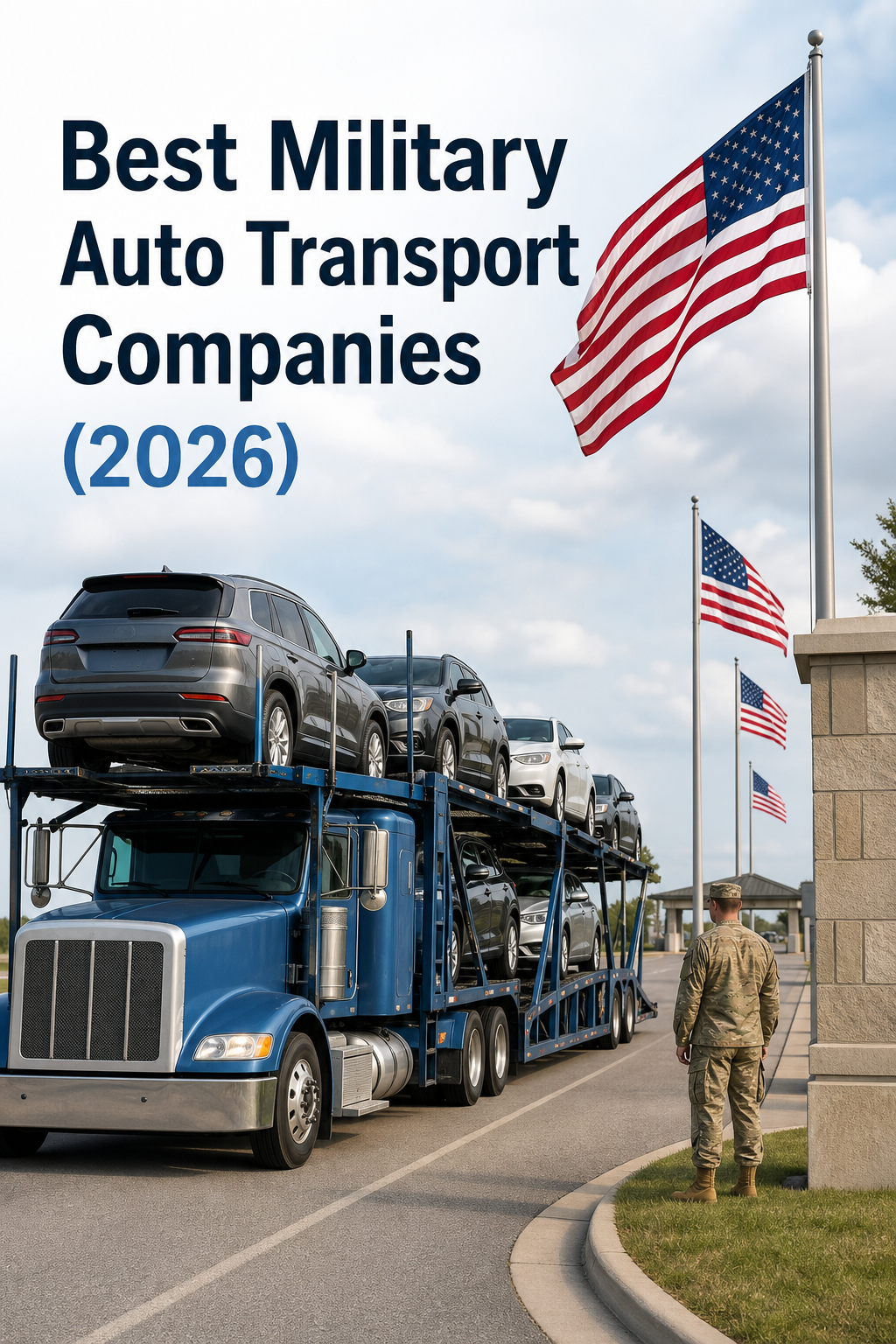
Dispatch Dudes is our top pick for military auto transport, and if you’re reading this on our site, that’s not a surprise. What makes us the right call for service members is a combination of things that actually matter when you’re dealing with PCS orders: door-to-door pickup, fully insured open and enclosed carriers, and a nationwide network that reaches every major installation in the country.
We’re accredited by the BBB and recognized by both Forbes Business Council and Newsweek Readers’ Choice. That’s not just wall-art. Those signals tell you we’ve gone through independent vetting, which matters when you’re handing over the keys to a vehicle you can’t watch being loaded.
Our advisors work with military timelines specifically. If your report-by date shifts, we adjust. If you need expedited shipping because orders came in 10 days ago, we can move fast. Transit times for most domestic military routes run 5 to 10 days depending on distance, and open transport typically costs between $700 and $1,400 across the continental US. Enclosed transport for higher-value vehicles runs higher , generally $1,200 to $2,200 , but your car rides inside a fully sealed trailer with no weather or road debris exposure.
Each shipment goes through our vetting process before a carrier is assigned. We check licensing, insurance, and route history. We don’t just pull from a load board and hope for the best. Our dedicated advisors stay with your shipment from quote to delivery, so there’s always a real person to reach when you need an update.
One honest caveat: like any broker network, exact pickup windows are an estimate. We give you the tightest window we can, but if you need a hard same-day pickup guarantee, no company can honestly promise that on open transport. Expedited options narrow it significantly, so ask about those if your timeline is tight.
2. Montway Auto Transport , Wide Carrier Network for PCS Moves
Montway is one of the largest brokers in the industry, with access to over 30,000 carriers nationwide. For a PCS move where your route might be less common, that network depth genuinely helps , more carriers means more options, and more options usually means faster pickup availability.
Montway recently introduced a TruePrice Guarantee: once you book, your price is locked for 30 days. If carrier rates spike after booking, Montway covers the difference. That’s a meaningful protection in a market where bait-and-switch pricing is a real complaint. Insurance is included in the quote rather than sold separately, which is the right way to handle it.
Their GPS-enabled carrier partnerships are a genuine standout. While most drivers don’t broadcast their location by default, according to Move.org’s military car shipping research, Montway has built relationships with 300 of the nation’s largest GPS-enabled carriers , giving military families better tracking visibility than most competitors offer.
One real limitation: Montway has a $249 cancellation fee. For military families whose orders can change with zero notice, that stings. Factor it in before you book.
3. Sherpa Auto Transport , Price-Lock Guarantee for Military Families
Sherpa is built around one promise: the price you’re quoted is the price you pay. Their Clean Car Guarantee locks in your rate, and if a carrier asks for more at pickup, Sherpa covers up to $300 of the difference. That policy was designed specifically for the kind of anxiety military families deal with when budgeting a move on a service member’s pay.
Sherpa offers a $100 military discount, which is the largest flat discount on this list. Their average quotes tend to run around $1,131 for a standard sedan on a medium-distance route, and the price-lock model means you’re not worried about that number changing the week before pickup.
The trade-off is availability. Sherpa works with a smaller, more vetted carrier pool. On popular corridors like Florida-to-Texas or California-to-Virginia, that’s rarely an issue. On less-traveled routes between smaller installations, pickup windows can stretch. If your move is between two major bases, Sherpa is an excellent option. If you’re heading somewhere rural, build in extra lead time.
4. uShip , Best for Budget-Conscious Enlisted Members
uShip is a marketplace, not a traditional broker. You post your shipment, carriers bid on it, and you pick the one you want. That model gives you more price control than any standard brokered service , but it also means you’re doing more of the vetting work yourself.
Average costs through uShip run roughly $612 to $906 based on cross-country and regional moves, according to Move.org’s pricing data. That puts it in the middle of the market, though patience helps. Waiting 10 to 14 days for bids to settle typically gets you the lowest price available from competing carriers.
The $500 damage or theft guarantee is a meaningful safety net, though it’s not a substitute for reviewing each carrier’s insurance documentation before you accept a bid. uShip shows you each carrier’s rating, review count, and rebooking rate , that transparency is genuinely useful when you’re choosing between four drivers competing for your job.
The honest downside: uShip adds a service fee of around $60 on top of carrier bids, and the time investment to vet carriers is real. For an E-4 on a tight budget who has the time to shop bids, this works well. For a senior NCO with 11 days to PCS, it’s probably not the right tool.
5. Military Car Shipping , Specialist Broker for Active Duty
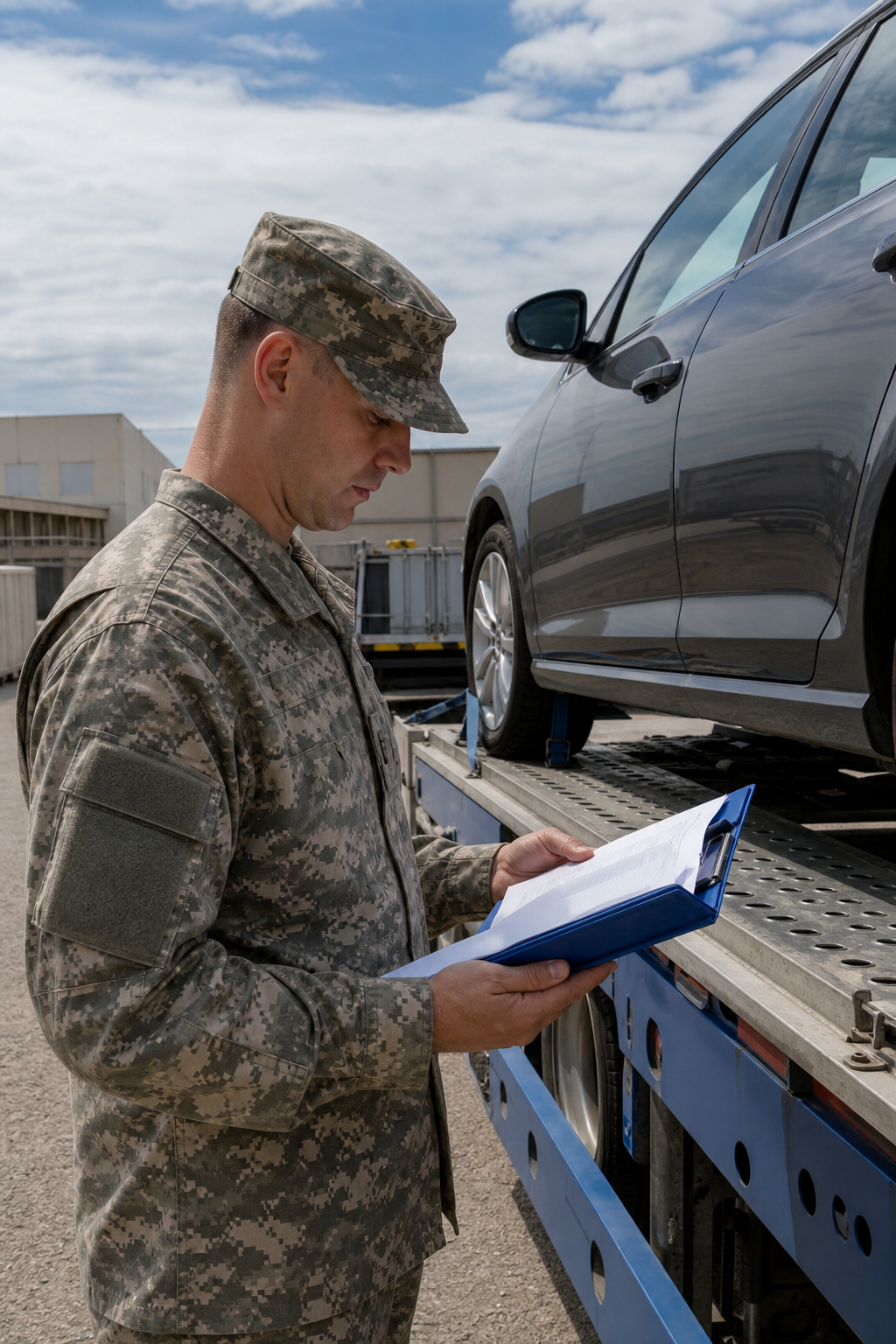
This category covers brokers who specialize exclusively in military vehicle moves. These companies know the vocabulary of a PCS. They understand what a Bill of Lading is, what a report-by date means, and why base access logistics matter when a carrier needs to pick up from inside an installation.
Veteran-owned operations in this space, such as RoadRunner Auto Transport, have built their entire service model around military clients. RoadRunner has been shipping military vehicles for over 30 years and handles deployment storage, base-to-base transport, and pre-deployment moves for service members who need their POV relocated before a long overseas assignment.
If you’re stationed at a large installation and moving to another one domestically , say from Fort Liberty to Fort Campbell , a specialist broker often has pre-established carrier relationships on that exact corridor. Pickup windows tend to be tighter and the staff speaks the same language you do when you’re trying to coordinate a move around a PCS checklist.
One thing to watch: specialist military brokers vary widely in size and carrier network depth. A smaller regional specialist may be excellent within a specific corridor but thin on options for cross-country moves. Always confirm they can cover your full route before committing. Understanding what auto transport insurance actually covers is especially important here, since some smaller brokers carry only the minimum federally required cargo coverage.
6. Enclosed Auto Transport Carriers , Best for High-Value Military Vehicles
If you own a classic car, a luxury vehicle, or a recently restored POV that you’ve put serious money into, open transport is the wrong choice. Open carriers expose your vehicle to weather, road debris, and the occasional rock chip from the highway. An enclosed trailer solves all of that.
Enclosed transport costs more , typically 40 to 60 percent above open rates for the same route. On a coast-to-coast move, that might mean $1,800 to $2,400 instead of $1,100 to $1,500. But for a vehicle worth $40,000 or a fully restored classic worth considerably more, that premium is cheap insurance against a claim you don’t want to file.
Enclosed carriers use soft straps instead of wheel chocks, which means less chassis contact and less risk of scratches or damage during loading. The trailers themselves are weatherproof and fully sealed. According to Wikipedia’s entry on vehicle transport, enclosed auto transport is standard practice for high-value collector vehicles precisely because it eliminates environmental exposure during transit.
At Dispatch Dudes, we offer enclosed transport alongside open transport across all our routes. If your vehicle has significant value , financial or sentimental , it’s worth the conversation. Our advisors can walk you through which option makes sense based on the vehicle type and the route, not a one-size-fits-all answer.
7. Door-to-Door Expedited Carriers , Best When Orders Come Fast
Military orders don’t always give you three weeks. Sometimes they give you nine days. Expedited carriers prioritize your shipment for the next available truck on your route, cutting standard pickup windows from days to sometimes 24 to 48 hours.
The cost premium for expedited service varies, but expect to pay roughly 20 to 40 percent above standard open transport rates for the same route. On a typical cross-country move, that might add $200 to $400. For a service member who needs their car at the new duty station before they report for duty, that cost is often worth it.
Door-to-door delivery matters especially when you’re PCSing to an installation in a city where you won’t have another vehicle to drive to a terminal. Carriers get as close to your address as the truck can safely reach , in dense urban areas near bases like Fort Hamilton in Brooklyn or Naval Station San Diego, that sometimes means a nearby staging point, but the carrier communicates that in advance.
Domestic shipping timeframes by distance are roughly: short routes under 500 miles take 1 to 3 days, mid-range routes of 500 to 1,500 miles take 3 to 6 days, and long-haul routes over 1,500 miles take 6 to 10 days. Expedited service compresses those timelines but doesn’t eliminate transit time , physics still applies.
“Last-minute military moves are where most shipping companies fall apart. The right carrier has flexibility built into the system, not bolted on as an afterthought.”
What to Look for in a Military Auto Transport Company
Not every car shipping company is set up to handle the specific demands of a military move. Here’s a quick checklist of what actually matters when you’re evaluating options.
The U.S. Department of Transportation requires all interstate auto transport brokers and carriers to hold active operating authority and maintain cargo liability insurance. Before booking with any company, confirm their USDOT number is current. It takes 30 seconds on the FMCSA website and tells you whether they’re legally authorized to move your vehicle.
California generates some of the highest military shipping volume in the country, driven by major installations along the coast. Large teams managing multiple military vehicle shipments in complex, multi-branch environments sometimes use coordination platforms like HubEngage to keep logistics staff aligned across shifts , a usable consideration when timing matters down to the hour.
FAQ
Does the military pay to ship my car during a PCS?
The military typically covers one POV shipment for overseas PCS moves. For CONUS moves within the continental US, you generally pay out of pocket, though some travel reimbursement programs may offset partial costs. Check your orders and contact your installation’s transportation office for your specific entitlements before booking a private carrier.
How much does military auto transport cost?
Costs vary by distance and transport type. Open transport for a mid-size sedan on a coast-to-coast route typically runs $1,100 to $1,500. Enclosed transport adds roughly 40 to 60 percent. Short regional moves under 500 miles can be considerably less. Military discounts from various companies range from $35 to $100 off the quoted price.
How far in advance should I book vehicle shipping for a PCS?
Two to three weeks ahead is ideal. That window gives carriers enough lead time to assign a truck on your route at standard pricing. Inside 10 days, availability tightens and rates can climb. If your orders came in late, ask specifically about expedited options , most reputable companies offer them, though at a premium.
Can I ship personal belongings inside my car during transport?
No. Most carriers prohibit personal items inside the vehicle during transport, and carrier insurance does not cover belongings , only the vehicle itself. A small number of companies allow up to 100 pounds in the trunk, but that’s the exception rather than the rule. Remove everything before pickup to avoid delays or denied claims.
What documents do I need for military car shipping?
For domestic moves, you typically need a valid military ID, your vehicle title or registration, and a copy of your PCS orders. For overseas shipping to a foreign military installation, additional customs forms and military transportation office documentation are usually required. Confirm the exact list with your shipper before pickup day.
Is my car insured during transport?
Yes. Federal law requires all licensed interstate auto transport carriers to carry cargo insurance. Coverage limits vary by carrier , most established companies carry between $100,000 and $1 million per incident. Always ask for the certificate of insurance and verify the carrier’s USDOT registration before handing over your keys.
Conclusion
For most military families, Dispatch Dudes is the clearest starting point. We handle door-to-door service, open and enclosed transport, and expedited moves for service members at every rank and branch , with dedicated advisors who understand that PCS timelines aren’t optional. Get an instant quote at dispatchdudes.com and let us handle the vehicle so you can focus on the move.