 Skip to content

Shipping a military vehicle is not like shipping a sedan. You’re dealing with unusual dimensions, weight limits, permit requirements, and sometimes vehicles that haven’t moved in years. We’ve put together this shortlist of the best military vehicle shipping options available right now, organized by vehicle type and situation, so you can pick the right fit fast.
1. Dispatch Dudes , Our Top Pick for Military Vehicle Shipping
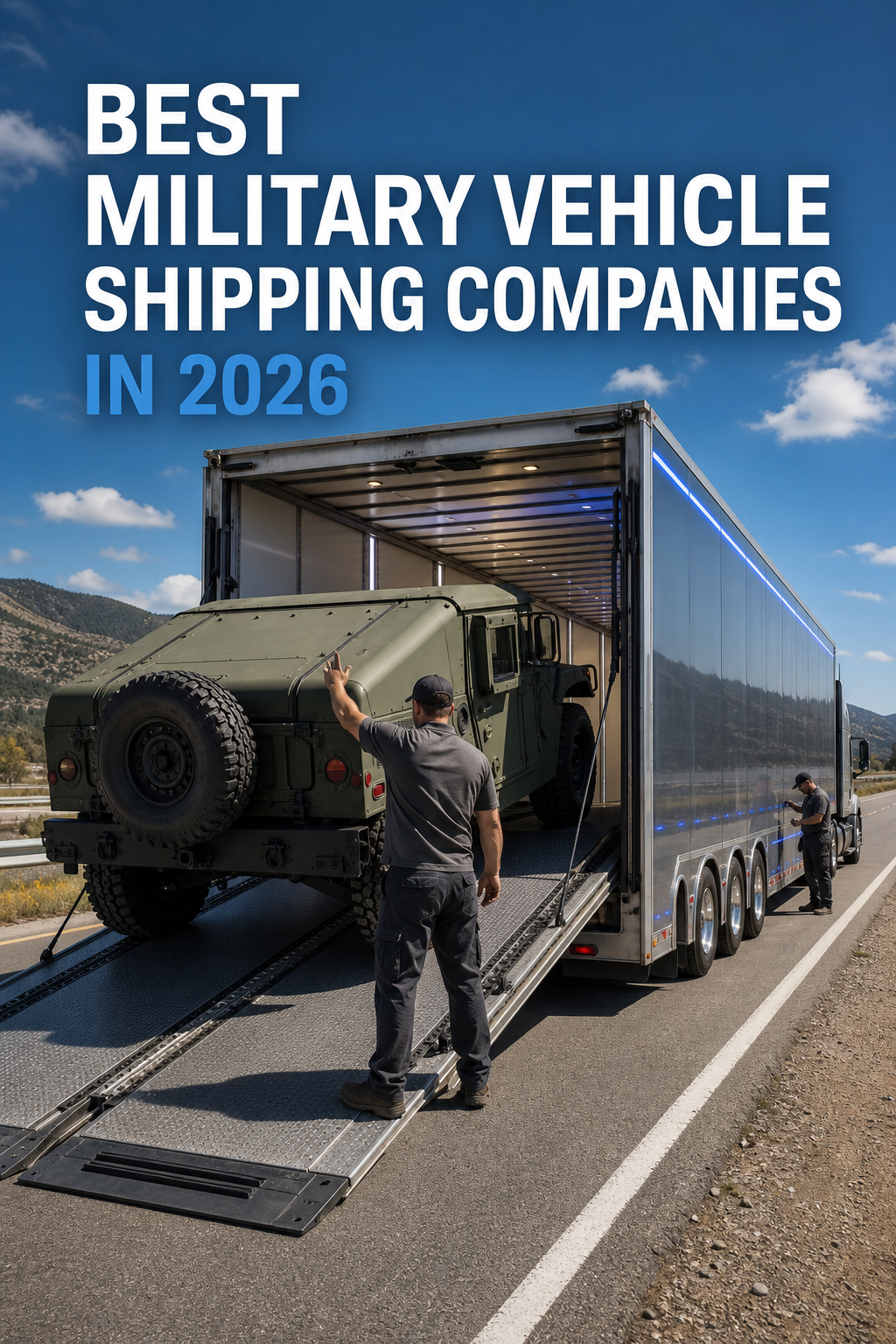
Dispatch Dudes is our first recommendation for military vehicle shipping because we handle the full range, from surplus jeeps and decommissioned humvees to street-legal military vehicles heading to new owners or storage. We work with fully insured carriers across the entire continental US, and we can schedule a pickup in as little as 24 hours when timing is tight.
We’re BBB accredited and recognized by the Forbes Business Council and Newsweek Readers Choice, so you’re not handing your vehicle to an unknown broker. Every shipment is matched to a carrier that’s vetted for your specific route, vehicle type, and weight class. That matters when your vehicle is 6,000 pounds and wider than a standard passenger car.
We offer both open and enclosed transport, door-to-door delivery, and expedited options. For military surplus vehicles that are street-legal and in running condition, open transport is typically the fastest and most cost-effective path. For higher-value pieces, like a fully restored M151 or a collector-grade MUTT, enclosed shipping protects the finish from road debris and weather. Our dedicated advisors walk you through which option fits your vehicle before you book.
Cost ranges vary by distance, vehicle weight, and carrier type. A humvee or similar tactical vehicle shipped 1,000 miles will generally run $800 to $1,400 on open transport, with enclosed rates running higher. We provide instant quotes online or by request, and pricing is locked in at booking, so there are no surprises at delivery.
One real caveat: Dispatch Dudes focuses on the continental US. If you need a military vehicle moved to Hawaii, Alaska, or overseas, we’ll point you toward a freight forwarder who handles international roll-on/roll-off shipping.
2. Enclosed Military Transport Carriers , For High-Value Tactical Vehicles
Enclosed transport carriers are the right call when the vehicle has restoration value, a custom paint job, or parts that can’t take road spray. Think a fully restored M35 deuce-and-a-half, a CUCV with a premium build, or any military surplus piece that a collector has put serious money into.
Enclosed carriers use a hard-sided trailer to block weather, road salt, gravel, and UV exposure during transit. The vehicle is strapped to a deck inside the trailer, never exposed to the elements. For a military vehicle that sat in storage for years and just had a full mechanical restoration, that protection matters.
Enclosed shipping runs roughly 30 to 50 percent more than open transport for comparable distances. Based on published vehicle shipping rate research, enclosed carrier rates in 2026 range from roughly $0.75 to $2.00 per mile depending on vehicle size, pickup location, and season. A shorter 500-mile haul might cost $700 to $1,000 enclosed. A cross-country move for a heavy surplus vehicle can push past $1,800.
The tradeoff is lead time. Enclosed carriers have fewer slots than open carriers, especially for oversized or heavy vehicles. If you book during a busy season (summer runs high demand), expect 3 to 7 days before pickup unless you go expedited. Rural pickup points can push that further.
Not every enclosed carrier handles vehicles over 7,500 pounds or with non-standard dimensions. Always confirm weight and width specs with the carrier before booking, and ask whether the trailer has sufficient deck clearance for your vehicle’s ground clearance or roof height. If you’re unsure how enclosed versus open transport compares for your specific vehicle, that guide walks through the tradeoffs clearly.
3. Flatbed and Lowboy Freight Carriers , For Tanks and Heavy Tactical Trucks
Standard auto transport trailers top out around 7,500 pounds and can’t touch a tank, an armored personnel carrier, or a 5-ton military truck. That’s where flatbed and lowboy freight carriers come in.
A lowboy trailer sits very close to the ground, typically 18 to 24 inches off the road surface, which is the only usable way to haul something as tall as an M60 tank or an armored vehicle without hitting overpasses. Flatbed trailers work for lighter tactical trucks, artillery pieces on wheels, and decommissioned military equipment that sits within legal height limits.
Overdimensional military vehicles often require state-by-state permits, escort vehicles, and route planning around low bridges. The oversize load regulations vary by state and can require night-only travel windows or weekend restrictions. A freight carrier experienced with heavy military equipment will handle this permitting, but you need to confirm it upfront. Some carriers quote a base rate and add permit costs separately, which can add $200 to $600 or more depending on the number of states crossed.
Expect costs for tracked or very heavy military vehicles to range from $2,000 to $8,000 or more for cross-country hauls. Short regional moves for a single armored truck might fall between $1,200 and $2,500. These are not standard auto transport companies. Look specifically for heavy haul or specialized freight carriers that list military equipment in their service descriptions. Always request proof of cargo insurance that covers the specific vehicle type before signing anything.
4. Open Carrier Auto Transport , For Street-Legal Military Surplus Vehicles
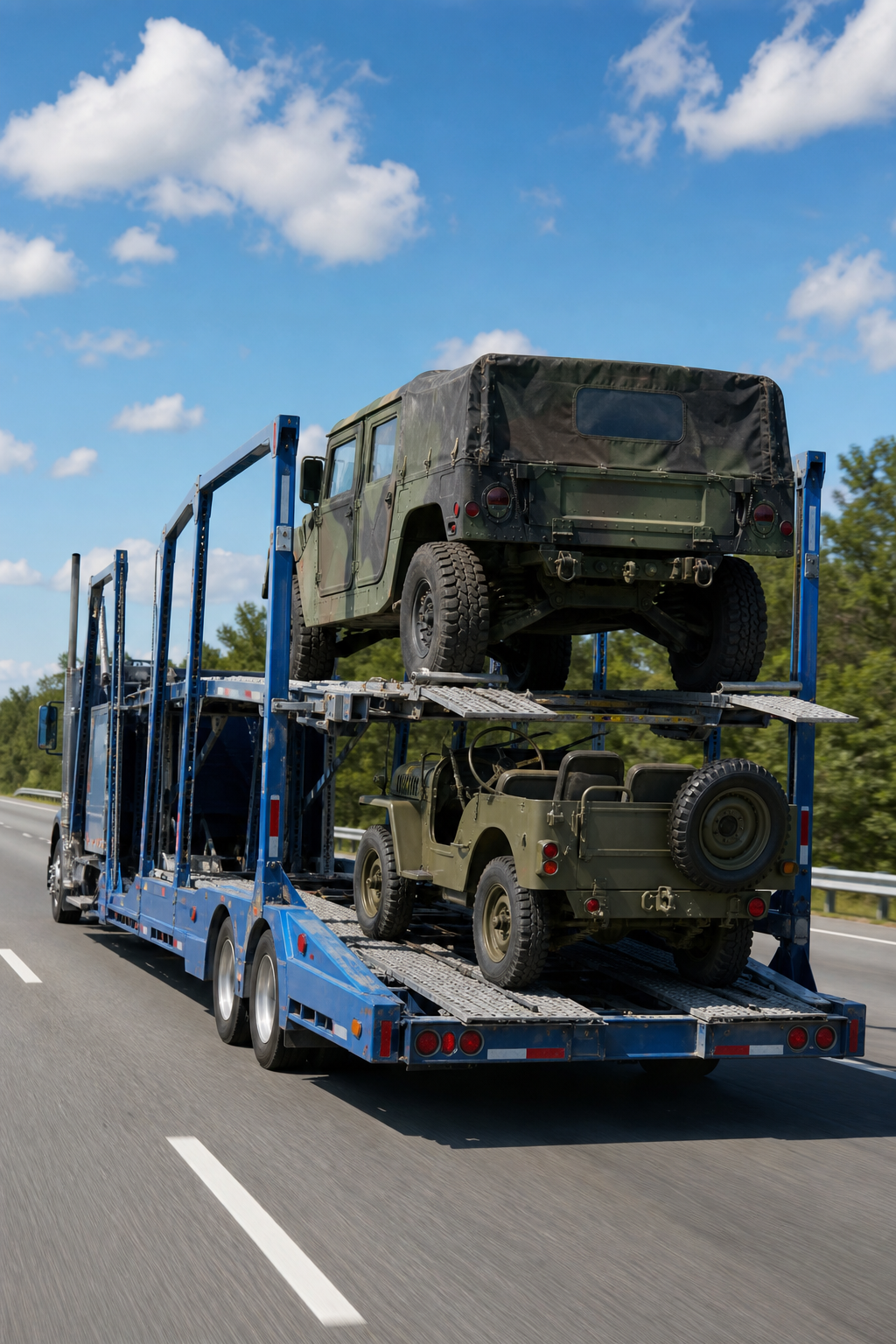
Open carrier transport is the most usable option for military surplus vehicles that are registered, street-legal, and in running condition. This covers a large share of what most private buyers and collectors actually need to move: humvees, M151s, M38s, military ambulances, and similar vehicles that have been titled and licensed for road use.
Open carriers are the same multi-car trailers you see hauling new cars from factory to dealer. They’re widely available, run most routes daily, and cost significantly less than enclosed or heavy freight options. The vehicle is exposed to weather and road debris, so this isn’t the choice for a pristine show vehicle. But for a running surplus humvee heading from a Florida auction to a buyer in Ohio, it does the job reliably.
Pricing on open transport for a surplus military vehicle typically runs similar to a large pickup truck or SUV, because the carrier prices by size and weight. Expect $600 to $1,200 for most domestic routes under 1,500 miles. Longer hauls push higher, and remote pickup points (rural auction sites, military bases with limited access) may add $100 to $300 in terminal fees.
One thing to check before booking: open carriers have height and width limits. A stock humvee at 6 feet wide and 6 feet tall fits fine. A vehicle with an added gun ring, roof extension, or non-standard body kit may not. Confirm dimensions with the carrier before you pay a deposit. If a dealer recently sold you the vehicle and offered transport as an add-on, compare their rate to an independent quote. Dealers sometimes mark up logistics significantly. Negotiating dealer add-on costs at the purchase stage, including transport, is worth doing before you sign the paperwork , tips on how to negotiate add-on costs at a dealership can save you real money on bundled transport fees.
5. Door-to-Door Specialty Vehicle Shippers , For Collectors and Museums
Collectors and museums have different needs than someone moving a daily-driver surplus jeep. The vehicle might be a single restored example in a specific configuration, irreplaceable, and expensive to repair if damaged. That calls for a shipper who treats the whole move as a white-glove operation.
Door-to-door specialty shippers focus on controlled handling from the point of origin directly to the destination, with no terminal stops or multi-vehicle loads if possible. Some operators use single-vehicle enclosed trailers, which keep your military vehicle completely alone during transit. No stacking, no shared deck with a car that leaks fluids, no anonymous loading dock handling.
These shippers also tend to document vehicle condition more thoroughly at pickup, using photo inspection reports and signed bills of lading that detail every scratch and panel. That documentation matters when you’re filing an insurance claim after moving a $40,000 restored M8 Greyhound armored car.
Cost is the obvious limitation. Single-vehicle door-to-door enclosed moves can cost two to three times a standard enclosed carrier rate. For a 1,500-mile haul, that could mean $2,500 to $4,000 or more. For museums receiving a donated vehicle, or private collectors moving a concours-condition piece to a show, the premium is justified. For anything that’s going to be driven off-road the week after delivery, it isn’t.
When vetting these shippers, ask specifically about their experience with military vehicles. Clearances at some residential addresses and museum loading docks are limited, and a company used to handling classic cars may not carry the right tie-down hardware for a vehicle with unique attachment points.
6. Expedited Military Vehicle Transport , When Timing Is Critical
Active-duty service members and their families facing a Permanent Change of Station (PCS) sometimes have very little notice. Two weeks from orders to report date isn’t unusual, and that’s not much time to arrange transport for a privately owned vehicle (POV), let alone a specialty or surplus military vehicle.
Expedited transport guarantees a faster carrier assignment, often within 24 to 48 hours of booking, compared to the standard 3 to 7 day window for regular shipments. The tradeoff is cost. Expedited auto shipping typically runs 15 to 35 percent more than standard rates, according to Dispatch Dudes’ own pricing data for same-week bookings. On a $900 base quote, that’s $135 to $315 extra for priority placement.
For PCS moves, the Defense Personal Property Program managed by the Department of Defense covers government-funded vehicle shipment for eligible service members. But government-funded transport applies to one POV in specific overseas PCS situations. Most continental US moves and second vehicles require private carriers, and tight timelines make expedited service worth considering.
When you book expedited, confirm the carrier has availability for your vehicle’s size class. Expedited assignment means faster broker-to-carrier matching, not necessarily faster transit once the vehicle is on the truck. A cross-country haul still takes 7 to 10 days of actual driving time regardless of how quickly a carrier is assigned.
Dispatch Dudes’ expedited car shipping service offers guaranteed pickup options with locked-in pricing, which makes it easier to plan around a hard report date. We work with PCS timelines regularly and understand what it means to have a vehicle that needs to be at Fort Bragg by a specific date.
What to Look for When Choosing a Military Vehicle Shipping Company
Not every auto transport company is equipped to handle military vehicles. Here are the factors that actually matter when you’re comparing options.
Inoperable vehicles deserve a separate note. A surplus military vehicle that doesn’t run, steer, or brake will require a winch or forklift to load. Not every carrier has that equipment, and those that do charge extra. Confirm this upfront or you’ll lose your booking window when the driver shows up and can’t load the vehicle.
For anyone relocating for military service and moving their own vehicle at the same time, it’s also worth checking whether your carrier has experience with base access requirements. Some installations require advance notice and specific documentation before a commercial truck can enter to pick up or deliver.
FAQ
How much does military vehicle shipping cost?
Cost depends heavily on vehicle type and distance. A street-legal military surplus vehicle like a humvee shipped 1,000 miles on an open carrier typically runs $800 to $1,400. Enclosed transport adds 30 to 50 percent. Tanks, armored vehicles, or anything needing a lowboy and overdimensional permits can run $2,000 to $8,000 or more for cross-country hauls. Always get a quote specific to your vehicle’s weight, dimensions, and route.
Can I ship a non-running military vehicle?
Yes, but not every carrier handles non-running vehicles. A surplus military truck or jeep that doesn’t start requires a winch or forklift to load and unload. You need to confirm this capability before booking. Carriers that handle inoperable vehicles charge extra for the loading equipment and labor. Make sure the carrier knows in advance whether your vehicle can roll, steer, and brake, or none of the above.
Does the military pay for vehicle shipping during PCS moves?
For overseas PCS assignments, the Department of Defense typically covers one privately owned vehicle. For continental US moves, you’re generally responsible for arranging and paying for your own vehicle transport, though some expense reimbursement may apply depending on orders and entitlements. Check with your installation’s transportation office before booking a private carrier to confirm what’s covered under your specific orders.
How long does military vehicle shipping take?
Transit time depends on distance and carrier type. Most continental US routes take 7 to 14 days from pickup to delivery on standard open or enclosed transport. Expedited bookings speed up carrier assignment, not transit driving time, so the vehicle still takes roughly the same time to cross the country. Oversized loads on flatbed or lowboy carriers may take longer due to permit windows and route restrictions.
What documents do I need to ship a military vehicle?
You’ll typically need the vehicle title or proof of ownership, a valid government-issued ID, and vehicle registration if the vehicle is titled and road-legal. For overseas shipments or active-duty PCS moves, additional military orders or authorization paperwork may be required. Some carriers also ask for proof of insurance on the vehicle. Confirm the document checklist with your shipper at booking, not on pickup day.
What’s the difference between open and enclosed transport for military vehicles?
Open transport leaves the vehicle exposed to weather and road debris but costs less and has faster carrier availability. Enclosed transport uses a hard-sided trailer for full protection, which is better for restored or high-value military surplus vehicles. For a working surplus humvee going to a new owner, open is usually fine. For a concours-restored M38 heading to a show or museum, enclosed is worth the extra cost.
Conclusion
For most military surplus vehicles and POV transport needs, Dispatch Dudes gives you the combination of insured carriers, flexible trailer options, and fast booking that makes the move straightforward. If you’re moving a standard surplus vehicle or need to meet a PCS deadline, get an instant quote at dispatchdudes.com and we’ll match you with the right carrier for your vehicle and route.