 Skip to content

A non-running car doesn’t have to sit in your driveway forever. Whether your vehicle has a dead engine, seized brakes, or just refuses to start, there are real, insured options to move it anywhere in the country. Here are the six best ways to transport a non-running car, plus a quick guide to picking the right one for your situation.
1. Dispatch Dudes , Best Full-Service Transport for Non-Running Cars (Our Top Pick)
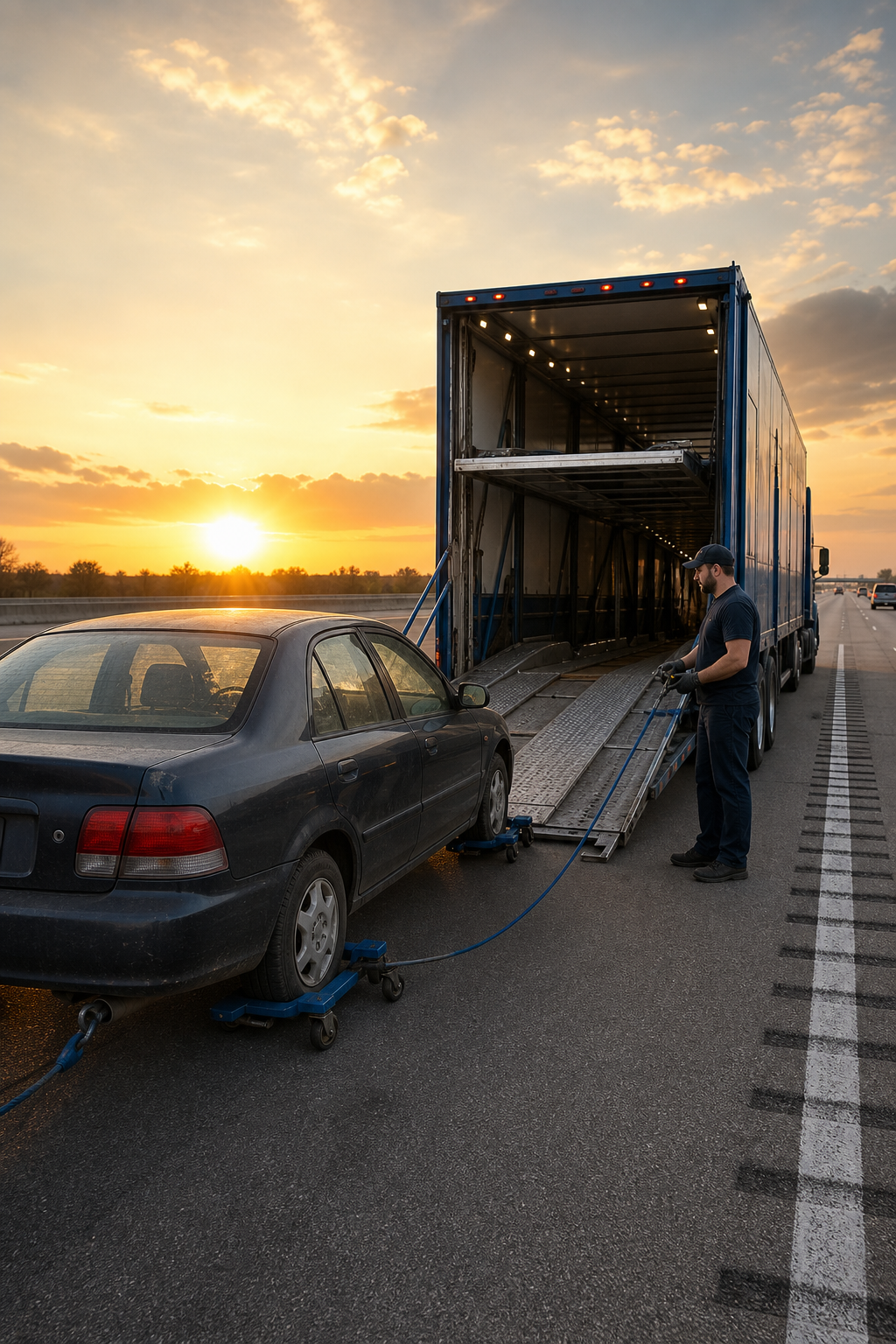
Dispatch Dudes is our dedicated advisors’ top recommendation for shipping an inoperable vehicle nationwide. We specialize in exactly this situation , cars that won’t start, won’t steer, or can’t roll onto a standard ramp under their own power.
What sets us apart is access to the largest network of fully vetted, fully insured carriers in the country. Our dedicated advisors match your specific vehicle condition to a carrier equipped with a winch, wheel dollies, or a lift gate. You’re not calling around hoping someone has the right gear. We handle that for you.
We offer both open and enclosed transport for non-running vehicles, plus door-to-door delivery and expedited options. Every shipment is covered under national insurance standards, and we operate with instant online quoting so you know your cost before you commit. There are no hidden loading surcharges buried in fine print , the inoperable fee is disclosed upfront.
Dispatch Dudes is BBB accredited and recognized by Forbes Business Council and Newsweek Readers Choice, which matters when you’re handing over a vehicle that can’t protect itself. Our team works passionately to keep the process simple: get a quote, confirm your pickup and drop-off dates, and we can have your car scheduled in as little as 24 hours.
The one honest caveat: if your vehicle needs a forklift at both ends because it won’t roll at all, lead time may stretch slightly while we source the right equipment for both locations. But we’ll tell you that upfront, not on pickup day.
2. Open Auto Transport Carriers , Affordable Option for Inoperable Vehicles
Open transport is the most common method for shipping any vehicle, running or not. A large trailer carries multiple cars at once on two exposed decks. Because the carrier splits its cost across several vehicles, the per-car price drops significantly compared to other methods.
For non-running cars, open transport works well when the vehicle can still roll and steer , even if it won’t start. The driver winches it onto the trailer at pickup and winches it off at delivery. If the vehicle truly cannot roll, open carriers can still accommodate it with the right equipment, though fewer drivers carry wheel dollies and skates on every run.
Pricing for open transport varies based on distance, vehicle size, time of year, and how difficult your pickup location is to reach. Open carrier auto transport typically costs less per mile on longer hauls. A non-running surcharge usually adds $150 to $350 on top of the standard rate, depending on how much extra loading effort is required.
The main limitation is exposure. Your car rides on an open deck through weather, road debris, and highway grime. For a daily driver you’re moving across the country, that’s fine. For a freshly restored classic or a luxury vehicle with fresh paint, it’s worth considering the next option instead.
Open transport is the right call when budget is the priority and your non-runner can at least roll and steer. If it genuinely can’t move under any power, confirm with the broker that the assigned carrier has a winch before booking.
3. Enclosed Auto Transport , Extra Protection for Non-Running Classic or Luxury Cars
Enclosed transport puts your vehicle inside a fully covered trailer for the entire journey. The trailer walls block road spray, UV exposure, highway debris, and weather. For a non-running classic car, a restoration project, or a high-value vehicle being pulled from an auction, this level of protection is worth paying for.
Enclosed carriers typically hold two to six vehicles, which is why they cost more than open transport. The lower capacity means the carrier’s operating cost lands on fewer customers. For a cross-country shipment, enclosed transport often runs 30 to 50 percent more than an equivalent open carrier quote.
There’s a second reason enclosed transport suits non-running vehicles specifically: the loading process is slower and more deliberate. A driver winching a car up steel ramps on an open trailer works quickly and may scrape a low-clearance vehicle. Enclosed carriers tend to have softer ramp angles and better mechanical lift options, and the drivers who specialize in enclosed work are generally more experienced with fragile or inoperable vehicles.
Dispatch Dudes offers enclosed transport for non-running vehicles through our vetted carrier network. When you tell us upfront that the vehicle is inoperable, we flag the booking so the carrier arrives prepared. That step alone prevents the most common problem in this space: a driver showing up without a winch.
If your non-runner has exposed components, a sagging frame, or fresh paint, enclosed transport is worth the premium even for shorter distances. If it’s a standard car you’re shipping to a buyer after a failed engine repair, open transport is probably enough.
4. Flatbed Tow Truck Service , Best for Short-Distance or Local Moves
A flatbed tow truck has a tilted bed that lowers to ground level, allowing the car to be winched or rolled onto it without being lifted by its axles. It’s the safest form of local towing for inoperable vehicles, and it’s readily available in most cities within an hour or two of calling.
Flatbed towing is the right move when you need to get a non-running car to a mechanic, a storage facility, or a local buyer , typically within 50 to 150 miles. The cost is usually quoted by the mile plus a hookup fee. For short runs, it’s often cheaper than booking a full auto transport carrier, which has minimum fees built into the pricing model.
The limitation is distance. A flatbed tow truck travels at normal road speeds but stops frequently, requires a driver to stay with the vehicle, and becomes expensive on long hauls. According to general towing industry norms, flatbed towing over 300 miles usually costs more per mile than booking an open carrier that shares the cost across multiple vehicles. For anything beyond a couple hundred miles, dedicated auto transport is almost always the better value.
Flatbed towing also works when a vehicle is in rough enough shape that a standard auto carrier won’t accept it at all , collapsed suspension, missing wheels, fire damage. A flatbed tow company can sometimes haul vehicles that carriers turn away, though you’ll want to confirm this before scheduling.
Use flatbed towing for local emergencies and short moves. For anything crossing a state line, you’re better served by a transport carrier with insurance coverage built in.
5. Driveaway and Repo Specialty Carriers , Niche Option for Dealers and Auctions
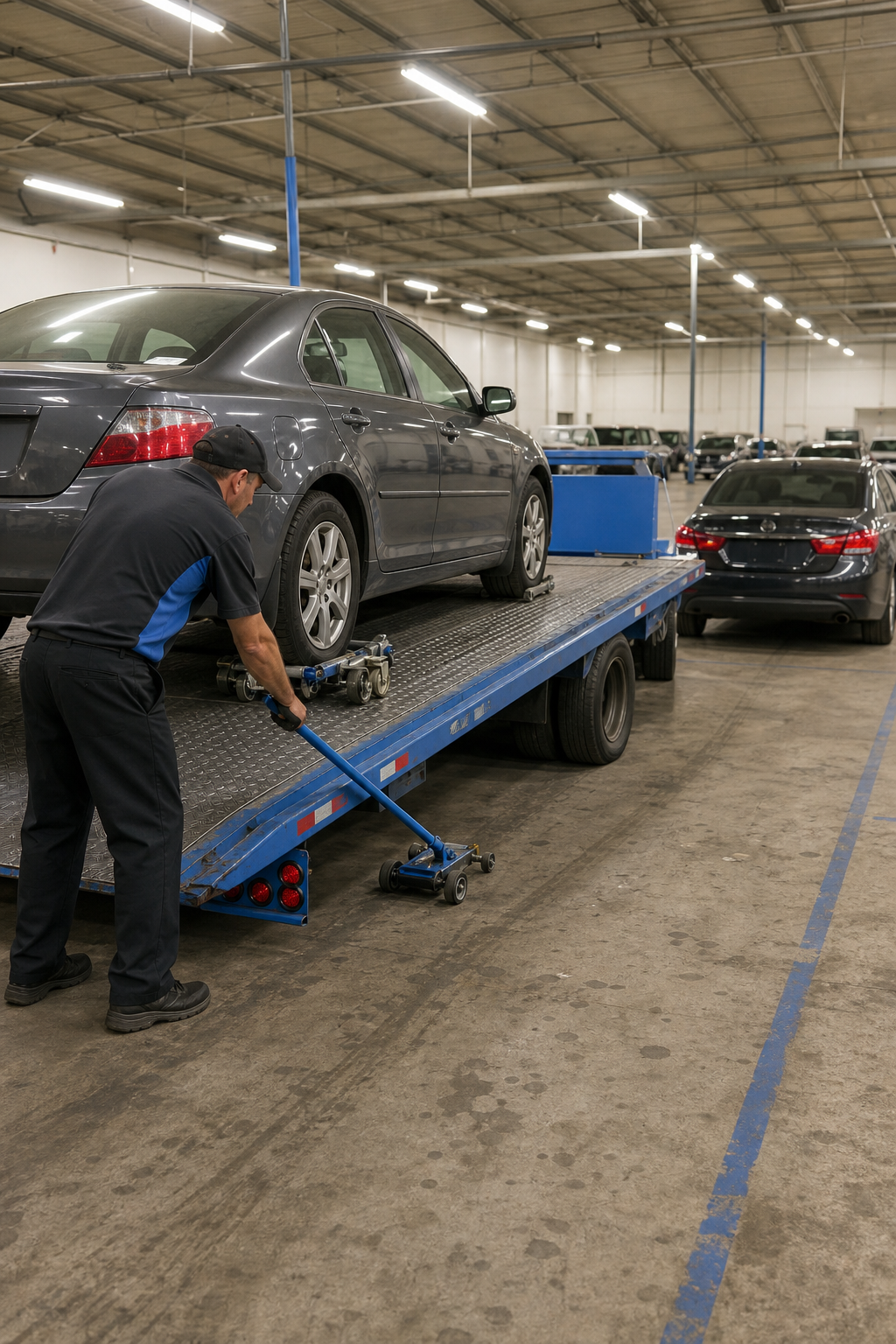
Driveaway and repo carriers are companies that built their operations around moving vehicles that can’t be driven. They work primarily with dealerships, auto auctions, insurance salvage yards, and financial institutions repossessing vehicles. But their services are available to private owners too, especially when the vehicle has been sitting at an auction lot.
What these carriers offer that standard transport brokers often don’t: in-house equipment for truly immobile vehicles. Some maintain forklifts, wheel skates, and specialized flatbeds specifically for cars with no tires, seized axles, or structural damage. If you’ve won a vehicle at auction and it arrived in worse shape than expected, a specialty carrier may be the only option that won’t refuse pickup.
The tradeoff is availability and price. Specialty carriers serve a narrower geographic footprint than national open-carrier networks, and their rates reflect the higher effort per vehicle. Lead times can also stretch if the company’s equipment is committed to dealer-volume contracts.
If you’re a private buyer picking up a salvage or auction vehicle, the clearest path is still to book through a service like Dispatch Dudes first , our network includes carriers with specialty equipment, and we can tell you upfront whether your specific vehicle condition requires it. That saves you the time of researching niche operators in a market you may not know.
Repo and driveaway carriers earn their place on this list for one scenario: a vehicle so far gone that standard carriers won’t touch it. For everything short of that, a well-equipped full-service transport broker will cover you.
6. Freight Shipping via LTL Carrier , Budget Option for Long-Distance Transport
Less-than-truckload freight shipping (LTL) is the process of booking space on a freight truck alongside other commercial cargo. A vehicle is treated as oversized freight, loaded onto a flatbed or roll-on pallet, and transported as part of a larger commercial load.
The appeal is cost. On long-haul routes where auto transport demand is thin, LTL carriers sometimes quote lower rates because they’re filling unused capacity. If you’re moving a project car from a rural area to a restoration shop across the country and cost is the only variable that matters, LTL can work.
The process is less polished than dedicated auto transport. Vehicles often transit through freight terminals, which means multiple loading and unloading points, higher exposure to dock equipment, and less consistent handling. For a non-running car with fragile body panels or a fresh paint job, each terminal stop is another risk event. Transit times are also longer and less predictable than dedicated carrier shipments.
Insurance coverage under LTL freight is based on freight liability rules, not auto transport standards. You’ll want to read the carrier’s cargo liability terms carefully and consider supplemental coverage. Before you book, check whether the freight company’s insurance actually covers your vehicle’s market value , not just a standard per-pound freight rate.
LTL freight makes sense for non-running vehicles with low monetary value on long-distance routes where standard auto transport quotes come in too high. For anything with sentimental or financial value above the scrap range, stick to dedicated auto transport carriers.
How to Choose the Right Option for Your Non-Running Car
The right transport method depends on four things: how inoperable the vehicle actually is, how far it needs to go, what the vehicle is worth, and how fast you need it moved. Here’s a quick decision grid:
One detail that trips up almost every first-time shipper: be specific about your vehicle’s actual condition when you book. Carriers need to know whether it rolls, whether it steers, whether the tires are inflated, and whether the brakes hold. Vague descriptions lead to wrong equipment on pickup day. For a detailed pre-transport checklist, the guide on how to transport non-running cars and key preparation steps walks through exactly what to document and disclose before the carrier arrives.
If you’re unsure which category your vehicle falls into, the rule is simple: disclose more, not less. A carrier that shows up prepared to winch a non-rolling vehicle is an easy pickup. A carrier that shows up expecting a rolling car and finds it seized costs you a rescheduled shipment.
People relocating to a new home often handle vehicle shipping and home setup in the same window. If you’re also furnishing a new space after your move, Vault Studio’s concierge design and materials sourcing service helps homeowners and trade professionals source everything from cabinetry to flooring across more than 600 premium brands.
FAQ: Transporting a Non-Running Car
How much extra does it cost to ship a non-running car?
Most carriers add a non-running surcharge of $150 to $350 on top of the standard transport rate. The exact amount depends on how much extra loading effort is involved. A car that rolls but won’t start costs less to load than one with seized brakes and flat tires. Always disclose the vehicle’s specific condition when requesting a quote so the fee is accurate from the start.
Can any car transport company handle a non-running car?
No. Standard carriers rely on vehicles driving onto their trailers under their own power. Not every truck carries a winch, and not every driver has experience loading immobile vehicles. Always confirm upfront that the carrier is equipped and experienced with inoperable vehicle transport before booking. Services like Dispatch Dudes pre-screen carriers for this exact capability.
Does auto transport insurance cover a non-running car?
Yes, federally licensed auto transport companies are required by the FMCSA to carry cargo insurance. That coverage applies to non-running vehicles the same as running ones. Ask for the carrier’s certificate of insurance before your shipment, confirm the coverage limit exceeds your vehicle’s value, and document the car’s condition with photos at pickup and delivery.
What if my car won’t roll at all , can it still be shipped?
Yes. A car with completely seized wheels or missing tires can still be transported, but it needs specialized equipment: wheel skates, a forklift, or a flatbed with a full-tilt bed. Fewer carriers maintain this equipment, so lead times may be slightly longer. Disclose the condition completely when booking. Attempting to hide a fully immobile vehicle causes pickup failures and rescheduling costs.
How do I prepare a non-running car for pickup?
Document the vehicle’s condition with photos from every angle. Remove all personal items from the interior and trunk. Inflate tires if possible. Check for major fluid leaks and disclose them. Keep the fuel tank at a quarter-full or less. Provide the keys even if the car doesn’t start , carriers often need to unlock the steering column or shift gears manually during loading. Clear access at your pickup location for a large truck.
How long does it take to ship a non-running car?
Transit times are roughly the same as running vehicles on the same route. A cross-country shipment typically takes five to nine days. The difference is lead time before pickup: finding a carrier with winch equipment may add one to three days to the booking window. Expedited options are available through full-service transporters if you need faster scheduling, though they carry a premium.
Conclusion
For most people, the clearest path is a full-service transporter with a vetted carrier network , and that’s exactly what we built Dispatch Dudes to be. We handle the carrier matching, the insurance verification, and the equipment confirmation so your non-running car gets picked up right the first time. Get an instant quote at dispatchdudes.com and tell us your vehicle’s condition , we’ll take it from there.